Monday, August 27, 2012

Relief after $180,000 bill worry

SINGAPORE - When her daughter-in-law gave birth to quadruplets last month, she worried about how the family was going to pay the staggering medical bills ($180,000 and counting) incurred as a result of the births.

But there is some relief after the Ministry of Health (MOH) made an exception and allowed Madam Lily Lim, 52, and her husband to use their Medisave savings to help pay their grandchildren's bills.

Madam Lim's daughter-in-law, Ms Jennifer Pan, 28 (pictured), gave birth by caesarean section at Gleneagles Hospital last month to what is believed to be Singapore's first set of quadruplets since 2008.

Ms Pan,an assistant treasury manager at acommodities trading company here, had taken fertility medication, but did not undergo in-vitro fertilisation, The Straits Times reported.

Janessa, Joelle, Jovianne and Kingsley (the only boy) were born on July 19.

In a letter to The Straits Times forum, published last Wednesday, Madam Lim said: "Having quadruplets was a joyous occasion, but it was marred by the financial hole it created."

She said the hospital bill totalled some $180,000 and explained that the babies were born premature and have to stay in the hospital for almost two months in the intensive care unit (ICU).

The ICU charges alone were reported as $1,000 for each baby a day.

The bills also include an estimated $25,000 for Ms Pan's month-long hospital stay and an obstetrician fee of $23,000.

Madam Lim added: "My husband and I wanted to help them by dipping into our Medisave account, but the Central Provident Fund blocked it with the reply that grandchildren could not use their grandparents' Medisave."

Unique circumstances

Madam Lim is the founder of a confinement nanny agency.

She and her husband have about $90,000 in their Medisave savings, Chinese newspaper Shin Min Daily News reported. The babies' father, Mr Phua Jiun Wei, 28, runs the agency.

In response to media queries, an MOH spokesman said it has "agreed to allow the grandparents to use their Medisave to help with the bills, considering their family's unique circumstances".

The spokesman said parents can use their Medisave to pay for their child's hospitalisation expenses.

But as elderly persons tend to incur more medical expenses than younger persons, grandparents cannot use their Medisave to help pay for their grandchildren's medical bills.

This is to ensure that the grandparents themselves have sufficient Medisave savings for their own hospitalisation needs, especially after retirement.

The spokesman said: "In circumstances such as in Madam Lim's case, where the grandparents have requested for their Medisave to be used, we will assess such requests on a case-by-case basis.

"We understand that the family has also appealed to Gleneagles Hospital for assistance for the babies' hospital and doctor charges."

The spokesman said that all hospitals are required to provide financial advice to their patients regarding their treatment.

"Patients are encouraged to choose a care setting most appropriate to their financial situation.

"In the restructured hospitals, Singaporeans can receive subsidies of up to 80 per cent of their total bill, and can also be assisted by Medifund or other hospital assistance schemes if they still face difficulties in settling their bill."

Ministry in touch with family

MOH understands the concerns faced by Madam Lim and her family, and has been in touch with them, the spokesman said.

When contacted, Madam Lim declined comment.

Dr Lam Pin Min, chairman of the Government Parliamentary Committee for Health, told The New Paper that he was glad to know that MOH has exercised flexibility according to the special circumstance in this particular case.

"I do understand the anxiety caused in cases where hospitalisation bills can be hefty and the helplessness in relieving the financial burden although there are significant amounts in the Medisave accounts," he said.

"The restriction on the use of Medisave needs to be reviewed regularly to commensurate with the medical needs of Singaporeans.

"However, we need to exercise caution as a too rapid liberalisation may result in premature depletion of members' Medisave savings," he said.


Bad drivers 'fess up

Are we adopting more bad driving habits?

Motorists here seem to think so.

AXA Insurance Singapore polled more than 600 drivers and motorcyclists last year in its annual Road Safety Survey.

The result showed that 41 per cent admitted to tailgating.

The same number also owned up to having answered the phone without a hands-free kit or text messaging while driving.

When asked why they tailgate, half of the drivers blamed the vehicle in front for "driving too slowly", while the rest gave excuses such as they were rushing or trying to overtake the vehicles in front.

The issue of driving habits came up after Minister for Foreign Affairs and Law K. Shanmugam posted on his Facebook page on Aug 20 his encounters with three reckless drivers in a day when his wife was driving the car.

In one instance, someone sped up to prevent his wife from switching lanes and in the other two instances, drivers did not signal when changing lanes.

Several netizens agreed with his observation.

From the AXA survey, it appears that we're an impatient lot on the roads.

And a lot of it may have to do with poor time management and a lack of route planning, AXA said.

But while they are bad habits, are our roads also more dangerous now?

Mr Chua Kim Soon, principal officer and chief executive officer of AXA Insurance Singapore, said in a media release on the survey results: "Close analysis of the data shows us a worrying trend of reckless drivers who commit dangerous behaviours such as tailgating, speeding and failing to signal - all of which can lead to accidents involving serious injuries.

More bodily injuries 

"With a notable increase over the past year in the number of bodily injury claims AXA has experienced, this is an area we are understandably concerned about."

Last year, 195 people were killed in road accidents, according to figures from Traffic Police, compared with 193 in the previous year.

Motorists in the AXA survey cited going through amber lights, speeding at more than 10 kmh above the limit and switching lanes without signalling as the three dangerous driving behaviours they committed most often.

Then there's the tailgating, even of emergency vehicles.

An ambulance driver who wanted to be known as only Mr Fariz,40, told The New Paper: "These drivers would keep close to my ambulance so as to get out of the congestion.

"But it is a very inconsiderate and dangerous act.

"What happens when I need to brake in an emergency? I am afraid that these drivers would hit my ambulance and injure my patients and their relatives that I am ferrying."

More aware? 
 
But could it be that we are just more aware of bad driving habits on the roads?

Transport analyst Lee Der Horng of the National University of Singapore thinks so.

He told The New Paper that his views are based solely on his observations of the road conditions when he drives to and from work.

"When I started driving here, I did notice how some drivers did not signal before changing lanes. But because traffic was comparatively low then, it was not an issue," said Dr Lee, who came here from Taiwan in 1999.

"Today, we have more vehicles on the roads and as traffic gets more congested, (naturally) we see more friction among the drivers."

Dr Lee began noticing the increased friction on the roads about six years ago as traffic got more congested, he added.

Mr Fariz agreed that it was less intense on our roads when he started driving the ambulance in the mid-1990s.

"Back then, when drivers see my ambulance approaching, they would quickly give way to me.

"Today, I would need to switch on the siren to alert drivers ahead. Even so, some of them would still hog the lane and not give way to me.".

How do we tackle the problem then?

Dr Lee said since it would be hard to change the volume of traffic here, education would be the key to improve driving conditions.

And that includes "educating" foreign drivers.

He recalled how he had made a number of bad mistakes when he first started driving here.

Dr Lee said: "I was driving on West Coast Highway and there was no traffic. I made a wrong turn and drove against traffic flow. Some vehicles flashed their headlights at me and I pulled over by the side of the road before making a U-turn.

"Even though I can drive and know traffic rules, it does not mean I am familiar with local driving conditions."

If we don't make a change now, new foreign arrivals will be conditioned to embrace the same bad driving habits.

He said: "The environment will change the driver's behaviour. When a driver is new, he would tend to be more conservative and drive more carefully on the road.

"But over the years, he would gain more confidence and maybe become more aggressive. His behaviour will be influenced by other drivers he encounters on the road."

Raffles Education at 8-year low after rights issue plan

Shares of Raffles Education Corp Ltd fell to an eight-year low after the Singapore education services provider announced a rights issue plan and a net loss of $59.3 million for the financial year ended June.

Raffles shares fell as much as 8.1 per cent to $0.34, the lowest since August 2004. More than 2 million shares changed hands, 2.2 times the average full-day volume over the past 30 days.

"There is some concern about dilution because of the rights issue, and their main business seems to be facing a lot of difficulties," said a trader.

Raffles said late on Monday it plans to issue up to 170.9 million rights shares at $0.14 each, on the basis of one rights share for every five existing shares held by certain shareholders.

The company also announced last week that it swung to a net loss of $59.3 million for its 2012 fiscal year from a net profit of $13.2 million a year earlier.

Raffles expects its business in China to continue being affected by challenging operational conditions in the country. Its operations in Vietnam had also been suspended, the company said.

Tuesday, August 21, 2012

Brain tumour op leaves man in coma

SINGAPORE - Mr Garry Douglas Tan went in for surgery to remove a benign tumour from his brain.

That was on June 15, 2010.

Two years on, the Auckland University graduate still hasn't made it out of Tan Tock Seng Hospital (TTSH).

Mr Tan, now 35, went into a coma 11 days after his operation and is now in a vegetative state and unresponsive.

And his father, Mr Tan Chiau Tong, wants the hospital to answer for his son's current situation.

"The operation was supposed to improve his life. I believe it would have, since the surgeon said it was a success. I would like to know what happened here?" Mr Tan, 64, said.

He told The New Paper that his son, a film production executive, had gone to the hospital after suffering from short-term memory loss.

A scan found a large tumour in his brain and doctors said it had to be removed.

The first phase of the brain surgery to remove 60 per cent of the tumour was "declared a success by his surgeon".

"Three days after the op, Garry regained consciousness and was speaking and eating normally.

"Even in the high-dependency ward, he was fully awake and able to eat and talk.

"The surgeon informed us that Garry was recovering well and he would be able to go ahead with the second part to remove the rest of the tumour two weeks after," said the senior Mr Tan, a technician with a shipping company.

But everything went downhill a day after the patient was transferred to the general ward.

'Under observation'

"It was on the 23rd (of June 2010) when his temperature started fluctuating between 38.2 and 38.7 deg C.

"We reported that to the nurses in the ward. They told us that he was under observation and not to worry," the older Mr Tan recalled.

He added: "Garry had just had surgery. Shouldn't they be more attentive?"

Mr Tan said it was on June 26, when his son's fever rose to 41 deg C, that the ward doctor was summoned.

"He turned up only 11/2 hours later. Once again, we were told that he was fine and we had nothing to worry about as my son was being given antibiotics for his fever," Mr Tan said.

Shortly after leaving the hospital for home, the Tans received a call from the hospital to return as "my son was coming to the end of his life's journey".

"We were told later the fever was caused by a urethral inflammation and the fever caused his blood pressure to fall, resulting in his falling into a coma.

"Much later, we were told he had had a stroke only by (his surgeon) after he returned on the 29th from an overseas trip," Mr Tan said.

"Why were we informed that it is a normal, minor fever earlier? Why did the hospital staff not react when informed of the rising fever? Why was the doctor not summoned earlier? Now my son can no longer talk, comprehend things and eat any more," he added.

The elder Mr Tan said he received a letter "only two years after the fact" that an investigation was carried out and the hospital did not find its staff negligent and that his current condition was caused by the tumour.

The family is hoping to go through the findings of the investigation with a fine-tooth comb before deciding on the next move.

At this point, the family has paid up about $24,000 of his medical expenses - mostly drawn from the older Mr Tan's Medisave account.

TTSH: Care given was appropriate

In an e-mail reply to The New Paper, Tan Tock Seng Hospital (TTSH) said Mr Garry Douglas Tan, 35, has been a patient at the National Neuroscience Institute (NNI) and TTSH since 2010 for treatment related to a brain tumour.

Its spokesman said during this time, Mr Tan Chiau Tong had expressed concerns over his son's care.

"A thorough investigation by the hospital, in consultation with independent experts, has concluded that the care and treatment administered to Garry was appropriate," she said.

"Though we deeply empathise with Mr Tan on his son's condition, we would like to state that there was no negligence in the medical management of his son. It was unfortunate that Garry's condition had deteriorated after the surgery."

The spokesman added that both TTSH and NNI staff have met Mr Tan and the family on several occasions and will continue to work closely with them to see what further help could be provided.


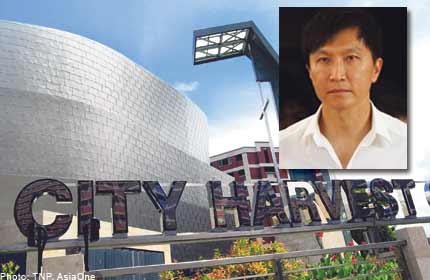
City Harvest Church warned over fund raising for accused

Singapore's Commissioner of Charities (COC) has warned City Harvest Church about its employees' efforts to raise funds to pay the legal fees of the church's leaders facing criminal charges in court.

At issue is a donation form which surfaced this month seeking funds as a "personal gift" to the six people charged so far.

Commissioner of Charities' response
 
"The Commissioner of Charities' (COC) office had earlier issued a Restriction Order to the Board of City Harvest Church (CHC) to restrict CHC from paying the legal fees of the six accused persons and entering into transactions relating to payment of services to the suspended individuals and their related entities, without the approval of the COC.

The COC has informed CHC that the church and/or its employees should not be involved in raising funds for the legal expenses or setting up a specific fund for this purpose."

Billionaire George Soros invests in Man United

NEW YORK: US billionaire George Soros has bought a stake in Manchester United, the British football club that made its Wall Street debut earlier this month, according to a filing with US regulators.

Soros' investment firm bought approximately 3.1 million Class A shares, or 7.85 per cent of the total Class A shares, a filing with the US Securities and Exchange Commission (SEC) revealed.

That comprises 1.9 per cent of Manchester United, when the powerful Class B shares held by members of the Glazer family, who control and direct the club, are taken into account.

Class B shares enjoy 10 times the voting rights in the company as compared with Class A shares.

After an underwhelming initial public offering on August 10, shares in the club finished Monday at US$13.06, down 6.7 per cent from the IPO price of US$14.

Still, the club earned US$233 million from the IPO, which valued it at about US$2.3 billion, making it the most valuable sports team in the world.

Risk of US double-dip recession rises: S&P

WASHINGTON: The odds the United States will slip back into recession next year have risen, ratings agency Standard & Poor's said, citing risks from the European debt crisis and budget tightening at year-end.

The US ratings firm raised the chance of the US falling into recession to 25 per cent, up from a 20 per cent chance estimated in February, as the world's largest economy struggles to recover from a severe 2008-2009 slump.

It also pointed to the looming possibility of the government being forced by existing law to severely cut spending and increase taxes on January 1, the so-called fiscal cliff that would crunch the economy.

"Economic activity has downshifted sharply from earlier this year," S&P said in a report on North American credit conditions amid global uncertainty, dated August 20.

"At the same time, possible contagion from the European debt crisis, the potential so-called 'fiscal cliff', and the risk of a hard landing for China's economy have added greater uncertainty to US economic prospects," it said.

In the second quarter, the world's largest economy grew at a 1.5 per cent annual rate, a sharp slowdown from late last year as unemployment remained stuck above 8.0 per cent.

S&P underscored concern about the impact of a recession in the 17-nation eurozone, whose economy contracted 0.2 per cent in the second quarter. S&P forecast a 0.6 per cent contraction this year.

"A double-dip recession in Europe that transmits financial turmoil to the US could push it into recession," the agency said.

However, S&P said its baseline scenario for the US economy -- remained "modest growth," projecting a gross domestic product expansion of about 2.1 per cent for this year.

S&P also said it expected that politicians would agree before year-end to change the current severe budget cut and tax hike mandates to avoid the fiscal cliff fate.

However, it said, "We do not believe the US and European economies will improve substantially in the next year."
Related Posts Plugin for WordPress, Blogger...