Showing posts with label healthcare. Show all posts

Monday, October 29, 2012

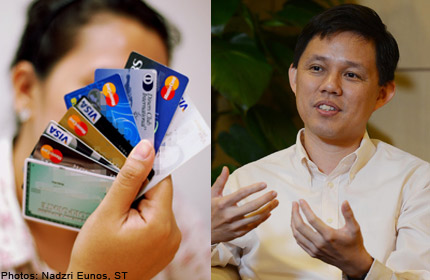
Family who earned $16k a month complained the most: Chan Chun Sing

Providing help, building families 

Mr Chan Chun Sing will never forget the three families who turned up to ask for help at his Meet-the-People Sessions.

One of them earned just $2,000 a month, but managed to raise three children. Another had double that income, of $4,000 to $5,000, and had no children.

But it was the third, a family that earned $16,000 and had two children, who complained the most, saying the Government was not doing enough to help them.

The incident, says Mr Chan, illustrates the rising expectations that Singaporeans have and the challenge that policymakers face as they try to work out who should get more help.

"It's not an easy question to answer and we will have to find the answer as a society going forward," he says.

It is also a challenge Mr Chan's new ministry, the Ministry of Social and Family Development (MSF), will have to grapple with as it streamlines its responsibilities to focus more on policies affecting Singaporean families.

On Thursday, the Ministry of Community Development, Youth and Sports (MCYS) will be renamed the MSF and pass on its youth and sports portfolios to the newly created Ministry of Culture, Community and Youth.

That will give Mr Chan's ministry more time and space to look at longer-term challenges such as meeting the needs of singles when they age in 20 years' time and finding ways to tap the energies of healthy elderly people to serve other senior citizens.

At an hour-long interview at the MCYS headquarters in Toa Payoh this week, the Acting Minister laid out the priorities for his new ministry.

One of them will be to strengthen the social safety net - which will require the ministry to factor in Singaporeans' changing expectations. Another is to improve the delivery of social services, and a third is to strengthen families.

Mr Chan notes that it is no longer only those at the bottom of the ladder who need help. Those in the middle are starting to feel unsettled by the growing income gap too.

"They wonder whether they can meet their aspirations because of the people at the top end," he says.

"The question for us is, as a society, to what extent we can actually help this group of people beyond the people at the bottom of the socio-economic scale."

As economic cycles become shorter and more volatile, people are also more likely to be in and out of jobs, he observes. They will have to relearn their skills at a much faster rate as well.

"If I use my mother as an example, she was a machine operator, stamping metal plates. She did that for at least 30 years."

With just one set of skills, notes Mr Chan, his mother, a divorcee, was able to raise him and his sister single-handedly.

But no longer.

The churn in jobs and the instability of people's incomes today pose a serious challenge and could even disrupt the way children are brought up and their education.

Another concern for Mr Chan is Singapore's changing demographics: More people are staying single, marrying later, having fewer children and living longer.

As he looks into the next 10 to 15 years, he foresees a shrinking of the support that extended families can now give in raising children and caring for sick relatives.

"So that is where you see us... not just building the nursing homes, which are institutional care, but growing the community care sector and the home care services," he says.

Strengthening elderly care services in the community and at home will allow people to grow old in familiar settings, he explains.

Longevity will pose another challenge as people in their 80s and 90s will be increasingly cared for by those in their 50s and 60s.

But Mr Chan also sees these healthy retirees as a source of volunteers and helpers to beef up the delivery of social services at the local level, as is being done in Japan.

Singapore is now trying out this idea: Lions Befrienders, for instance, is getting the old to befriend the old, while a seniors' activity centre in Choa Chu Kang pays elderly folk a stipend to run activities.

As for the larger challenge of strengthening families, Mr Chan thinks measures should be targeted at people's four life stages: when they are young, when they marry, when they have children and when they are maintaining a family.

He believes that a central plank of the efforts - besides helping couples with housing, health care, childcare and education - should be to inculcate from young values for marriage, parenthood and family.

"If we bring up our children appreciating the joy of a family, then I think when they grow up, chances are that they will also aspire to have their own family," he says.

It means getting people not to see their career as an obstacle to starting a family, helping them to appreciate the joy of parenthood, and maintaining healthy relationships between parents and teenagers.

Such values can be transmitted through schools and the media, he says, especially as children may not live with their grandparents and parents may be working. Positive role models are also needed, he adds.

The 43-year-old says his own values were shaped by his family and the people he met. Watching Hong Kong sword-fighting drama serials and movies helped, he quips.

The former army chief married his colleague in Mindef in 1997 at the age of 28 - the median age then. They have three children, aged 11, three and one.

Recalling their decision to wed and have children, he cites a senior's advice: "He told me that there's never a perfect time to get married or to have a child... The perfect time is when you have the commitment to overcome life's challenges with your partner.

"But through the whole journey, you find a new sense of joy and purpose beyond just the pursuit of material well-being for yourself."


Tuesday, May 1, 2012

Simple device can help babies with tragic heart flaw

PARIS - A cheap, simple device widely used to monitor blood oxygen can help save newborn babies with congenital heart defects, a study in The Lancet determined on Wednesday.

Congenital heart flaws account for between three and 7.5 per cent of all infant deaths, but surgery greatly improves the chances of survival, especially if the problem is detected at the earliest stages.

Doctors led by Shakila Thangaratinam of Queen Mary University of London looked at published research into pulse oximetry, in which a small monitor is placed on the fingertip or toe to check levels of oxygen in arterial haemoglobin.

It works by comparing the differences in red light, which is absorbed by oxygenated blood and infrared light, which is absorbed by deoxygenated blood.

Oxygenation levels are given instantly, in a digital display.

Thirteen studies covering nearly 230,000 newborn babies were included in the trawl.

Pulse oximetry detected 76.6 per cent of congenital heart defects and had a rate of just 0.14 per cent of "false positives," a term meaning the times when the device wrongly signalled a problem when in fact the infant was healthy.

The risk of a "false positive" was even lower when the baby was tested more than a day after birth, rather than within the first 24 hours, the paper said.

Pulse oximetry is a useful, non-invasive early warning test for babies who do not have obvious symptoms of cardiac problems, say the researchers.

Infants that are spotted as being at risk can then be diagnosed by echocardiography and, if need be, treated by surgery.

Pulse oximetry for newborns is an issue that has been hotly debated in medical circles, with some experts saying its reliability is unproven. United States is the only country to use it as a routine screening tool.

But the new study says the evidence is now emphatic, as pulse oximetry has been tested on more than a quarter of million infants, 100,000 more than in 2009 when the last review took place.

Wednesday, February 15, 2012

Singaporeans voice top 3 concerns for Budget 2012

SINGAPORE - Social issues, employment matters and the economy were among Singaporeans' list of top concerns, said REACH after it conducted the Pre-Budget 2012 Feedback Exercise.

The government feedback arm received over 1,800 inputs from members of the public over the period of Nov 16, 2011 to Feb 5, 2012.

It received 38 per cent more feedback this year than the last.

Social issues such as the rising cost of living, promoting family life and strengthening social safety nets made up 24 per cent of inputs.

13 per cent of feedback was centred on employment; while 10 per cent raised concerns about the economy.

Contributors called for more measures to curb the rising costs of basic necessities and essential services like utilities, transport and healthcare, and to improve the standard of living for the low-income and sandwiched middle-income groups.

To boost Singapore's birth rate and make raising families in Singapore more affordable, they requested for more measures such as cash incentives, additional paternity and childcare leave, more subsidised childcare facilities and waiver of the foreign domestic worker levy.

On supporting the elderly, they requested for more aid like transport and medical subsidies to help elderly Singaporeans cope with escalating costs, as well as measures to address elder care needs.

Many also called for more funds to be channelled towards helping the less fortunate in Singapore.
There is also a call for greater efforts to develop local Small and Medium Enterprises (SMEs), promote entrepreneurship and strengthen Singapore's business infrastructure so as to encourage more business start-ups to enhance Singapore's economic growth.

Others requested for more measures, such as corporate tax rebates and lower office rentals, to help local businesses cope with the economic slowdown and rising business costs.

Contributors also urge the Government to create more jobs for citizens and help companies keep existing jobs during the economic slowdown.

They want  the quantum and income limit for Workfare incentives to be raised and transitional schemes to be introduced to tide citizens over a short period of unemployment.

Some also requested for more to be done to encourage companies to hire and develop Singaporeans by providing training schemes and subsidies to improve the competitiveness of the local workforce.

And instead of relying on low-cost labour, they want more initiatives to raise productivity.

Besides these top issues, REACH has received feedback and suggestions on other topics such as housing, healthcare, education and transport.

Sunday, October 9, 2011

BG Tan urges Singaporeans to plan for retirement early

Instead of sipping coffee at their favourite breakfast joints, more than 500 Singaporeans spent their Sunday morning getting tips on how to plan for retirement.

The audience, many of whom were reaching 55 years of age, were attending talks organised by the Central Provident Fund (CPF). Topics covered included managing healthcare and housing costs.

Minister of State for Manpower and National Development Tan Chuan-Jin was the guest of honour at the event, which was held at the NTUC auditorium at Marina Boulevard.

Many among the audience nodded and listened intently as BG (NS) Tan urged them not to overstretch their finances and to prepare for uncertainties such as changes in income levels.

The minister also launched two initiatives: The 'Are You Ready' website (www.areyouready.com.sg) to help people assess their readiness to retire; and the Minimum Sum Topping-Up campaign, where Singaporeans who top up their or their loved ones' CPF accounts before December 15 stand to win prizes worth up to $4,000.

Related Posts Plugin for WordPress, Blogger...