Showing posts with label wealth protection. Show all posts

Tuesday, February 7, 2012

Diabetic girl, 4, gets 5 jabs a day to stay alive

Did you know that one in nine adults in Singapore is diabetic?

Diabetes has been gaining ground here.

In 2004, 8.2 per cent of those aged 18 to 69 had the disease. In 2010, that figure went up to 11.3 per cent.

These worrying figures are from the latest National Health Survey (NHS), published at the end of last year by the Ministry of Health.

But the figures do not capture the number of young diabetics among us, such as four-year-old Corrinne Chua.

Little Corrinne was diagnosed with Type 1 diabetes when she was just 16 months old.

Type 1 diabetes, unlike Type 2, is currently not preventable, according to the World Health Organisation.

Back then, Corrinne's blood sugar level was so high (about three times that of normal people) that her blood became acidic.

She nearly went into a life-threatening coma.

Since then, the little girl has needed at least five insulin injections every day.

Her blood sugar level also has to be tested four times a day - when she wakes up, at lunch and dinner, and before she goes to sleep.

If she falls sick, she has to be tested every two hours and the number of injections she gets goes up to seven a day.

 Starting to ask why

When Corrinne was younger, she accepted the injections, but as she grew older, she started to question why she had to take them, said her mother, Madam Gillian Pua, 37.

Said the IT network engineer: "When she complains of the pain and doesn't want to be injected, I jab myself and say, 'See, Mummy tried. It's not painful'.

"It's something my husband and I have done to understand what it's like for her to have diabetes," she said.

Neither Madam Pua nor her husband has a family history of diabetes, so Corrinne's diagnosis came as a shock to the couple.

Madam Pua said there is a perception that having diabetes means ill-health and rotting limbs.

"But if you learn to manage it well, you can have a full life. And that's what I want for Corrinne," she said.

Self-control

"I don't stop her from eating anything. She knows how to limit her intake of sweet things and is very aware of what her body can take," Madam Pua said.

For example, Corrinne loves chocolate muffins, but she will stop after taking at most three mouthfuls of her favourite treat.

The little girl's self-control would stand many in good stead when it comes to preventing Type 2 diabetes, which can be triggered by lifestyle habits.

Dr Kevin Tan, a practising endocrinologist and vice-president of the Diabetic Society of Singapore, said that over the last 10 years, he has seen a rising number of young people being diagnosed with Type 2 diabetes.

He said it's because young people here are leading increasingly unhealthy lifestyles. Said Dr Tan: "They are eating more high-calorie, energy-dense foods, and they're not exercising enough."

Housewife Susan Lee, 53, believes her diet had a part to play in her developing Type 2 diabetes.

When she was diagnosed with the disease in her late 30s, she took it positively.

"Even if I moan or cry, it doesn't change anything," she said.

As a Peranakan Chinese, she feels that the rich food she used to eat contributed to her condition.

"The way Peranakan food is cooked is more oil-intensive. We also use a lot of spices and other ingredients like coconut milk," she said.

According to the 2010 NHS, which is conducted every six years, diabetes is most prevalent among Indians (17.2 per cent), followed by Malays (16.6 per cent) and Chinese (9.7 per cent).

Genes and lifestyle

Dr Tan said this could be the result of an "interplay of genes and lifestyle". By lifestyle, he is referring to diet and insufficient exercise.

Dr Natasha Lim, Singapore Medical Group's medical director for Centre for Eye Surgery, added: "Certain cultures have carbohydrate-heavy meals and are more sweet-toothed."

She said a recent study performed in Singapore on Singaporean Malay diabetics showed that 35 per cent of the 3,261 participants had diabetes-related eye disease.

Beyond vision loss, diabetes can also lead to kidney damage, result in limb amputations, and cause impotence in men and pregnancy problems in women, said Dr Tan.

"We worry about diabetes not only because of the death that results, but the suffering that comes before death," he said.

Often, diabetes goes undetected because of a lack of awareness.

More than half - or 51.4 per cent - of those who were diagnosed with diabetes because of their participation in the NHS 2010 (as the survey involved a blood sample test), didn't know they had the condition.

Support group

Still, Mrs Julie Seow, senior manager for Touch Diabetes Support, feels there is more awareness about diabetes today compared with 30 years ago when she was diagnosed with Type 1 diabetes.

The support group, which began in 1989 and has about 1,500 members today, is one of the two main local non-governmental organisations tackling diabetes - the other being the Diabetic Society of Singapore.

Mrs Seow hopes to see more being done to increase awareness of diabetes and support for those with the disease.

For example, she said, there is still not enough education to help the public distinguish between Type 1 and Type 2 diabetes.

There is also a lack of recognition that diabetes has to be treated holistically, she added. She said the psycho-social and emotional impact of diabetes should receive more attention.

Said Mrs Seow: "There are studies to show that people who have a strong network of support do much better in managing their condition."

The 2010 NHS also showed that 32 per cent of known diabetics have poor blood sugar control, an increase from 2004 when it was 30.4 per cent.

Diabetes cases increasing globally

Last November, the International Diabetes Federation (IDF) released its fifth edition of the Diabetes Atlas on World Diabetes Day, which falls on Nov 14 every year.

The IDF data showed that, as of 2011, 366 million people had diabetes, and that the number would rise to 552 million by 2030 if no urgent action is taken. This is equivalent to about three new cases every 10 seconds, or almost 10 million new cases a year.

IDF also estimated that as many as 183 million people, half of the total number of diabetics worldwide, are unaware that they have diabetes and remain undiagnosed.

Among Asean countries, Malaysia has the highest national prevalence of diabetes, with 11.7 per cent of its adult population afflicted. Singapore comes a close second, with a national prevalence of more than 11 per cent. Thailand and the Philippines are next with 8.2 per cent.

Worldwide, China remains the country with the most number of people living with diabetes – 90 million.

Mr Yutaka Seino, chair of IDF’s Western Pacific region, said in a press release marking World Diabetes Day 2011: “We are particularly worried that across the region, more men – around 973,000 – in their most productive years are dying as a result of the disease.”

Trend

Every country is seeing an increasing trend of people with Type 2 diabetes, prompting IDF president Jean Claude Mbanya to say, “In every country and in every community worldwide, we are losing the battle against this cruel and deadly disease”.

Diabetes caused 4.6 million deaths worldwide last year. The World Health Organisation predicts that diabetes will be the seventh leading cause of death in the world by 2030. Total deaths from diabetes are projected to rise by more than 50 per cent in the next 10 years.

Signs you could have diabetes

Diabetes is a chronic disease and there are two major forms of it.

Type 1 diabetes is characterised by a lack of insulin, a hormone that regulates blood sugar.
International Diabetes Federation (IDF) president Jean Claude Mbanya has said that although Type 1 diabetes makes up only 10 per cent of diabetes cases worldwide, it can be deadly unless sufferers are diagnosed immediately and receive insulin and skilled instruction on how to use it.

In contrast, Type 2 diabetes has a gradual onset and is due to the body’s ineffective use of insulin. It accounts for the vast majority of diabetes cases, and can remain undetected for many years.

The World Health Organisation says a healthy diet, regular exercise, maintaining a normal body weight and avoiding tobacco helps to lower the risk of developing Type 2 diabetes.

Reports of Type 2 diabetes in children – previously rare – have also increased. In some parts of the world, Type 2 diabetes has become the main type of diabetes in children.

The global rise of childhood obesity and physical inactivity is widely believed to play a crucial role. Raised blood sugar is a common effect of uncontrolled diabetes, and over time, this leads to serious damage to many of the body’s systems, especially the nerves and blood vessels.

The IDF website lists the following warning signs that someone could have diabetes:
>> Frequent urination
>>  Excessive thirst
>>  Increased hunger
>>  Weight loss
>>  Tiredness
>>  Lack of interest and concentration
>>  Vomiting and stomach pain
>>  Tingling sensation/numbness in hands/feet
>>  Blurred vision
>>  Frequent infections
>>  Slow-healing wounds

My advice is to protect yourself early by insuring yourself with Critical Illness Coverage, contact me to find out more now.

Wednesday, February 1, 2012

7 foods for a healthy heart

Eating right goes a long way when it comes to a healthy heart.

According to the Ministry of Health, Ischaemic Heart Disease accounts for 18.7 per cent of deaths in Singapore in 2010. It is Singapore's number two killer just after cancer.

A heart attack occurs when blood flow to part of the heart is blocked causing poor supply of oxygen to the heart muscles. Some people have chest pains when heart attack happens but some people have no symptoms at all.

It is important to be aware of the risks of heart attack because most of them are preventable.

About.com reported that dietary advice for reducing heart disease risk includes eating a balanced diet with less saturated fats from red meats, more fresh fruits and vegetables, more fish, less sugar, more fiber and for many people, fewer total calories.

Try having these 7 foods to boost your heart health:


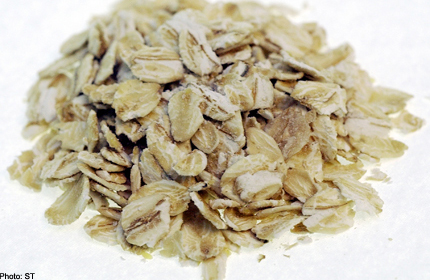
Oatmeal

Health.com reported that a review of 67 studies showed that diets high in soluble fiber, like the kind in steel-cut oats, decrease total and LDL ("bad") cholesterol.

So start your day with a steaming bowl of oats, which are full of omega-3 fatty acids, folate, and potassium.

One bowl a day will go a long way in keeping your arteries clear.


Salmon

According to health.learninginfo.com, salmon earned its reputation as a superfood because it is naturally high in omega-3 fatty acids.

Omega-3 fatty acid is healthy fat that helps reduce inflammation and keeps your blood flowing easily.

It also prevents the build-up of artery-clogging plaques in your heart and brain and reduces the risk of blood clots.

These fats work to keep your cholesterol levels healthy.

Eat salmon or other oily ocean fish like tuna, sardines or herring at least two times per week.

But according to studies done by Norwegian scientists in 2005, in an attempt to cut costs, some fish farmers are feeding their salmon with vegetable-oil instead of fish-oil.

They found that heart disease patients who ate the vegetable-oil fed salmon did not show the same cardiovascular improvements as patients who ate fish-oil fed salmon.

So if you want the maximum disease prevention benefits of salmon try buying wild-caught salmon instead.


Nuts
 
Nuts can be a great source of healthy oils, vitamin E and other substances that will help keep cholesterol levels in check.

Mayoclinic.com says the type of nut you eat isn't that important, although some nuts have more heart-healthy nutrients and fats than do others. Walnuts, almonds, hazelnuts and almost every other type of nut has a lot of nutrition packed into a tiny package.

The best part? They're inexpensive, easy to store and easy to take with you to work.


 Extra-virgin olive oil

Several studies in Mediterranean countries have shown that the incidence of heart disease is lower than would be expected by blood cholesterol levels which can plausibly be explained by the high amount of olive oil in the diet in the region.

Health.com reported that a huge body of research confirms that its monounsaturated fats lower LDL cholesterol and reduce the risk of heart disease.

Studies show that extra-virgin olive oil, which contains more antioxidants than more refined olive oil, may offer better protection against heart disease.

Extra virgin olive oil contains polyphenols - compounds that work as antioxidants to protect the cells in your body from free radical damage. These can reduce inflammation and may help to prevent some forms of cancer including breast, ovarian and colon cancers.

  
Berries

A Finnish study done in 2008 suggests that eating a moderate amount of berries may increase HDL (good) cholesterol and reduce blood pressure.

While all fruits and vegetables are high in antioxidants, berries contain particularly high levels of polyphenols and according to a report in the Nutritional review, berries lower inflammation and have a host of other cardiovascular perks.

They are chock full of anti-inflammatories, which reduce your risk of heart disease and cancer.
Other polyphenol-rich foods include chocolate, tea, and red wine, which also have been linked to lower heart disease risk.


Beans

According to Health.com, people who ate legumes—like beans and lentils—at least four times a week had a 22 per cent lower risk of heart disease than people who ate them less than once a week.

Online reports say that beans, such as Kidney, Pinto, Navy and Black, are naturally low in total fat, contain no saturated fat or cholesterol, and provide important nutrients such as fiber, protein, calcium, iron, folic acid and potassium.

Their health benefits are consistent with many existing health claims approved by the US Food and Drug Administration, specifically those related to heart disease and cancer.

Studies also suggest eating beans as part of a healthy diet to help manage diabetes and cut the risk of high blood pressure and stroke.


Broccoli

UK researchers said that eating broccoli could reverse the damage done to heart blood vessels by diabetes because the vegetable contains a compound called sulforaphane.

They tested sulforaphane the lab and found it increased enzymes that protect heart blood vessels and reduced the molecules that damage them.

This vegetable also has anti-inflammatory and detoxifying effects.
 

Thursday, October 27, 2011

Mothering a child with a terminal illness

How do you mother a child with a terminal illness?

With the same unconditional love, and more, that you would give a healthy one.

But for Mrs Sandra Fairclough, the pain of mothering her sick daughter is so intense she sometimes wishes her daughter had cancer instead of her current illness.

"There's nothing good about having cancer," says the 50-year-old, whose heart goes out to Ms Cynthia Lim, mother of six-year-old Charmaine.

Yesterday, The New Paper reported on how Charmaine lost her two-year fight against cancer, which studded her with tumours and filled her mouth with blood.

"It's very tiring for any mother in that position. It's physically, mentally and emotionally draining.

But at least the doctors can immediately tell you the good, the bad and the ugly," says Mrs Fairclough.

"They can give you timelines, how much time you have with your child."

But that's not the case with 13-year-old Chelsea, who suffers from brainstem hemangioma-inoperable - there are lesions in her brainstem, the most compact and important part of the brain, which bleed.

For Chelsea, multiple bleeds have left her paralysed neck down since she was nine years old.

Ticking clock

Other patients suffer from vision problems, loss of facial functions, loss of consciousness and other cognitive and physical deficits.

It is a terminal illness, and in Chelsea's case, she could die anytime.

Mrs Fairclough, a Briton who has lived here for the past 17 years, describes the illness to The New Paper on Sunday: "Your nerves in your brainstem are like 1,000 strands of spaghetti, each one carrying a signal to a certain part of the body.

"Too much water causes the spaghetti to break. In the same way, with more and more bleeds or breaks, Chelsea loses more and more functions in her body.

"One day, there might be so much damage that she can't recover and she dies."

When will this day come?

"That's the thing, you don't know. If you don't know, it's more terrifying," she says.

But she's far from fatalistic about it.

She's focused on letting Chelsea live her life to the fullest.

"I have to drive her to rebellion"

Chelsea likes reading, painting, and beat boxing. And like many other teenagers, she's into Facebook, thinks of doing "rebellious things" like getting a tattoo, and loves watching the Vampire Diaries.

But there're some differences.

Because Chelsea is paralysed from neck down, she needs people to turn book pages for her and paints with the wheels of her wheelchair.

Mrs Fairclough logs onto Chelsea's Facebook page on her behalf, and if Chelsea decides to get a tattoo, she will have to convince her mother to drive her to the parlour.

She says, with a laugh: "I literally have to drive her to rebellion. And unlike other mums of teenagers, I don't have to worry about what my child is doing online since I have full access."

Judging from Mrs Fairclough's energy, positiveness and wit, one can hardly tell how challenging the past 13 years have been for her and her family.

She runs a training and consulting company and is married to a computer consultant. They have two other children, aged 10 and 15, who are healthy.

Chelsea was born normal, but within the first six months of her life, she had undergone three surgeries.

By the time she celebrated her first birthday, she had spent 110 days in an intensive care unit at the KK Women's and Children's Hospital.

Fighting against the odds

Between her first and third birthdays, she had been hospitalised more than 10 times as the brainstem lesions affected various organs including her lungs and stomach.

She weighed just 8kg when she was three years old.

Looking at their child, who at that time tired easily and walked with a limp, Mrs Fairclough and her husband made a decision.

"You either hold your breath and hold your child real tight, or you let her experience all that she can in life. It was a real leap of faith for us," says Mrs Fairclough, adding that she's glad that Chelsea's condition stabilised enough when she was between three and eight years old, allowing her to swim, swing on a trapeze, do ballet and ride a horse.

"That was a wonderful period in Chelsea's life, and it brought me great joy to let her enjoy her life.

She got to be herself."

But Chelsea started to get weaker and tired easily from the time she was nine years old. That year, she became paralysed but her family assumed the loss of function would come back.

"It always had," says Mrs Fairclough.

However, Chelsea did not get better. Soon after, her breathing had to be assisted. A tracheostomy - an operative procedure that creates a surgical airway in the cervical trachea - was needed.

Mrs Fairclough resisted this initially, as there was a possibility that Chelsea would lose her ability to speak.

"How was I to communicate with her then?" she asks.

Mother and daughter worked out a way of communicating using eye signals.

Whisper of courage

Just before theoperation, the nurse asked Mrs Fairclough: "Have you recorded Chelsea's voice? You must."

"So I recorded this crazy conversation for all of us to always remember what she sounds like," she recalls.

The operation was a success, although it resulted in her voice being reduced to a mere whisper.

"My whisper has courage because it's all I've got. It's my only way to speak. The courage comes out through my whispers," says Chelsea, who enjoys expressing herself through her blog (theworldtochelsea.blogspot.com) and her art.

Says Mrs Fairclough: "What she has achieved is phenomenal. As a parent, you spend a huge amount of time asking, 'Why me?' But that's a very unproductive position to be in.

"Chelsea is suffering, not me. My job is to help her. At some point, I'll suffer enormously if she dies. But until that day, I haven't lost anything."

She believes that the experience of having a disabled child has humbled her and made her a better person.

"People say, 'I don't know how you do it.' It's true, you don't. Until you have to step up, you've no idea what you can do and how much strength you have," she says.

Remaining positive

"Everyone wants a perfect, easy life. But I won't trade this for anything. The reality is that my children have created my life, and they are amazing."

Chelsea quips: "I don't want to be boring and normal. I want to be awesome and different."
The road ahead remains rough for mother and daughter. But Chelsea is positive.

"Yes, I get frustrated. But there's no use getting frustrated. I don't know what I want to be, but I just know I have to always move forward and move on," she says.

It's the same with Mrs Fairclough, who celebrates every little triumph in Chelsea's life. On good days, Chelsea can move the index finger of her right hand.

So instead of exchanging fist pumps, mother and daughter exchange finger pumps instead.

Referring to the friendly alien's magical healing finger, Chelsea says as she leans her finger to touch her mother's: "ET phone home."


Thursday, October 20, 2011

Mobile phone, cancer "no link"

PARIS: The largest study of its kind found no link between long-term use of mobile phones and increased risk of brain tumours, the British Medical Journal (BMJ) reported on Friday.

Danish researchers found no evidence of enhanced risk among more than 350,000 mobile-phone subscribers whose health was monitored over 18 years.

Earlier research on the possible link between cell phone use and cancerous tumours has been inconclusive, partly due to lack of long-term data.

In June, the World Health Organisation's International Agency for Research on Cancer (IARC) classified the radio-frequency electromagnetic fields emitted by mobile phones as "possibly carcinogenic to humans."

The new study follows up an earlier investigation that compared the cancer risk faced by all mobile phone subscribers in Denmark -- some 420,000 people -- with the rest of the adult population.

Patrizia Frei, a postdoctoral research fellow at the Danish Cancer Society, and colleagues examined health records from 1990 to 2007 for 358,403 cell phone subscribers.

Overall, 10,729 tumours of the central nervous system were diagnosed.

But among people with the longest mobile phone use -- 13 years or more -- cancer rates were nearly the same as for non-subscribers.

"The extended follow-up allowed us to investigate effects in people who had used mobile phones for 10 years or more, and this long-term use was not associated with higher risks of cancer," the study concluded.

The findings, however, could not rule out the possibility of a "small to moderate increase in risk" for very heavy users, or people who have used cell phones for longer than 15 years.

"Further studies with large study populations where the potential for misclassification of exposure and selection bias is minimised are warranted," the researchers said.

In a commentary, Anders Ahlbom and Maria Feychting from Sweden's Karolinska Institute said the new evidence was reassuring but called for continued monitoring of health registers.

There are about five billion mobile phones registered in the world, a figure that continues to rise sharply along with the average amount of time spent using them.

The IARC does not issue formal recommendations, but its experts pointed in June to a number of ways consumers can reduce possible risk.

Texting and using hands-free sets for voice calls lower exposure to potentially harmful radiation, compared to device-to-ear voice calls, by at least 10-fold, they said.

Tuesday, October 18, 2011

People risk contracting infections at fish spa therapies

The Health Protection Agency (HPA) in the United Kingdom (UK) has found that fish spa therapies - where tiny toothless Garra Rufa fish nibble off the dead skin on hands and feet - can put people with weak immune systems or underlying medical conditions at risk of contracting infections.

The HPA has found that tank water containing the fish had a range of micro-organisms.

The agency also found that infections could be transmitted in a number of ways - from fish to person during the nibbling process, from contact with the contaminated water, or from person-to-person through sharing the same tank.

An HPA spokesman told the Sun newspaper in the UK on Oct 18 that the pedicures may spread blood-borne viruses like HIV or hepatitis.

High blood pressure ups birth defect risk: Study

LONDON (AP) - A new study suggests that high blood pressure during early pregnancy is what raises the risk of major birth defects - not the medicines used to control the condition, as previously thought.

Pregnant women have been warned for years to avoid drugs called ACE inhibitors during the later stages of pregnancy to avoid the possibility of birth defects. But whether it was safe to take them during the first trimester wasn't clear.

A 2006 paper concluded no, and two later studies found an increased risk with other blood pressure drugs as well. Researchers behind a new, larger study suggest it's the high blood pressure itself that is responsible for the higher risk of birth defects, not the medications.

Compared to women without high blood pressure, those with the condition were more likely to have babies with congenital heart, brain or spinal cord defects regardless of whether they were taking ACE inhibitors, other medications, or getting no treatment at all, the study found.

Friday, October 14, 2011

Caught in a lower income trap

MADAM Koh Ting Guat’s bedridden husband needs to be hooked up to an oxygen
machine to help him breathe.

She changes the ventilator tubes once a week, instead of the prescribed every
three days. That way, she reckons, the $5 pack of 50 tubes will last longer.

Such cutting of corners is not out of meanness but a lack of means.

A year ago, they were getting by as a middle-income family. She earns $2,800
a month as a shipping executive and her husband made $1,500 as a salesman.

But life threw them a curveball when he suffered a stroke, leaving him bedridden.

These days, the family makes do on her salary, with little left after paying for
their two sons’ school expenses, her husband’s medical bills, the wages of a Filipino
caregiver, utilities, transport and food.

The family has fallen into that sandwich class of low-middle income Singaporeans
who keep Acting Minister for Community Development, Youth and Sports
Chan Chun Sing awake at night.

In a media interview last week, he said that this group tend to be in jobs that are
vulnerable to being lost in the churn of economic cycles. They also tend to have
little savings to cushion the impact.

He identified them as being in the 11th to 20th percentile in terms of resident
household income, making an average of $2,681 a month. These are headed by a citizen or permanent resident, and with at least one working person.

Another set of figures, measuring individual incomes of Singaporeans, is sobering.

A joint report by the Manpower Ministry and the Department of Statistics
showed that monthly real incomes of Singaporeans at the 20th percentile grew 0.3
per cent over the decade – almost zero per cent a year.

In contrast, those in the middle saw real monthly incomes rise 1.2 per cent a
year over the same period, or 11.3 per cent over the decade.

Who are in this low-middle income group and how can they be helped?

Figures culled from various agencies show them to be mainly made up of large
families with school-going children, with the parents aged between 40 and 50. One
parent may have been recently retrenched, or they may be burdened by
heavy medical bills or in some cases, marital woes have added to their troubles.

Some may benefit from the Workfare Income Supplement Scheme, if they are
aged 35 and above and have gross monthly incomes of $1,700 or less, among other
conditions.

But apart from Ministry of Community Development, Youth and Sports
(MCYS) programmes to help with childcare costs and taking care of elderly parents,
little other help is available as they fall outside social assistance nets.

Government schemes such as Com- Care Transitions and the Work Support
Programme disqualify households with incomes above $1,500.

Those in the 1st to 10th percentile – with average monthly household incomes
of $1,400 – would qualify for benefits such as cash grants and utilities vouchers
under these programmes.

The “at risk” group in the 11th to 20th percentile, Mr Chan pointed out, form a
significant portion of the bottom third of the population. About 377,400 employed
residents aged 15 years and above earn between $2,000 and $2,999, according to labour statistics last year.

And, the minister feels, this group’s meagre savings – not more than a few
thousand dollars usually – mean they are on a dangerous keel in an increasingly uncertain global economy where a recession might be around the corner.

“You think I have savings now? If strike lottery tomorrow, yes,” said Madam
Koh.

She is thinking of taking on a second job to supplement her income. In the
meantime, scrimping and saving is all she can do. She is cutting back even on treatments for her husband.

Acupuncture treatments, for example, have been cut from thrice to twice weekly, saving $100.

“If a downturn really happens, I might have to sell this flat and move in with my
parents in Pasir Ris,” said Madam Koh of their four-room Sengkang flat.

Like many in their bracket, she and herhusband have only secondary education.
Singaporeans in this rung hold jobs such as technicians, security guards and in the service industry.

Top of their wish-lists: financial help from the Government when they hit dire
straits, or utility and transport vouchers, especially if a downturn occurs.

For Mr S. Ahmad, 55, his household is “already in a recession”.

A diabetic, he was a freelance travel agent earning about $1,000 a month until
June last year, when his right foot suddenly became swollen. He has been going for operations and follow-up treatment since. After insurance claims and government subsidies, he still has had to paymore than $10,000 in medical bills.

Now, his 25-year-old son, an optometrist earning about $2,500 monthly, is the
family’s sole breadwinner.

Adding further strain on Mr Ahmad’s finances are a $680 monthly housing loan instalment and another two young children who are still in school.

And as Mr Ahmad did not have the $1,000 advance to pay for a machine to
vacuum the pus from his foot last year, the infection spread upwards to his knee.

More medical treatments, bills and stress followed.

“I just have to borrow money from friends, what can I do?” he said resignedly in an interview in his Pasir Ris flat.

“I’m just living by the day.”

His 53-year-old housewife may resort to making kueh and selling it from home to raise funds, he said.

Another Singaporean trying to make ends meet is Mr Haron Ajit, 51.

He was a logistics supervisor until he suffered a stroke in June. His 21-year-old daughter is now the family’s sole breadwinner,earning about $2,500 from her nursing job. He has two sons – one in Secondary 4 and the other in Primary 1.

Mr Haron said: “We’re financially very tight now because of my condition.”

Apart from help to deal with medical expenses, social workers say some in the
low-middle income group also seek assistance for family problems like divorce, or after they lose their jobs.

Mr Hindran Maniam, a counsellor at Rotary Family Service Centre in Clementi,said: “They ask for counselling for problems like family violence, taking care of elderly parents, or communication issues with children.”

One middle-income wife, for instance,went for counselling at Fei Yue Family
Service Centre in Yew Tee after she discovered her husband had an affair. She was contemplating divorce, but was held back by fear that it would affect the household income.

Retrenchments are not a problem yet but Ms Florence Lim, the director of Covenant
Family Service Centre in Hougang,expects such cases to surface if the global economy drags Singapore down.

Industry veterans say the best way to help the low-middle income group is to raise
the upper limit for ComCare programmes to about $2,000 to $2,500.

This would open up qualifying for more benefits such as medical assistance,rental and utilities vouchers, and monthly cash grants.

Ms Lim, a social worker for three decades,said: “Why not also look at their net income after Central Provident Fund deductions,rather than gross household income,in deciding eligibility?”

This would widen the pool of those eligible,especially with rising living costs.

The Government could give slightly smaller ComCare subsidies to the low-middle income bracket compared to those at the bottom rung, Ms Rachel Lee, head of Fei Yue Family Service Centre and a social worker for 19 years, mooted.

Getting these workers to upgrade their skills so they can get jobs that are less susceptible to being wiped out by economic cycles was another popular suggestion,
but there are problems with that route.

“These people need money from work. Who’s going to feed their families when they go for training for those few months?” said Ms Lim.

She said CDCs do give a few hundred dollars a month to help these individuals during say the quantum should be higher.

Short-term assistance for about threemonths to help them tide over a difficult situation would also work well, said North East District Mayor Teo Ser Luck.

Mr Teo, whose district has been helping residents who do not qualify for Com-Care through its local scheme, said: “You have to be there when they need you.

That’s what this safety net is about – covering the cracks.”

Tuesday, October 11, 2011

Cancer patient prized sex more than life

He prized his love life more than his life. To his detriment.

He had prostate cancer and could have been cured if he had had the cancer surgically removed at an early stage.

But because that carries a risk of his losing his ability to have sexual intercourse, he decided to gamble with his life.

He had been married only recently.

Impotence would have meant an end to sex with his 28-year-old wife and the possibility of children.
So he ignored his doctor's advice.

He died six months later at 30.

Prostate cancer is the third most common cancer among men in Singapore. It develops in the prostate, a gland in the male reproductive system.

On average, there are 534 new cases a year and 105 deaths from prostate cancer.

Speaking to The New Paper on Sunday, leading urologist Peter Lim recalled his youngest patient: "His prostate cancer was detected by biopsy and it was still at an early stage.

"I told him to remove it urgently or he will die. He asked me, 'Any danger?' I said, 'Yes, you have a high chance of impotency.' And he ran away.

"At that time, we did not have the robots and it was an open operation. The chance of his being impotent was high, at 80 per cent," Professor Lim explained.


Death preferable to impotency?

He said 10 to 15 per cent of his patients "disappeared" at the very mention of "impotence".

"Sex is very important to most men. Even though they can still have a penile implant to get back their erections, many do not want to take the risk.

"They would run away and it is usually their wives who would encourage them and get them to return to the hospital for treatments."

Last month, The Journal Of The American Medical Association published a study that found that a high percentage of men could not have a normal sex life after being treated for prostate cancer.

Fewer than half of the 1,027 patients involved in the study and who had reported good sexual function before cancer had managed to regain it two years after treatment.

Those involved in the study were aged between 38 and 84. Overall, just 35 per cent of men in the surgery group, 37 per cent who were in the radiation group and 43 per cent of those in the brachytherapy group could have sexual intercourse two years after treatment.


Sex life still possible after surgery

Still, it is possible for men who have had surgery to experience an improved sex life two years later.
Alternative treatments like radiotherapy may not necessarily lower the risk of impotency. It's just that the effect could be delayed, said Dr Lewis Liew, a urologist and laparoscopic surgeon.

Prostate cancer tends to develop in men older than 50. But Prof Lim has treated patients as young as 41. In the last 10 years, he had two patients, both aged 30, hit by prostate cancer.

He said: "The younger you are, the more aggressive the tumour will be. You must remove the tumour urgently or you will die.

"The minute you know that you have cancer, you cannot be so stupid to go shopping around for another doctor. They are going to say the same thing to you."

He added: "Some patients hope to find one doctor who would say to them, 'Oh, don't worry! I can give you this medicine and you will be okay.'

"Men should know that if you are not that young and you get prostate cancer, it is not a bad cancer to have, provided you quickly treat it."

He recalled another patient, a 52-year-old Caucasian, who refused to have the tumour surgically removed because he was newly married.

Prof Lim said: "He told me, 'Why should I go for the operation and be impotent?' I told him, 'It's about your life, you know'."

Within 18 months, the cancer spread to his liver and, even though he started chemotheraphy, he died three months later.


Best chance for recovery

Prof Lim, who sees five times more foreigners than Singaporeans seeking treatment for prostate cancer, added: "We have the best treatment in Asia.

"We have a few robots here that can perform the surgery accurately. With robotic surgery, the risk of impotency is low, at 25 per cent.

"In fact, I just operated on a patient from Mauritius. He was in hospital for three to four days and after he returned to Mauritius, he called to tell me that he had an erection!"

What women say... 
"Most men define their masculinity through sex and to some, especially those still in their prime, sex is a big part of their lives. Losing the ability to perform is like losing sight of who they are, thus the feeling that life is not worth living." - Miss Cheryl Lim, 27, business owner

"While sex may be crucial in a marriage, it is not the only thing. When you lose your life, you lose everything, not just sex." - Ms Shino Yee, 37, a beautician

"Men need to know that women want more than just sex. If they can't even take care of themselves, how are they capable of taking care of their loved ones?" - Miss Fei Wong, 32, regional assistant director of sales

"While I can understand how men value their 'manhood', it is stupid to put health and life at such a risk." - Miss Deborah Dayani Nanayakara, 26, public relations manager

Sunday, October 2, 2011

Death of delivery man moves nation

Touching story to highlight the act of kindness and the beauty of sharing to other needy:

SOUTH KOREA - The death of a Chinese food delivery man who regularly donated a portion of his small salary to help the needy is touching the heart of the nation.

People he barely knew have attended his funeral, expressing condolence. They praised him for carrying out the spirit of sharing despite living on a shoestring budget.

Kim Woo-su, 54, died Sunday, two days after his motorcycle collided with a car while on a delivery run.

Though Kim scratched a living as a delivery man of a small Chinese restaurant, he had given part of his salary to children in need through Child Fund Korea since 2006. He had earned 700,000 won ($600) a month from the restaurant in the southern Seoul town of Ilwon.

On top of his years of donations, he left 40 million won ($34,000) in life insurance money to the charity. He had insured himself against traffic accidents because his job put him at risk of them.

Orphaned at 7, Kim once served time for arson. Six months before release, he began to make donations for children who lived a hard life like he did. His decision to give came in jail after he read about children suffering from domestic violence.

Though Kim pledged to be an organ donor, his wish did not come true as hospitals could not find his family, whose consent was needed.

"I live a very happy life by making donation for children," Kim once said in an interview with a local TV network. "I would rather spend less than stopping my support for children. I wish I could live a long and healthy life so that I can support them as long as possible."

News of his death served as a wakeup call to those who regard giving as someone else's job.

"I felt bad when I heard the news. I failed in business several times, but I didn't make a small effort to help others even when I was well off," said Park Hyun-chul, who learned of Kim's story on Twitter.

Though Kim was single and had never married, he was like a father to the children he supported.

Except for a brief period three years ago when he had to cut his donation due to lung surgery, he donated steadily.

One of the children who received money from him is a 16-year-old girl, surnamed Shin, who lives with her grandmother and three sisters.

"I didn't know you have done so much for me. Not knowing how precious your donation was, I would complain and whine about my situation. I will do my best in everything and help others like you," said Shin in a letter to Kim after his death.

President Lee Myung-bak and politicians have also conveyed messages of condolence.

"Kim had shared what he had with others and proved that small good deeds can give hope and courage to others," Lee said on the Blue House Facebook page.

"I express condolences to Kim, who showed the spirit of caring and sharing. Kim reminds me of an old Chinese saying that everyone around me is greater than me," said Ji Sang-wook, lawmaker of the Liberty Forward Party on Twitter.

Monday, September 26, 2011

Workplace deaths in first half of 2011 up year-on-year

The number of workplace deaths went up in the first half of 2011, compared to the same period last year.

There were 30 this year, five more than the 25 recorded last year, the Workplace Safety and Health Council and Ministry of Manpower (MOM) said in a joint media statement on Monday.

Falls from height accounted for almost half of the fatalities. Other causes included being struck by a moving object, and fires or explosions.

The number of occupation-related diseases also increased.

The number more than doubled, from 124 in that period last year to 361 this year.

The authorities said that this was due mostly to reports on deafness induced by work, which were found during an island-wide audit by the MOM.

Tuesday, September 6, 2011

Fear factor

Are we very afraid yet? Or merely afraid?

Economists and those who make a living spreading dread have increasingly preached approaching doom, so has the gloom filtered down to the heartlands?

Or is the feeling merely one of irrational pessimism?

"Last time, my customers would buy sea bass, grouper, codfish, salmon, some sotong and even Tiger prawns," bemoans Phua Ah Teng, a fishmonger who runs a stall at the wet market at Block 216 Bedok North Street 1.

"Now? Aiyoh, some of them don't spend even $10 at my stall for their weekly marketing."

Uncle Teng, whom I've known since I was a teenager, does not like how his business has dipped in the past months. Times are bad, he tells me.

"Better save your money. But buy some fish from Uncle first lah."

I didn't. Only because we don't really eat fish as a family. Except when it's sashimi at Japanese restaurants.
(And those visits - I have decided after listening to Uncle Teng - shall now be few and far between.)

You see, Uncle Teng, 64, thinks of his business as a barometer for the economy.

He explains: "The sales I do is like the economy's weighing scale for me."

He leans over and whispers: "I order according to demand. On weekends and paydays, better supply. Nah boh leh, sibei cham ("If not, it's very pitiful" in Hokkien).

"And then, sooner or later, you'd see me selling only ikan bilis."

That's because some folks now opt for sea bream instead of sea bass. Cuttlefish instead of squids.

Grey prawns, not Tiger prawns.

Unless it's payday.

Five cans of drink and one cup of kopi cost us $10. The dinner, made up of individual orders of chicken rice, fishball noodles, laksa and western food, totalled another $40-$50.

Scary. "At the rate we're going," I told my son, "Your mum's gonna be broke."

By the way, Singapore's inflation rate is expected to remain high in the next few months, said the Monetary Authority of Singapore in its latest quarterly report on the economy.

But it's sticking to its 4 to 5 per cent forecast for the consumer price index.

Other hawkers are also groaning.

Drinks seller Tang Moi Kheng, who said she had no choice but to raise prices at her stall in Ang Mo Kio Food Centre, says: "If I keep the old prices, how to survive with the rising costs?"

Mr Zhou Bin, a helper at an economy rice stall, has noticed that his customers have cut down on the number of dishes - from four to three or three to two.

"A little penny-pinch here and there, and it would make a difference," he says in Mandarin, referring to both his business and his customer's budget.

Two weeks on the ground - in and out of wet markets and coffee shops - and I decided to impose a new rule on my own family.

I declared: "We're cutting down on eating out. Kids, you are limited to only one can of soft drink, and no, it doesn't matter how thirsty you are."

Son and daughter were horrified. How much really can we save, asked my son.

Food for thought.

Bank officer Cheryl Ho, 43, says: "Food expenses are difficult to cut down on, but we still need to eat, right?"

It's worse for her because she works in Shenton Way and "the food there is even more expensive".

Her family of four have "already cut down on overseas holidays - such as Hong Kong, Australia - and now, can only go to Malaysia".

But what else can she do?

It's a question more frequently heard, with no clear answer.

Mrs Iris Ooi, 44, who owns an exclusive boutique in Bukit Timah Plaza, admits to sleepless nights over rising prices from property to daily needs.

Her daughters are four and seven. She says: "Prices have rocketed ridiculously. Even the price of my daughter's branded milk powder just keeps rising, every other month."

So she resorts to bulk purchases when there's an offer to stock up.

Housewife Fausiah Ahmad, 22, who gave birth to a baby boy last month, wishes she and her despatch rider husband - they married in January last year - had been more careful in family planning.

It's worse now as they will also be getting the keys to their four-room HDB flat in three months.

She says: "The timing is all so salah (wrong in Malay)."

So how?

Oh, no disposable diapers - cloth ones are cheaper as you can wash them, she says.

Is such penny-pinching justified? Is it really reflective of a general siege mentality?

Not if you go by the thousands of bargain hunters at the four-day Comex 2011 (358,000 visitors after just two days) and the anxiety of shoppers to get into the newly-opened H&M store on Orchard Road.

Ms Adele Chia, 37, is not too concerned.

The director of sales and customer management only "just keeps feeling that money is getting smaller".

"Truth is, couples don't really feel the rise that much. If you need to spend, you'll still do so.

"Occasionally, we opt for housebrands or cheaper brands, then we end up thinking, it's just the two of us. How much more expensive can that be?"

It's been a while since I've been bothered by the word "inflation". The last time was when I had to plough through my Economics textbook in Pre-U.

And then there is this perspective from tuition teacher Seow Pei Pei. She and her husband splurged on two trips - one to New Zealand in November and another to South Korea next February - at the recent Natas Fair.

Madam Seow, 32, says: "Look, haven't you heard that all things seem to indicate that 2012 will mark the end of the world?

"You watch the movies - Hong Kong ah, Hollywood ah - and you keep hearing the same thing. So why worry?"

So yes, don't worry, be happy. If you dare.

Riots, rebellion, revolution

Riots, larger than the kind that happened in the United Kingdom last month - but this time over food.

Squatter rebellions. Slums where skyscrapers once stood.

All in the US next year.

Can this really be a picture of the world's richest, most powerful country?

Yes, says Mr Gerald Celente, the chief executive officer of Trends Research Institute.

The man is no wacko conspiracy theorist. He is the best-selling author of Trend Tracking and Trends 2000 and is renowned for his accuracy in predicting future world and economic events.

He is also widely quoted in newspapers and is sought after for his presence on talk shows like Oprah.

He predicted the 1997 Asian currency crisis, the subprime mortgage collapse and the devaluation of the US dollar.

"America's going to go through a transition the likes of which no one is prepared for," Mr Celente told Fox News.

In another interview, Mr Celente went further.

"There will be a revolution in this country," he said.

"It's not going to come yet, but it's going to come down the line and we're going to see a third party and this was the catalyst for it: The takeover of Washington, D.C. in broad daylight by Wall Street in this bloodless coup.

"And it will happen as conditions continue to worsen.

"...It's going to be very bleak. Very sad. And there is going to be a lot of homeless (people), the likes of which we have never seen before. Tent cities are already sprouting up around the country and we're going to see many more."

"We're going to start seeing huge areas of vacant real estate and squatters living in them as well. It's going to be a picture the likes of which Americans are not going to be used to. It's going to come as a shock and with it, there's going to be a lot of crime."

But one person writing in news sharing website InfoBarrel put things in perspective.

The person wrote: "Simply put, Gerald Celente's predictions for 2012 are purely guess work, although based on logic and data analysing. This means he could be wrong just like anyone else. The fact that he was right before means nothing today.

"...There could very well be some food and tax riots. People riot all the time. This doesn't mean it will be common."

Monday, August 22, 2011

10 cancer signals

FOR some women, cancer comes hand-in-hand with another syndrome: denial. They may not want to face the reality that they have cancer, or may not want to go through treatment because they think they are doomed to death anyway.

In some cases, denial starts early on at the symptom stage, because they may not even want to consider that it could be cancer at all.

When women neglect to pay attention to cancer symptoms out of denial, fear or ignorance, they could be missing out on a valuable opportunity to detect cancer and treat it early.

Since there are so many different types of cancers that could affect us, the symptoms vary widely between different conditions and different people as well. There are also many instances where cancers do not produce symptoms at all, or symptoms only appear at late stages.

However, we can easily identify about 10 symptoms that should immediately send up warning flags in our minds and prompt us to seek medical advice. These symptoms can be easily mistaken for other conditions or as benign symptoms, but you shouldn't be so quick to shrug them off without proper medical advice.

I will explain each of these 10 symptoms below.

#1: Unexplained weight loss

Say you haven't been exercising more than usual lately, or have not even been exercising at all. Or you haven't gone on a diet and have been eating the amounts that you usually do. Yet you've been steadily losing a significant amount of weight, for instance 4kg or 5kg within a month.

This kind of unexplained weight loss is not necessarily a reason to be happy. It could be a sign of cancer, especially cancer of the colon or other parts of the digestive system.

You should see your doctor and provide as much details as possible about when you began losing weight and how much you have lost. Your doctor will conduct some tests to rule out an overactive thyroid and ask you to undergo CT scans to look at your internal organs.

#2: Bloating

Bloating is something that most women have become used to. We experience bloating at some point or other in our lives, whether due to PMS, water retention, or indigestion.

If you start to experience bloating that is unusual and not related to your menstrual cycle, you should start to pay close attention to what's happening. Are you so bloated that your jeans, trousers or skirts can't fit? Did it appear suddenly and is now occurring regularly over a few weeks?

Is the bloating accompanied by pain or tenderness in the abdomen or pelvis? Do you constantly feel full and unable to eat, even though you haven't eaten much?

All these signs have been known to occur in women with ovarian cancer. If you experience any of the above, it would be wise to see a doctor to check your ovaries because this type of cancer is difficult to detect in the early stages.

If you are able to catch it early, your chances of a better outcome are higher.

#3: Unusual bleeding

Any instance of vaginal bleeding that is out of the ordinary should be cause for concern. As a woman, you should know your body and your monthly cycle well enough to be familiar with when you should bleed, how much bleeding you experience, and how you feel.

Basically, you should not ignore any bleeding that is abnormal from what you normally have. If you have very regular cycles, but suddenly experience bleeding or spotting between periods, then it is abnormal.

If you usually have light flows, but suddenly have heavy and painful periods, then you should also have it checked out.

Other symptoms that may accompany unusual bleeding are unpleasant odours or discharge, bleeding after intercourse or blood in the urine. All these types of unusual bleeding should be checked out because they could be signs of cervical or uterine cancers.

Bleeding may also originate from the gastrointestinal tract or parts of the urinary system, such as the bladder or kidney.

If you discover blood in your urine or your stool, it could be due to a number of things, such as haemorrhoids, or blood from the vagina. But it could also be a sign of bladder, kidney or colorectal cancer, so you should see a doctor to rule these out.

Bladder, kidney or colon cancer can also trigger symptoms like changes in bowel and bladder habits. You should be concerned if you develop unusual bowel and bladder movements, such as continual constipation, diarrhoea or stomach aches. More frequent urination, or pain during urination or during a bowel movement, are also worrying signs.

Finally, if you cough up blood more than once, you should also get medical advice.

#4: Breast changes

The breasts hold a lot of clues for women. We've been told countless times that we need to know our breasts intimately and examine them once a month for lumps and other changes within the breasts, on the surface of the skin, as well as on and around the nipples.

Redness and thickening of the skin on the breasts should be looked at immediately as this could indicate inflammatory breast cancer, which is a very rare but aggressive form of breast cancer. A rash, flaking of the skin, or itchiness that persists over weeks should also be examined.

Changes to the skin surface may also include swelling, dimples, puckerings or rough spots.
Observe your nipples as well and look for changes in appearance that are not normal. If your nipples suddenly start producing discharge (if you aren't breastfeeding), become flattened, or turn in or out (contrary to what it usually is), it is best to see your doctor or gynaecologist.

#5: Skin changes

Changes in your skin texture, warts, moles or pigmentation, are well-known signs of skin cancer.
Melanoma is a common type of skin cancer and has symptoms like spots on your skin that have unusual changes in colour, size, shape or border. If certain spots on your skin appear to be funny-looking or different from your usual skin pigmentation, get it checked out.

Look out for moles or warts that change, such as growing excessively, sprouting hair, or changing colour or shape. Be wary if you suddenly develop bleeding on your skin or excessive scaling too.

Observe the changes for one or two weeks, and if they persist, see your family doctor or a skin specialist.

#6: Difficulty swallowing and constant indigestion

Have you found it difficult to swallow your food lately? If you feel as if food is always caught in your throat when you eat, take note of this, as it could be a symptom of oesophageal or throat cancer.

Repetitive indigestion, not linked to pregnancy or any other apparent reason, is also a red flag. If you constantly feel nauseous, discomfort or a burning feeling in your upper abdomen, or vomit blood, you could be showing early signs of oesophageal, stomach or throat cancer.

#7: Persistent pain, fever or cough

These are three of the most vague and common symptoms that accompany many illnesses. It is extremely difficult to pinpoint them to cancer or any particular condition, but they are also not to be ignored or neglected.

Unexplained pain, in any part of the body, may point to some cancers. If it persists over a period of time, and cannot be attributed to any obvious physical wounds or conditions, then you should see your doctor and describe it in as much detail as possible.

Take note of when the pain arises, what kind of pain it is, and what exacerbates it.

A fever is often a sign of an infection, like influenza or some other viral or bacterial infection, but it can also point to certain types of cancer. The American Cancer Society says that fever is one of the symptoms that occur with early blood cancers such as leukaemia or lymphoma.

Of course, you do not have to run to your doctor in fear every time you have a fever. The point is that unexplained and prolonged fever needs to be examined, not ignored.

A very prolonged cough (one that lasts more than three or four weeks) that is unrelated to a cold or influenza, should also be noted. If lung cancer is suspected, especially if you are a smoker, your doctor should examine your throat, check your lung functioning and ask for X-rays.

#8: Swollen lymph nodes

Your lymph nodes are found in the sides of your neck, under your armpits, and around the groin area. Usually, they may become mildly swollen if you have an infection, and will subside once the infection has been treated or healed.

However, if the lymph nodes get progressively larger for more than a month, or develop lumps that do not go away, and are not related to a treatable infection, then the concern may be that it is linked to cancer, such as blood and lymphatic cancers.

#9: Mouth changes and sores

If you smoke or used to, you should look out for signs of oral cancer. Symptoms include white patches in the mucosa of the mouth, white spots on the tongue, or sores on the lips or in the mouth.

Other sores on the skin and genital area that won't heal, or cause excessive bruising or bleeding, should also be examined by a doctor.

#10: Fatigue and weakness

Finally, we come to the last potential symptom of cancer that is most commonly ignored - fatigue. Obviously, fatigue is such an everyday symptom of so many conditions that we cannot jump to the conclusion that it must be caused by cancer.

However, fatigue caused by cancer will probably be unlike the usual tiredness that you experience after a long day at work. It may plague you even when you have had sufficient rest or have not exerted yourself. It will be prolonged, unabated by rest, and may be accompanied by unexplained weakness.

You will realise that the 10 signs and symptoms described above are very subtle and vague indications of a problem. It is not easy to distinguish symptoms of cancer, and you should not work yourself up into a panic just because you suddenly have a mole on your arm or you are feeling a little tired.

Just keep in mind that if these symptoms persist, or appear without due cause, then it is a good idea to discuss your concerns with your doctor. It could be nothing, but it could also save your life.

Datuk Dr Nor Ashikin Mokhtar is a consultant obstetrician & gynaecologist (FRCOG, UK). The information provided is for educational and communication purposes only and it should not be construed as personal medical advice.


Related Posts Plugin for WordPress, Blogger...