SINGAPORE: The
Ministry of Manpower (MOM) and the Central Provident Fund (CPF) Board
will increase their joint enforcement inspections on employers by
ten-fold from this November.
The increase from 500 to 5,000
inspections a year is meant to improve compliance with the CPF Act and
Employment Act so that employees may enjoy their basic employment
rights.
This is particularly so with more vulnerable groups like low-wage workers.
Areas
of focus include payment of CPF contributions, on-time payment of
salary, provision of paid annual and medical leave, and working-hour
requirements.
Greater attention will also be placed on industries
where the number of cases of non-compliance with the CPF Act and the
Employment Act tend to be higher.
These include the food and beverage, retail, security and cleaning industries.
In a joint statement on Thursday, MOM and CPF Board say they will complement enforcement with education.
Through
the "I Know My Employment Rights, I Do It Right" campaign, workers will
be educated about their employers' obligations towards them.
Employers will also be educated about their responsibilities.
Tapping
the power of the community to multiply the effect of the campaign, a
hotline and an email address will also be advertised.
Workers and the public can report non-compliance of the CPF Act and Employment Act through the hotline or the email address.
In the Manpower Blog,
Acting Minister for Manpower Tan Chuan-Jin commented on why enforcement
and education on the ground about employment rights is necessary.
He
noted that while most employers are responsible, there are some who
continue to flout the law, hoping to benefit from short-term gains. This
created the need to step up enforcement.
He said it is also
crucial for workers to understand that going along with their employers
to forgo their CPF contributions is to their disadvantage, as they would
be missing out on government subsidies such as Workfare.
Mr Tan
commented that even as efforts are made to increase the wages of
low-income workers, inclusive growth is not just about money.
A
progressive workplace and fair work practices ensure that employers are
responsible and employees, particularly low-wage workers, are not
shortchanged, he said.
Showing posts with label Ministry of Manpower (MOM). Show all posts
Thursday, September 27, 2012
Tuesday, September 11, 2012
Government to clamp down on errant bosses
The Government has tightened its policies on the hiring of foreign
manpower, with key changes to the Employment of Foreign Manpower Act
passed in Parliament yesterday.
The changes will give the Ministry of Manpower (MOM) more teeth to act against errant employers and foreign workers, as well as syndicates that have set up increasingly complex sham operations to illegally bring in and supply foreign workers.
The amendments will come into effect by the end of the year.
Acting Manpower Minister Tan Chuan-Jin noted that, while most employers are responsible, there are some who seek to get around the work- pass framework for foreigners.
He said: "The changes will ensure that employers pay the true costs of hiring foreign workers and create a level playing field for law-abiding employers. They also seek to stem the worst abuses against foreign workers."
Mr Tan noted that some errant employers who have been debarred resort to applying for work passes under other people's names, in order to continue using foreign manpower.
To prevent the use of such tactics, associates of the debarred employer may be debarred as well when the changes kick in.
Employers' scope of responsibilities may also be broadened, if necessary, with the imposing of pre- and post-employment conditions so that foreign workers can be better protected.
For example, employers might have to ensure that the In-Principle Approval letter stating employment terms is sent to a foreign worker in his native language before he leaves his country.
This reduces reliance on unscrupulous middlemen.
MOM will also have greater powers to investigate cases, including the power to enter and inspect premises by force, such as when there is reasonable belief of a breach of the manpower regulations.
One key change will also make a distinction between administrative infringements and criminal offences when breaches occur. Breaches are currently classified as criminal.
The change means that there would be fewer cases heard in court, so offences can be dealt with faster.
Still, steps will be taken to ensure that penalties for administrative infringements are severe and in line with the offences committed.
Commissioners for Foreign Manpower will look into administrative infringements. They can impose administrative financial penalties of up to S$20,000, and debar employers from applying for and renewing work passes.
The changes will give the Ministry of Manpower (MOM) more teeth to act against errant employers and foreign workers, as well as syndicates that have set up increasingly complex sham operations to illegally bring in and supply foreign workers.
The amendments will come into effect by the end of the year.
Acting Manpower Minister Tan Chuan-Jin noted that, while most employers are responsible, there are some who seek to get around the work- pass framework for foreigners.
He said: "The changes will ensure that employers pay the true costs of hiring foreign workers and create a level playing field for law-abiding employers. They also seek to stem the worst abuses against foreign workers."
Mr Tan noted that some errant employers who have been debarred resort to applying for work passes under other people's names, in order to continue using foreign manpower.
To prevent the use of such tactics, associates of the debarred employer may be debarred as well when the changes kick in.
Employers' scope of responsibilities may also be broadened, if necessary, with the imposing of pre- and post-employment conditions so that foreign workers can be better protected.
For example, employers might have to ensure that the In-Principle Approval letter stating employment terms is sent to a foreign worker in his native language before he leaves his country.
This reduces reliance on unscrupulous middlemen.
MOM will also have greater powers to investigate cases, including the power to enter and inspect premises by force, such as when there is reasonable belief of a breach of the manpower regulations.
One key change will also make a distinction between administrative infringements and criminal offences when breaches occur. Breaches are currently classified as criminal.
The change means that there would be fewer cases heard in court, so offences can be dealt with faster.
Still, steps will be taken to ensure that penalties for administrative infringements are severe and in line with the offences committed.
Commissioners for Foreign Manpower will look into administrative infringements. They can impose administrative financial penalties of up to S$20,000, and debar employers from applying for and renewing work passes.
Monday, August 27, 2012
Worker dies after falling into hole at worksite
SINGAPORE - An Indian national died after falling into a 68m deep bore hole at the Tuas West extension line worksite.
The Ministry of Manpower (MOM) said its preliminary findings revealed that the workers were in the process of lowering a rebar cage when it got dislodged from its lifting chains and dragged the 30-year-old worker into a 1.5m-wide bore hole.
A rebar cage is made of steel and is commonly used to reinforce concrete structures.
The Straits Times reported that the police was notified of the accident at around 2.50pm last Saturday and subsequently dispatched Singapore Civil Defence Force (SCDF) rescue vehicles to the scene.
Eyewitnesses said that the SCDF officers continued the rescue operation until the body of the worker was recovered the next day, almost 24 hours later.
The Indian worker was pronounced dead by SCDF officers at 1.40pm on Sunday.
A MOM spokesperson said they have instructed the contractor, China Railway 11 Bureau Group Corporation, to cease operations.
Officers from MOM's Occupational Safety and Health Inspectorate are investigating the accident.
Construction for this project commenced early this year and is set for completion in 2016.
The Ministry of Manpower (MOM) said its preliminary findings revealed that the workers were in the process of lowering a rebar cage when it got dislodged from its lifting chains and dragged the 30-year-old worker into a 1.5m-wide bore hole.
A rebar cage is made of steel and is commonly used to reinforce concrete structures.
The Straits Times reported that the police was notified of the accident at around 2.50pm last Saturday and subsequently dispatched Singapore Civil Defence Force (SCDF) rescue vehicles to the scene.
Eyewitnesses said that the SCDF officers continued the rescue operation until the body of the worker was recovered the next day, almost 24 hours later.
The Indian worker was pronounced dead by SCDF officers at 1.40pm on Sunday.
A MOM spokesperson said they have instructed the contractor, China Railway 11 Bureau Group Corporation, to cease operations.
Officers from MOM's Occupational Safety and Health Inspectorate are investigating the accident.
Construction for this project commenced early this year and is set for completion in 2016.
Monday, June 4, 2012
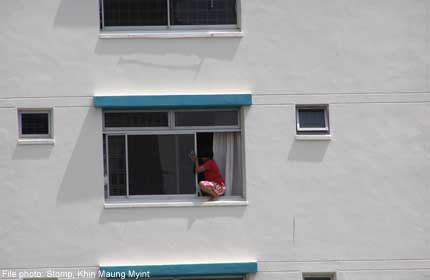
Stricter rules for window cleaning by maids
The Ministry of Manpower (MOM) today announced stricter rules for window cleaning by foreign domestic workers (FDW).
From today, employers of FDWs shall not allow their maids to clean the exteriors of windows except where two conditions are met.
First, the employer or an adult representative of the employer must be physically present to supervise the FDW.
Second, window grilles have been installed and are locked at all times during the cleaning process.
These rules will apply to all homes, except for those whose windows are at the ground floor or along common corridors.
Failure to comply with these tightened requirements constitutes a breach of the Employment of Foreign Manpower (Work Passes) Regulations.
Employers who fail to comply may be prosecuted and permanently barred from hiring a maid.
The ministry is also planning to double the penalties from the current $5,000 fine and/or six months' jail to $10,000 fine and/or 12 months' jail to serve as added deterrence. This s is part of the ongoing review of the Employment of Foreign Manpower Act and its subsidiary legislation later this year.
While anyone who cleans the exterior windows of their homes should follow these safety requirements, MOM emphasises that when maids are tasked to do domestic work, the onus is on both employers and FDWs themselves to ensure the FDWs' safety.
In a statement, MOM said: "Many FDWs do not come from high-rise environments and may not be used to the urban living environment in Singapore. They are therefore likely to be unaware of the risks in a high-rise domestic setting. Apart from window cleaning, employers should take necessary steps to eliminate the risks involved in other tasks by following the Dos and Don'ts covered in MOM's guidebooks and pamphlets."
"For example, if FDWs are required to hang laundry outside the window using bamboo poles, employers should ensure their FDWs do not stand on an elevated platform or tip toe while handling the poles, and do not overload the pole with too many clothes."
The new measures come at the back of nine work-related FDW fall from height fatalities since January 2012. This is a significant increase from just four cases registered in 2011 and eight in 2010.
MOM said that five of the nine fatalities were related to unsafe practices in cleaning windows.
A circular will be sent to all existing maid employers to notify them of the tightened safety requirements.
MOM will also be updating its training materials for first-time FDWs and FDW employers.
Members of the public can take a photo of unsafe work practices that they witness then send them to MOM using the recently launched free SNAP@MOM application or through email at mom_fmmd_cr@mom.gov.sg. All information will be kept strictly confidential.
From today, employers of FDWs shall not allow their maids to clean the exteriors of windows except where two conditions are met.
First, the employer or an adult representative of the employer must be physically present to supervise the FDW.
Second, window grilles have been installed and are locked at all times during the cleaning process.
These rules will apply to all homes, except for those whose windows are at the ground floor or along common corridors.
Failure to comply with these tightened requirements constitutes a breach of the Employment of Foreign Manpower (Work Passes) Regulations.
Employers who fail to comply may be prosecuted and permanently barred from hiring a maid.
The ministry is also planning to double the penalties from the current $5,000 fine and/or six months' jail to $10,000 fine and/or 12 months' jail to serve as added deterrence. This s is part of the ongoing review of the Employment of Foreign Manpower Act and its subsidiary legislation later this year.
While anyone who cleans the exterior windows of their homes should follow these safety requirements, MOM emphasises that when maids are tasked to do domestic work, the onus is on both employers and FDWs themselves to ensure the FDWs' safety.
In a statement, MOM said: "Many FDWs do not come from high-rise environments and may not be used to the urban living environment in Singapore. They are therefore likely to be unaware of the risks in a high-rise domestic setting. Apart from window cleaning, employers should take necessary steps to eliminate the risks involved in other tasks by following the Dos and Don'ts covered in MOM's guidebooks and pamphlets."
"For example, if FDWs are required to hang laundry outside the window using bamboo poles, employers should ensure their FDWs do not stand on an elevated platform or tip toe while handling the poles, and do not overload the pole with too many clothes."
The new measures come at the back of nine work-related FDW fall from height fatalities since January 2012. This is a significant increase from just four cases registered in 2011 and eight in 2010.
MOM said that five of the nine fatalities were related to unsafe practices in cleaning windows.
A circular will be sent to all existing maid employers to notify them of the tightened safety requirements.
MOM will also be updating its training materials for first-time FDWs and FDW employers.
Members of the public can take a photo of unsafe work practices that they witness then send them to MOM using the recently launched free SNAP@MOM application or through email at mom_fmmd_cr@mom.gov.sg. All information will be kept strictly confidential.
Wednesday, May 30, 2012
CPF minimum sum to be raised to $139,000
The CPF minimum sum will be revised upwards to $139,000 from the
previous $131,000 from July 1 said the Ministry of Manpower (MOM) on
Wednesday.
The new minimum sum will apply to CPF members who turn 55 from July 1, 2012 and June 30, 2013.
The Medisave minimum sum will also be raised to $38,500 from the previous amount of $36,000.
Members will be able to withdraw their Medisave savings in excess of the Medisave minimum sum at or after age 55.
The maximum balance a member can have in the Medisave account is fixed at $5,000 above the Medisave minimum sum.
Corresponding to the increase in the Medisave minimum sum, this ceiling would also be increased to $43,500 from $41,000.
Any Medisave contribution in excess of the prevailing ceiling will be transferred to the Special Account if the member is below 55 years old or his Retirement Account if he is above 55 and has a shortfall in his minimum sum.
The CPF board said that the revisions, which have been adjusted for inflation, are to ensure that Singaporeans have sufficient savings to meet their healthcare expenses.
The new minimum sum will apply to CPF members who turn 55 from July 1, 2012 and June 30, 2013.
The Medisave minimum sum will also be raised to $38,500 from the previous amount of $36,000.
The maximum balance a member can have in the Medisave account is fixed at $5,000 above the Medisave minimum sum.
Corresponding to the increase in the Medisave minimum sum, this ceiling would also be increased to $43,500 from $41,000.
Any Medisave contribution in excess of the prevailing ceiling will be transferred to the Special Account if the member is below 55 years old or his Retirement Account if he is above 55 and has a shortfall in his minimum sum.
The CPF board said that the revisions, which have been adjusted for inflation, are to ensure that Singaporeans have sufficient savings to meet their healthcare expenses.
Friday, April 27, 2012
Some 9,990 workers laid off in Singapore
SINGAPORE: Amid more moderate economic growth, more workers were laid off in 2011, especially in the fourth quarter of the year.
Some 9,990 workers were laid off last year, up slightly from the 9,800 in 2010.
But the Ministry of Manpower (MOM) said seven out of 10 residents who were laid off were re-employed within a year.
This is according to MOM's yearly Redundancy and Re-employment Report.
With a larger employment base, however, the incidence of redundancy dropped.
5.5 workers were laid off for every 1,000 employees in 2011, down from 5.7 in 2010.
Redundancies for the past two years remain substantially lower than the more than 23,000 workers laid off during the recession in 2009.
Mr Yeo Guat Kwang, director, Workplace Safety and Health, NTUC, said: "The economic situation is getting more challenging, and the economic cycle is getting shorter, so it's inevitable that we'll see such figures going up and down.
"Fortunately, I think based on the last two years' figures, we don't have a significant trend to show that it's been getting worse.
"It's important that we continue to strengthen our efforts to strengthen employment and employability capability of all the workers. We need to take good care of those who're affected, although the numbers are still small."
Production, transport operators and cleaning workers formed the largest group of layoffs, at 47.6 per cent.
Professionals, managers, executives and technicians (PMETs) came in second at 41.7 per cent.
The remaining 11 per cent were clerical, sales and service workers.
For companies, restructuring and high labour cost were the top two reasons for laying off workers, followed by high operating cost and business re-organisation.
Singapore National Employers Federation assistant executive-director Tan Kwang Cheak said: "If we look at overall context of how the economy is, how competitive it has been, not only in Singapore but globally, I think companies are constantly looking for ways to restructure, to improve their processes, to, in essence, be more competitive as they seek greater growth.
"So I think it reflects that ongoing process for companies."
In addition, the manpower report said the average time a laid-off worker took to find a job, was about two months.
Those in clerical, sales and service jobs, as well as those who're younger, took the shortest time.
Data showed re-entry into employment has been improving for the past three years.
Seventy per cent of residents laid off in the first three quarters of 2011 found jobs within a year, up from 66 per cent in 2010, and 65 per cent in 2009.
Some 9,990 workers were laid off last year, up slightly from the 9,800 in 2010.
But the Ministry of Manpower (MOM) said seven out of 10 residents who were laid off were re-employed within a year.
This is according to MOM's yearly Redundancy and Re-employment Report.
With a larger employment base, however, the incidence of redundancy dropped.
5.5 workers were laid off for every 1,000 employees in 2011, down from 5.7 in 2010.
Redundancies for the past two years remain substantially lower than the more than 23,000 workers laid off during the recession in 2009.
Mr Yeo Guat Kwang, director, Workplace Safety and Health, NTUC, said: "The economic situation is getting more challenging, and the economic cycle is getting shorter, so it's inevitable that we'll see such figures going up and down.
"Fortunately, I think based on the last two years' figures, we don't have a significant trend to show that it's been getting worse.
"It's important that we continue to strengthen our efforts to strengthen employment and employability capability of all the workers. We need to take good care of those who're affected, although the numbers are still small."
Production, transport operators and cleaning workers formed the largest group of layoffs, at 47.6 per cent.
Professionals, managers, executives and technicians (PMETs) came in second at 41.7 per cent.
The remaining 11 per cent were clerical, sales and service workers.
For companies, restructuring and high labour cost were the top two reasons for laying off workers, followed by high operating cost and business re-organisation.
Singapore National Employers Federation assistant executive-director Tan Kwang Cheak said: "If we look at overall context of how the economy is, how competitive it has been, not only in Singapore but globally, I think companies are constantly looking for ways to restructure, to improve their processes, to, in essence, be more competitive as they seek greater growth.
"So I think it reflects that ongoing process for companies."
In addition, the manpower report said the average time a laid-off worker took to find a job, was about two months.
Those in clerical, sales and service jobs, as well as those who're younger, took the shortest time.
Data showed re-entry into employment has been improving for the past three years.
Seventy per cent of residents laid off in the first three quarters of 2011 found jobs within a year, up from 66 per cent in 2010, and 65 per cent in 2009.
PMETs still vulnerable to layoffs
SINGAPORE - Professionals, managers, executives and technicians
(PMETs) remain vulnerable to layoffs, according to a report released by
the Ministry of Manpower (MOM) yesterday.
Among occupational groups, PMETs were the second-most vulnerable, after those holding production jobs.
The third-most vulnerable group were those in clerical and sales positions.
Last year, about 4,170 PMETs were made redundant - retrenched or released early from contract - up from 3,450 in 2010.
Overall, some 9,990 workers were laid off last year. Due to a rise in layoffs in the fourth quarter last year, the number of employees made redundant was higher than the 9,800 in 2010.
Still, against a larger employment base last year, the rate of redundancies - at 5.5 workers for every 1,000 employees - continued to decline from 5.7 in 2010. Last year's rate is the lowest since 1998, when MOM first released the annual Redundancy And Re-entry Into Employment report.
Mr David Ang, executive director of the Singapore Human Resources Institute, said that the rise in the number of PMETs displaced last year could be attributed to restructuring among companies in sectors such as manufacturing and services.
"Sometimes, companies merge or streamline their operations and, in the process, employees working in jobs like sales and marketing may end up losing their jobs," he told my paper.
"There may not be space for these employees, who used to hold positions that have now been combined with those in other departments or removed totally."
This was reflected in the report, which cited restructuring for greater efficiency and increased labour costs as the two main reasons for redundancies.
Workers in the manufacturing sector continued to be the most susceptible to redundancies. About 11 employees were laid off for every 1,000 of such workers last year.
This was drastically higher as compared to the 3.8 per 1,000 workers laid off in the services sector, and the 4.2 workers laid off for every 1,000 in the construction sector over the same period.
Meanwhile, the rate of re-entry into employment for workers who were laid off last year improved for the second straight year.
The report showed that 70 per cent of workers - or seven in 10 - who were made redundant in the first three quarters of last year had managed to secure employment again by December.
This was an improvement over the 66 per cent figure for the previous cohort in 2010, and 65 per cent for the 2009 cohort.
On average, it took just over two months for these workers to land new jobs last year.
Younger employees, and those laid off from clerical, sales and service jobs, took the shortest time to clinch new jobs.
Among occupational groups, PMETs were the second-most vulnerable, after those holding production jobs.
The third-most vulnerable group were those in clerical and sales positions.
Last year, about 4,170 PMETs were made redundant - retrenched or released early from contract - up from 3,450 in 2010.
Overall, some 9,990 workers were laid off last year. Due to a rise in layoffs in the fourth quarter last year, the number of employees made redundant was higher than the 9,800 in 2010.
Still, against a larger employment base last year, the rate of redundancies - at 5.5 workers for every 1,000 employees - continued to decline from 5.7 in 2010. Last year's rate is the lowest since 1998, when MOM first released the annual Redundancy And Re-entry Into Employment report.
Mr David Ang, executive director of the Singapore Human Resources Institute, said that the rise in the number of PMETs displaced last year could be attributed to restructuring among companies in sectors such as manufacturing and services.
"Sometimes, companies merge or streamline their operations and, in the process, employees working in jobs like sales and marketing may end up losing their jobs," he told my paper.
"There may not be space for these employees, who used to hold positions that have now been combined with those in other departments or removed totally."
This was reflected in the report, which cited restructuring for greater efficiency and increased labour costs as the two main reasons for redundancies.
Workers in the manufacturing sector continued to be the most susceptible to redundancies. About 11 employees were laid off for every 1,000 of such workers last year.
This was drastically higher as compared to the 3.8 per 1,000 workers laid off in the services sector, and the 4.2 workers laid off for every 1,000 in the construction sector over the same period.
Meanwhile, the rate of re-entry into employment for workers who were laid off last year improved for the second straight year.
The report showed that 70 per cent of workers - or seven in 10 - who were made redundant in the first three quarters of last year had managed to secure employment again by December.
This was an improvement over the 66 per cent figure for the previous cohort in 2010, and 65 per cent for the 2009 cohort.
On average, it took just over two months for these workers to land new jobs last year.
Younger employees, and those laid off from clerical, sales and service jobs, took the shortest time to clinch new jobs.
Subscribe to:
Comments (Atom)