Showing posts with label heart disease. Show all posts

Saturday, August 11, 2012

Local study shows diabetes patients not managing disease well

SINGAPORE: A local study has shown that almost eight in 10 patients suffering from diabetes here are not managing their disease well.

Experts warn that if unmanaged, diabetes can lead to blindness, amputations and heart disease.

Seventy-three-year-old Mr Wong Wai Khew has been a diabetes patient for 13 years.

Mr Wong had to get used to taking nine pills daily.

"When we travel, we have to bring a lot of medicine. If we travel for a week, we have to pack enough medicine for two weeks. If there are any delays at the airport, we will run out of medicine," he said.

Not many are as conscientious as Mr Wong.

A survey by the Diabetic Society of Singapore showed that only about half of the over 150 respondents take their medicine regularly.

One in four patients said they're frustrated at having to pop so many pills.

Seven in 10 are not self-monitoring their blood glucose, while more than six in 10 do not exercise three times a week for 30 minutes each time.

Diabetes is a disease in which the body does not produce or properly use insulin, a hormone that converts sugar and other nutrients into energy needed for daily life.

Vice president of the Diabetic Society of Singapore, Dr Kevin Tan, thinks that education is key in helping these patients.

"If we can educate them as to the importance of medication... not to just control the blood sugar in diabetes but also blood pressure and cholesterol, why they need to exercise and why they need to control their weight... I think more would be keen to control their condition," he said.

Families and friends too can do their part.

Two in three patients feel they need help with their condition, and many hope their companions can eat healthily with them.

There's also a new drug now that can help patients reduce the pill load.

With Kombiglyze XR, patients who take two pills daily can halve that dosage.

The drug may be prescribed for patients with Type-2 diabetes, often associated with obesity and a family history of the disease.

Doctors said the price of the drug is comparable to similar ones in the market.

The drug is available in private clinics. It will be six to 12 months before the drug is made available at hospitals.

Monday, July 9, 2012

NUS bio student dies after playing computer games overnight

SINGAPORE - A 25-year-old National University of Singapore (NUS) biology student was found dead at his desk after an all-nighter playing computer games, Shin Min Daily reported yesterday.

Third-year student Xu Kaixiang's body was found collapsed on the floor next to his home computer, which was still switched on.

When interviewed by the paper, his father said that his son had been holed up at home playing computer games recently as he did not have to attend lessons due to it being the school holidays.

Mr Xu said that his son would even sometimes spend entire nights playing computer games.

"When I was getting ready for bed at about 1am in the morning, I saw him in front of the computer.

When my wife and I woke up at 6.45 in the morning, we saw him lying on the living room floor, with the computer still running," he said.

He said his wife tried to wake their son up, but Kaixiang did not respond at all. Mr Xu said he then rushed forward, which is when he realised that his son's body was icy cold.

He then immediately asked his other son to quickly call an ambulance.

The family tried reviving him with CPR, and the paramedics who arrived at the scene shortly after also tried to do the same. However, their efforts were in vain.

'He was a healthy child'

Mr Xu revealed that although his son did not like to go out and preferred to stay at home with his computer, Kaixiang was a healthy boy who had no unusual complaints of feeling uncomfortable.

Hence, his son's death took him entirely by surprise.

Kaixiang used to go running twice every week, and he had gone running just a few days ago and reported nothing abnormal.

Sometimes, Mr Xu would even go running with his son.

"Last Tuesday, when we went running together, I did not find him experiencing any discomfort. His sudden death has left us all very shocked." Mr Xue said.

The reporter, taking a look around the deceased's room, found that besides computer games, he loved Japanese anime and owned several photos of anime characters.

His father said that his son was a conscientious student, who would only play games after he finished his homework or during holidays.

High achiever

Mr Xu said in an interview that his son had always been a high academic achiever all his life.

In primary school, he was placed in the Gifted Education Programme, and later went on to enter Hwa Chong Junior College, before applying to the NUS Department of Biological Sciences.

Besides his normal studies, he also took Japanese classes.

An overly excited heart may lead to sudden cardiac failure: Doctor

According to heart and surgical specialist consultant Dr Yuan Zhixiong, a sudden death of a person aged 35 can be regarded as a fairly rare event.

For a person to die suddenly so young, he may have had an underlying heart disease which was undiagnosed due to a lack of symptoms, Dr Yuan said.

He added that if the deceased frequently stayed up late to play computer games, his habit might have resulted in a strain to the heart.

Especially since the heart is already at an excited state, this might have triggered a heart disease, leading to his death.


Sunday, April 8, 2012

Women urged to take care of heart

SINGAPORE: A new study of more than 15,000 Singaporean patients revealed women admitted for acute coronary syndrome -- or the sudden blockage of arteries -- were twice as likely to die as men.

Experts at the 8th Go Red for Women symposium, organised by the Singapore Heart Foundation, stressed that women must take action to care for their heart.

Acute coronary syndrome patients can experience tightness around the chest which usually leads to heart attacks and strokes.

Women's risk for heart disease also increases after menopause, as oestrogen levels drop.

In fact, heart disease and stroke are the top killer of women.

Contrary to popular belief, cardiovascular diseases kill five times more women than breast cancer.

Health experts said heart disease could be under-diagnosed among females because symptoms may manifest differently, for example, in unexplained fatigue or pain in the jaw.

Experts said heart disease is mainly preventable through healthy diets and regular exercise.

Minister of State for Health Amy Khor said: "Age, gender and heredity are some risk factors for heart disease and stroke that you cannot change in your lifetime.

"But there are behaviours that you can adopt to change other risk factors.

"This includes not smoking, controlling your high blood pressure and high cholesterol, preventing obesity and physical inactivity, and managing diabetes and stress."

Dr Khor said there is little excuse for avoiding those jogging shoes, as the government has invested heavily in new outdoor spaces, from park connectors to mall walks in shopping centres.

Health authorities are also working towards better screening initiatives.

A new Women's Health Advisory Committee is in the pipeline to better educate women about good health.

The Go Red for Women campaign is part of an international movement led by the American Heart Association, to encourage women to take action in reducing their risks of heart disease.

Thursday, March 15, 2012

Unable to walk, but he cares for wife himself

Every day, Mr Ismail Mohamed, 77, bathes his bedridden wife, cleans, cooks and buys the groceries - all from his wheelchair.

The former policeman has been wheelchair-bound for 45 years after an accident left him paralysed from the waist down when he was 32.

But the grandfather of 12 insists on taking care of his wife of 56 years, Sohdiah, by himself.

The 73-year-old has been bedridden with heart disease and liver cancer for the past two years.

Every morning, he wakes up at 5am to change her soiled diapers and clothes, then makes her breakfast.

When she naps, he cleans their one-room flat in Circuit Road. A few times a week, he wheels himself to the wet market across the street to buy groceries.

His five children have offered to hire a maid to help, but he has firmly refused. 'As long as my hands are still strong, I will do it. It's not difficult,' he said.

Wednesday, February 1, 2012

7 foods for a healthy heart

Eating right goes a long way when it comes to a healthy heart.

According to the Ministry of Health, Ischaemic Heart Disease accounts for 18.7 per cent of deaths in Singapore in 2010. It is Singapore's number two killer just after cancer.

A heart attack occurs when blood flow to part of the heart is blocked causing poor supply of oxygen to the heart muscles. Some people have chest pains when heart attack happens but some people have no symptoms at all.

It is important to be aware of the risks of heart attack because most of them are preventable.

About.com reported that dietary advice for reducing heart disease risk includes eating a balanced diet with less saturated fats from red meats, more fresh fruits and vegetables, more fish, less sugar, more fiber and for many people, fewer total calories.

Try having these 7 foods to boost your heart health:


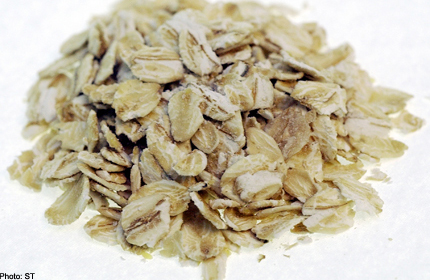
Oatmeal

Health.com reported that a review of 67 studies showed that diets high in soluble fiber, like the kind in steel-cut oats, decrease total and LDL ("bad") cholesterol.

So start your day with a steaming bowl of oats, which are full of omega-3 fatty acids, folate, and potassium.

One bowl a day will go a long way in keeping your arteries clear.


Salmon

According to health.learninginfo.com, salmon earned its reputation as a superfood because it is naturally high in omega-3 fatty acids.

Omega-3 fatty acid is healthy fat that helps reduce inflammation and keeps your blood flowing easily.

It also prevents the build-up of artery-clogging plaques in your heart and brain and reduces the risk of blood clots.

These fats work to keep your cholesterol levels healthy.

Eat salmon or other oily ocean fish like tuna, sardines or herring at least two times per week.

But according to studies done by Norwegian scientists in 2005, in an attempt to cut costs, some fish farmers are feeding their salmon with vegetable-oil instead of fish-oil.

They found that heart disease patients who ate the vegetable-oil fed salmon did not show the same cardiovascular improvements as patients who ate fish-oil fed salmon.

So if you want the maximum disease prevention benefits of salmon try buying wild-caught salmon instead.


Nuts
 
Nuts can be a great source of healthy oils, vitamin E and other substances that will help keep cholesterol levels in check.

Mayoclinic.com says the type of nut you eat isn't that important, although some nuts have more heart-healthy nutrients and fats than do others. Walnuts, almonds, hazelnuts and almost every other type of nut has a lot of nutrition packed into a tiny package.

The best part? They're inexpensive, easy to store and easy to take with you to work.


 Extra-virgin olive oil

Several studies in Mediterranean countries have shown that the incidence of heart disease is lower than would be expected by blood cholesterol levels which can plausibly be explained by the high amount of olive oil in the diet in the region.

Health.com reported that a huge body of research confirms that its monounsaturated fats lower LDL cholesterol and reduce the risk of heart disease.

Studies show that extra-virgin olive oil, which contains more antioxidants than more refined olive oil, may offer better protection against heart disease.

Extra virgin olive oil contains polyphenols - compounds that work as antioxidants to protect the cells in your body from free radical damage. These can reduce inflammation and may help to prevent some forms of cancer including breast, ovarian and colon cancers.

  
Berries

A Finnish study done in 2008 suggests that eating a moderate amount of berries may increase HDL (good) cholesterol and reduce blood pressure.

While all fruits and vegetables are high in antioxidants, berries contain particularly high levels of polyphenols and according to a report in the Nutritional review, berries lower inflammation and have a host of other cardiovascular perks.

They are chock full of anti-inflammatories, which reduce your risk of heart disease and cancer.
Other polyphenol-rich foods include chocolate, tea, and red wine, which also have been linked to lower heart disease risk.


Beans

According to Health.com, people who ate legumes—like beans and lentils—at least four times a week had a 22 per cent lower risk of heart disease than people who ate them less than once a week.

Online reports say that beans, such as Kidney, Pinto, Navy and Black, are naturally low in total fat, contain no saturated fat or cholesterol, and provide important nutrients such as fiber, protein, calcium, iron, folic acid and potassium.

Their health benefits are consistent with many existing health claims approved by the US Food and Drug Administration, specifically those related to heart disease and cancer.

Studies also suggest eating beans as part of a healthy diet to help manage diabetes and cut the risk of high blood pressure and stroke.


Broccoli

UK researchers said that eating broccoli could reverse the damage done to heart blood vessels by diabetes because the vegetable contains a compound called sulforaphane.

They tested sulforaphane the lab and found it increased enzymes that protect heart blood vessels and reduced the molecules that damage them.

This vegetable also has anti-inflammatory and detoxifying effects.
 

Related Posts Plugin for WordPress, Blogger...