FRANKFURT: The
European Central Bank is coming under increasing pressure to come to the
rescue once again as the eurozone debt crisis deepens, with analysts
suggesting it could cut interest rates soon.
The ECB's governing
council usually convenes on the first Thursday of every month for its
regular policy-setting session but it is meeting in the bank's Eurotower
headquarters on Wednesday owing to a public holiday.
While the
majority of ECB watchers believe the bank could cut borrowing costs very
soon from their current historic low of 1.0 percent, most analysts
believe it will not act this month, preferring to keep its options open.
"With
the euro area crisis deteriorating, there is a lot of pressure on the
ECB to act but in our view it is unlikely to announce any specific new
measure this Wednesday, while obviously keeping the door open to
intervene should the crisis worsen," said Silvio Peruzzo of RBS European
Economics.
At the meeting, the ECB will also publish its latest
quarterly staff projections on inflation and growth which could
highlight the downside economic risks for the 17 countries that share
the euro.
The figures could bolster the case for a rate cut.
Italian
Mario Draghi -- who took over as ECB president last November -- has
certainly not shied away from surprise moves in his short career at the
helm so far.
Nevertheless, "while flagging the materialisation of
further downside risk and the increased uncertainty about the growth
outlook, the ECB might want to wait for further corroborating data to
conclude that its second half of the year recovery expectations are
challenged and hence cut rates," said Peruzzo.
He predicted a
rate cut in July, "but we do not exclude the possibility that the ECB
might pre-announce it this week, recognising the increasing downside
risk to the economy."
ING Belgium economist Carsten Brzeski said
the ECB "is caught between a rock and a hard place: opening the fire
hose again could lead to political complacency, while doing nothing
could accelerate the latest market turmoil."
It will be a "close
call," Brzeski said, but he thought it "rather unlikely that the ECB
will use the new room for manoeuvre ... this week."
The ECB
"looks tired from being the eurozone's fire brigade and seems to have a
preference for staying on hold. Despite latest developments in Greece
and Spain, it looks likely that the ECB will want to keep pressure as
high as possible to tackle political complacency," the analyst
predicted.
The ECB has never hesitated to act from the very beginning of the crisis.
It
quickly reversed last year's rate hikes to bring eurozone borrowing
costs back down to an all-time low of 1.0 percent and embarked on a
hotly contested programme of indirectly buying up the bonds of
debt-mired countries.
Most recently, in two so-called long-term
refinancing operations (LTROs) in December and February, it pumped more
than 1.0 trillion euros ($1.25 trillion) into the banking system to
avert a dangerous credit squeeze in the euro area.
Nevertheless,
ECB officials have all along insisted that such measures cannot cure the
root cause of the crisis -- profligate spending by governments.
Natixis
economist Cedric Thellier believed the ECB would probably wait until
its next meeting in July -- by which time the outcome of Greek elections
on June 17 will be known -- before taking any further action.
Greece
is heading to the polls for a second time in six weeks after an
inconclusive vote on May 6. With the radical leftist Syriza party, chief
opponent of a massive EU-IMF bailout accord, tipped to win this time,
the election could lead to Greece quitting the single currency.
"We
guess (Draghi) will try to save time and ammunition in case of an
unfavourable outcome from Greek elections on June 17 and European summit
on June 28," Thellier said.
"Then, further support from the ECB might be necessary" in the form of a rate cut or a third LTRO, he added.
Tuesday, June 5, 2012
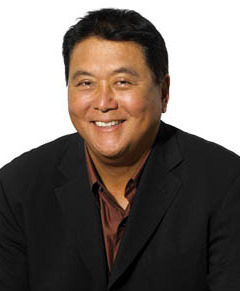
Get rich through debt, but study it: Kiyosaki
DON'T ask Robert Kiyosaki for tips on how to get rich. He'll just tell you to "get smart".
"The last guy who asked for a tip invested in Facebook," he said, referring to the social networking site's poor showing on the stock exchange.
Rather, the author of personal finance best-seller Rich Dad Poor Dad wants people to get smart about debt.
"People are so used to working hard for dollars. But the rich become rich through debt," the 65-year-old told more than 300 attendees at a book signing organised by the National Library Board last Thursday. "It's a fundamental change of thought."
The controversial writer encourages people to use debt to finance the purchase of assets, which he defines as things that generate cashflow. These include businesses and rental properties.
Assets can also be as simple as a self-written e-book on how to write e-books, his wife and fellow author, Kim Kiyosaki, said. "My friend did that and she makes about US$300 a month on royalties - it's small, but she doesn't have to do anything else for the money to keep coming."
The underlying principle of Mr Kiyosaki's 22 books is this: be an entrepreneur, not an employee.
Not only do assets generate perpetual income for you, but their ownership also gives many an entrepreneur tax breaks in the United States, he said.
"As a business owner with more than 25,000 employees, every state would give me a tax break for moving there," Mr Kiyosaki told BT in a phone interview. "And the reason they give me tax breaks is because they tax my employees."
This is why he rails against the American education system - it trains students to be employees, which will always leave them poor, he told audiences.
Determined to bypass what he thinks is wrong, "brainwashing" advice in American schools, Mr Kiyosaki is rolling out his own financial education system with his books, and soon, mobile platforms like the iPhone.
"I teach, even though it's a poor dad's kind of job," he said, referring to the book that made him a household name. "That's because I'm very concerned - worried really."
Mr Kiyosaki is especially cautious about a global financial crash, which he predicts will happen in 2016.
"Israel will bomb Iran before 2014, and oil prices will skyrocket to US$300 to US$400 a barrel. The world economy will collapse because it can't sustain that," he told BT.
He also thinks America risks going into hyper-inflation, if the Federal Reserve continues to print more dollars to lower interest rates and encourage spending in a declining domestic market.
But as worried as he is, Mr Kiyosaki believes he can come out of any crisis relatively unscathed because of his choice of investments.
Referring to his prophecy about imminent war and high oil prices, Mr Kiyosaki said: "As much as I hope such a crisis doesn't happen, I'll end up a rich man, anyway."
This is because he owns around 100 oil wells and oil drilling operations around the US.
"I'm in oil production - I'll be needed because governments need me to provide oil and jobs. You need me so you can fly planes," he explained, adding that he does not invest in oil company shares like ExxonMobil.
Besides oil, Mr Kiyosaki also purchases precious metals.
"I don't save money - I save gold and silver," he said, adding that investing in precious metals helps hedge against governments' misprinting of money. "Those will always be real money." Mr Kiyosaki advised his Singaporean audience to buy gold, especially since goods and services tax on precious metals will be scrapped here come October. This means that investment-grade gold will effectively be 7 per cent cheaper.
He also adds to his long list of properties every year. This includes, he says, more than 4,000 properties around the US, particularly in Texas and Arizona.
He is especially fond of rental properties. "This is what I mean when I say I use debt to get rich - my tenants are the ones who essentially pay the mortgage for me." While most of these properties were predominantly financed by bank loans, land appreciation and continual improvements to the properties have tripled, even quadrupled, the value of some of his initial investments, he said.
Without working, Mr Kiyosaki said he can earn about US$2 million a month, part of which comes from royalties from his book sales.
But whether people choose to invest in commodities and properties like his or not, Mr Kiyosaki is clear about one thing - he wouldn't save money in this economic climate.
"Europe, China and the US are printing trillions of dollars," he claimed. "That means for the next 20 years or so, the purchasing power of paper currency, including the Singapore dollar, is going to go down."
When asked about the difficulties of financing relatively more expensive items, Mr Kiyosaki said, "That's why I tell people to study debt. It can be quite the hand grenade if you don't know anything about it - if you misuse it, it'll kill you."
Young people often tell him that they don't have money, but this situation primes them well to learn about debt, he said.
In a sold-out seminar attended by 3,000 people last Saturday, Mr Kiyosaki recounted how he and his wife bought a few hundred dollars' worth of silver at US$3 an ounce in the 1980s, while still in debt of US$1 million. Today, silver is worth about US$35 an ounce.
"Don't be afraid to start small," he advised.
"The last guy who asked for a tip invested in Facebook," he said, referring to the social networking site's poor showing on the stock exchange.
Rather, the author of personal finance best-seller Rich Dad Poor Dad wants people to get smart about debt.
"People are so used to working hard for dollars. But the rich become rich through debt," the 65-year-old told more than 300 attendees at a book signing organised by the National Library Board last Thursday. "It's a fundamental change of thought."
The controversial writer encourages people to use debt to finance the purchase of assets, which he defines as things that generate cashflow. These include businesses and rental properties.
Assets can also be as simple as a self-written e-book on how to write e-books, his wife and fellow author, Kim Kiyosaki, said. "My friend did that and she makes about US$300 a month on royalties - it's small, but she doesn't have to do anything else for the money to keep coming."
The underlying principle of Mr Kiyosaki's 22 books is this: be an entrepreneur, not an employee.
Not only do assets generate perpetual income for you, but their ownership also gives many an entrepreneur tax breaks in the United States, he said.
"As a business owner with more than 25,000 employees, every state would give me a tax break for moving there," Mr Kiyosaki told BT in a phone interview. "And the reason they give me tax breaks is because they tax my employees."
This is why he rails against the American education system - it trains students to be employees, which will always leave them poor, he told audiences.
Determined to bypass what he thinks is wrong, "brainwashing" advice in American schools, Mr Kiyosaki is rolling out his own financial education system with his books, and soon, mobile platforms like the iPhone.
"I teach, even though it's a poor dad's kind of job," he said, referring to the book that made him a household name. "That's because I'm very concerned - worried really."
Mr Kiyosaki is especially cautious about a global financial crash, which he predicts will happen in 2016.
"Israel will bomb Iran before 2014, and oil prices will skyrocket to US$300 to US$400 a barrel. The world economy will collapse because it can't sustain that," he told BT.
He also thinks America risks going into hyper-inflation, if the Federal Reserve continues to print more dollars to lower interest rates and encourage spending in a declining domestic market.
But as worried as he is, Mr Kiyosaki believes he can come out of any crisis relatively unscathed because of his choice of investments.
Referring to his prophecy about imminent war and high oil prices, Mr Kiyosaki said: "As much as I hope such a crisis doesn't happen, I'll end up a rich man, anyway."
This is because he owns around 100 oil wells and oil drilling operations around the US.
"I'm in oil production - I'll be needed because governments need me to provide oil and jobs. You need me so you can fly planes," he explained, adding that he does not invest in oil company shares like ExxonMobil.
Besides oil, Mr Kiyosaki also purchases precious metals.
"I don't save money - I save gold and silver," he said, adding that investing in precious metals helps hedge against governments' misprinting of money. "Those will always be real money." Mr Kiyosaki advised his Singaporean audience to buy gold, especially since goods and services tax on precious metals will be scrapped here come October. This means that investment-grade gold will effectively be 7 per cent cheaper.
He also adds to his long list of properties every year. This includes, he says, more than 4,000 properties around the US, particularly in Texas and Arizona.
He is especially fond of rental properties. "This is what I mean when I say I use debt to get rich - my tenants are the ones who essentially pay the mortgage for me." While most of these properties were predominantly financed by bank loans, land appreciation and continual improvements to the properties have tripled, even quadrupled, the value of some of his initial investments, he said.
Without working, Mr Kiyosaki said he can earn about US$2 million a month, part of which comes from royalties from his book sales.
But whether people choose to invest in commodities and properties like his or not, Mr Kiyosaki is clear about one thing - he wouldn't save money in this economic climate.
"Europe, China and the US are printing trillions of dollars," he claimed. "That means for the next 20 years or so, the purchasing power of paper currency, including the Singapore dollar, is going to go down."
When asked about the difficulties of financing relatively more expensive items, Mr Kiyosaki said, "That's why I tell people to study debt. It can be quite the hand grenade if you don't know anything about it - if you misuse it, it'll kill you."
Young people often tell him that they don't have money, but this situation primes them well to learn about debt, he said.
In a sold-out seminar attended by 3,000 people last Saturday, Mr Kiyosaki recounted how he and his wife bought a few hundred dollars' worth of silver at US$3 an ounce in the 1980s, while still in debt of US$1 million. Today, silver is worth about US$35 an ounce.
"Don't be afraid to start small," he advised.
Monday, June 4, 2012
Asian markets rise after heavy sell-off
HONG KONG: Asian
markets climbed on Tuesday and the euro clawed back some of its losses
as dealers took a breather from a recent heavy sell-off caused by
concerns over the eurozone.
Tokyo rose 0.75 percent as the yen lost some of its recent strength, Hong Kong was 1.03 percent up, Shanghai gained 0.52 percent, Sydney added 1.37 percent and Seoul climbed 0.68 percent.
With little to drive sentiment after the weekend analysts said there was an opportunity to buy after most regional bourses fell into negative territory for the first time in 2012.
The "mostly flat performance in New York, and a pause in the yen's strength are likely to invite some buying" on Tuesday, Rakuten Securities senior market analyst Masayuki Doshida said.
But jitters over the eurozone debt situation and concerns over the state of the global economy are likely to weigh on sentiment, Doshida told Dow Jones Newswires, signalling that any gains may be limited.
On Wall Street the Dow fell 0.14 percent, the S&P 500 was flat and the Nasdaq Composite gained 0.46 percent.
Spanish Prime Minister Mariano Rajoy called at the weekend for a banking union in Europe, which would be able to provide aid to lenders, especially in Spain, a move that was picking up support in France and at the European Central Bank (ECB). However, Germany remained strongly opposed for the moment.
Global markets have been hammered since the start of May as Europe's debt troubles returned after a Greek general election saw a strong showing for anti-austerity parties, while Spain's bank crisis has left the already creaking economy teetering.
Market players will be looking to the result of a conference call later in the day between the Group of Seven finance ministers to discuss Europe's crisis, in particular Spain's travails.
In Europe the ECB will hold a rate-setting meeting Wednesday, with investors looking to see if it will announce any moves to kickstart the region's stuttering economy.
On currency markets the euro -- which last week hit a 23-month low versus the dollar and a near 12-year low against the yen -- regained a little ground.
The common unit bought $1.2534 and 98.18 yen in early Asian trade, up from $1.2494 and 97.89 yen in New York late Monday. The dollar was flat, buying 78.35 yen.
Oil prices rose in early trade. New York's main contract, West Texas Intermediate crude for July delivery, was 85 cents higher at $84.83 a barrel and Brent North Sea crude, also for July, rose by 54 cents to $99.39.
Gold was at $1,621.50 an ounce at 0230 GMT, compared with $1,622.08 late Monday.
Tokyo rose 0.75 percent as the yen lost some of its recent strength, Hong Kong was 1.03 percent up, Shanghai gained 0.52 percent, Sydney added 1.37 percent and Seoul climbed 0.68 percent.
With little to drive sentiment after the weekend analysts said there was an opportunity to buy after most regional bourses fell into negative territory for the first time in 2012.
The "mostly flat performance in New York, and a pause in the yen's strength are likely to invite some buying" on Tuesday, Rakuten Securities senior market analyst Masayuki Doshida said.
But jitters over the eurozone debt situation and concerns over the state of the global economy are likely to weigh on sentiment, Doshida told Dow Jones Newswires, signalling that any gains may be limited.
On Wall Street the Dow fell 0.14 percent, the S&P 500 was flat and the Nasdaq Composite gained 0.46 percent.
Spanish Prime Minister Mariano Rajoy called at the weekend for a banking union in Europe, which would be able to provide aid to lenders, especially in Spain, a move that was picking up support in France and at the European Central Bank (ECB). However, Germany remained strongly opposed for the moment.
Global markets have been hammered since the start of May as Europe's debt troubles returned after a Greek general election saw a strong showing for anti-austerity parties, while Spain's bank crisis has left the already creaking economy teetering.
Market players will be looking to the result of a conference call later in the day between the Group of Seven finance ministers to discuss Europe's crisis, in particular Spain's travails.
In Europe the ECB will hold a rate-setting meeting Wednesday, with investors looking to see if it will announce any moves to kickstart the region's stuttering economy.
On currency markets the euro -- which last week hit a 23-month low versus the dollar and a near 12-year low against the yen -- regained a little ground.
The common unit bought $1.2534 and 98.18 yen in early Asian trade, up from $1.2494 and 97.89 yen in New York late Monday. The dollar was flat, buying 78.35 yen.
Oil prices rose in early trade. New York's main contract, West Texas Intermediate crude for July delivery, was 85 cents higher at $84.83 a barrel and Brent North Sea crude, also for July, rose by 54 cents to $99.39.
Gold was at $1,621.50 an ounce at 0230 GMT, compared with $1,622.08 late Monday.
"My Grandfather Road" markings identified as vandal, woman arrested
SINGAPORE: Police
arrested a 25-year-old woman who is believed to have painted "MY
GRANDFATHER ROAD" on several roads in Singapore.
Between 17 and 21 May, the Land Transport Authority (LTA) found the words "MY GRANDFATHER ROAD" being painted on some roads along Robinson Road and Maxwell Road and reported the matter to the Police.
LTA also reported that circular stickers printed with captions were pasted on a pavement around Lau Pa Sat and on a road traffic sign along Robinson Road.
Officers from Central Police Division, with the support from Police Intelligence Department, investigated the matter and arrested the woman suspect at her home in eastern Singapore on Sunday.
The officers also found several paint-stained stencils and several pieces of stickers printed with captions.
These items were seized for investigation.
Police are investigating and are working with LTA on earlier reports of round stickers found affixed on other pedestrian crossings at various places.
A person who is convicted of vandalism shall be punished with a fine of up to S$2,000, or jail up to three years and caning.
Police said they take a serious view of such irresponsible actions and warned that offenders will be dealt with severely.
Between 17 and 21 May, the Land Transport Authority (LTA) found the words "MY GRANDFATHER ROAD" being painted on some roads along Robinson Road and Maxwell Road and reported the matter to the Police.
LTA also reported that circular stickers printed with captions were pasted on a pavement around Lau Pa Sat and on a road traffic sign along Robinson Road.
Officers from Central Police Division, with the support from Police Intelligence Department, investigated the matter and arrested the woman suspect at her home in eastern Singapore on Sunday.
The officers also found several paint-stained stencils and several pieces of stickers printed with captions.
These items were seized for investigation.
Police are investigating and are working with LTA on earlier reports of round stickers found affixed on other pedestrian crossings at various places.
A person who is convicted of vandalism shall be punished with a fine of up to S$2,000, or jail up to three years and caning.
Police said they take a serious view of such irresponsible actions and warned that offenders will be dealt with severely.
Budget carrier Scoot's maiden flight delayed
SINGAPORE - Local budget carrier Scoot's maiden flight was off to a
bumpy start with a delay of almost two hours on Monday night due to a
technical fault.
The Boeing 777-200 jet was originally scheduled for departure at 11.25pm, eventually took off at about 1.05am, according to reports.
The flight with a full load of about 400 paying passengers,
guests and members of the media left Terminal 2 at Singapore Changi
Airport 20 minutes later then scheduled. However, it turned back on the
runway and returned to the boarding area at 12.20am.
The Straits Times (ST) reported that passengers remained calm and were served milk and cookies.
'It's their first flight, so I expected some teething problems,' said teacher Gamar Annisa, 25, to ST.
Reporters on-board, aviation enthusiasts and industry members tweeted about the flight delay on social media site Twitter.
Mr Tony Fernandes, CEO of competitor airline AirAsia, reposted humorous tweets by others on the event, including a photo of the milk and cookies offered with a word play on the acronym Scoot - Singapore Carrier Offers Oreo Treats. However, Mr Fernandes did not personally comment on the issue on Twitter.
According to reports, the plane landed in Sydney at about 8.20am (Singapore time) today.
The subsidiary of Singapore Airlines will fly to four destinations in its first year. Flights to Gold Coast, Australia will start from next Tuesday, it will fly to Bangkok from July 5 and to Tianjin, China from August 23.
According to ST, some 100,000 tickets for flights this month have been sold since late March, when they went on sale.
The Boeing 777-200 jet was originally scheduled for departure at 11.25pm, eventually took off at about 1.05am, according to reports.
The Straits Times (ST) reported that passengers remained calm and were served milk and cookies.
'It's their first flight, so I expected some teething problems,' said teacher Gamar Annisa, 25, to ST.
Reporters on-board, aviation enthusiasts and industry members tweeted about the flight delay on social media site Twitter.
Mr Tony Fernandes, CEO of competitor airline AirAsia, reposted humorous tweets by others on the event, including a photo of the milk and cookies offered with a word play on the acronym Scoot - Singapore Carrier Offers Oreo Treats. However, Mr Fernandes did not personally comment on the issue on Twitter.
According to reports, the plane landed in Sydney at about 8.20am (Singapore time) today.
The subsidiary of Singapore Airlines will fly to four destinations in its first year. Flights to Gold Coast, Australia will start from next Tuesday, it will fly to Bangkok from July 5 and to Tianjin, China from August 23.
According to ST, some 100,000 tickets for flights this month have been sold since late March, when they went on sale.
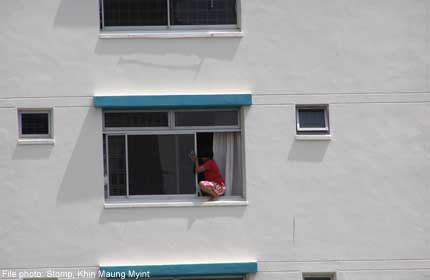
Stricter rules for window cleaning by maids
The Ministry of Manpower (MOM) today announced stricter rules for window cleaning by foreign domestic workers (FDW).
From today, employers of FDWs shall not allow their maids to clean the exteriors of windows except where two conditions are met.
First, the employer or an adult representative of the employer must be physically present to supervise the FDW.
Second, window grilles have been installed and are locked at all times during the cleaning process.
These rules will apply to all homes, except for those whose windows are at the ground floor or along common corridors.
Failure to comply with these tightened requirements constitutes a breach of the Employment of Foreign Manpower (Work Passes) Regulations.
Employers who fail to comply may be prosecuted and permanently barred from hiring a maid.
The ministry is also planning to double the penalties from the current $5,000 fine and/or six months' jail to $10,000 fine and/or 12 months' jail to serve as added deterrence. This s is part of the ongoing review of the Employment of Foreign Manpower Act and its subsidiary legislation later this year.
While anyone who cleans the exterior windows of their homes should follow these safety requirements, MOM emphasises that when maids are tasked to do domestic work, the onus is on both employers and FDWs themselves to ensure the FDWs' safety.
In a statement, MOM said: "Many FDWs do not come from high-rise environments and may not be used to the urban living environment in Singapore. They are therefore likely to be unaware of the risks in a high-rise domestic setting. Apart from window cleaning, employers should take necessary steps to eliminate the risks involved in other tasks by following the Dos and Don'ts covered in MOM's guidebooks and pamphlets."
"For example, if FDWs are required to hang laundry outside the window using bamboo poles, employers should ensure their FDWs do not stand on an elevated platform or tip toe while handling the poles, and do not overload the pole with too many clothes."
The new measures come at the back of nine work-related FDW fall from height fatalities since January 2012. This is a significant increase from just four cases registered in 2011 and eight in 2010.
MOM said that five of the nine fatalities were related to unsafe practices in cleaning windows.
A circular will be sent to all existing maid employers to notify them of the tightened safety requirements.
MOM will also be updating its training materials for first-time FDWs and FDW employers.
Members of the public can take a photo of unsafe work practices that they witness then send them to MOM using the recently launched free SNAP@MOM application or through email at mom_fmmd_cr@mom.gov.sg. All information will be kept strictly confidential.
From today, employers of FDWs shall not allow their maids to clean the exteriors of windows except where two conditions are met.
First, the employer or an adult representative of the employer must be physically present to supervise the FDW.
Second, window grilles have been installed and are locked at all times during the cleaning process.
These rules will apply to all homes, except for those whose windows are at the ground floor or along common corridors.
Failure to comply with these tightened requirements constitutes a breach of the Employment of Foreign Manpower (Work Passes) Regulations.
Employers who fail to comply may be prosecuted and permanently barred from hiring a maid.
The ministry is also planning to double the penalties from the current $5,000 fine and/or six months' jail to $10,000 fine and/or 12 months' jail to serve as added deterrence. This s is part of the ongoing review of the Employment of Foreign Manpower Act and its subsidiary legislation later this year.
While anyone who cleans the exterior windows of their homes should follow these safety requirements, MOM emphasises that when maids are tasked to do domestic work, the onus is on both employers and FDWs themselves to ensure the FDWs' safety.
In a statement, MOM said: "Many FDWs do not come from high-rise environments and may not be used to the urban living environment in Singapore. They are therefore likely to be unaware of the risks in a high-rise domestic setting. Apart from window cleaning, employers should take necessary steps to eliminate the risks involved in other tasks by following the Dos and Don'ts covered in MOM's guidebooks and pamphlets."
"For example, if FDWs are required to hang laundry outside the window using bamboo poles, employers should ensure their FDWs do not stand on an elevated platform or tip toe while handling the poles, and do not overload the pole with too many clothes."
The new measures come at the back of nine work-related FDW fall from height fatalities since January 2012. This is a significant increase from just four cases registered in 2011 and eight in 2010.
MOM said that five of the nine fatalities were related to unsafe practices in cleaning windows.
A circular will be sent to all existing maid employers to notify them of the tightened safety requirements.
MOM will also be updating its training materials for first-time FDWs and FDW employers.
Members of the public can take a photo of unsafe work practices that they witness then send them to MOM using the recently launched free SNAP@MOM application or through email at mom_fmmd_cr@mom.gov.sg. All information will be kept strictly confidential.
A Porsche for a Chery
Soaring Certificate of Entitlement (COE) premiums and a robust Singapore dollar have made the cheapest passenger car here - the manual Chery QQ 0.8 - the equivalent of most European luxury badges elsewhere.
Even at a promotional net price of S$74,988, the Chery QQ gets you the Porsche Boxster Black Edition at US$55,200 (S$71,450) in the US. If it is any comfort, the Black Edition's drawback is the literal application of Henry Ford's motto - it only comes in black - while the Chery QQ comes in a cheerful orange.
Three weeks ago, the Chery QQ's normal selling price of S$94,988 would have priced it into the luxury car market in the toppermost of the poppermost of cities - Hong Kong, where an Audi A6 2.8 FSI quattro costs slightly less at HK$560,000 (S$93,400).
At S$94,988, the QQ's price tag is more COE than car - the S$58,001 premium for Category A cars at last count makes up 61 per cent of the final retail price.
But it is when you reach for the larger cars in Category B that you hit the supercar leagues overseas. The BMW 520i, a best-selling model, goes for S$250,800 as of its May price list - enough to get you a Ferrari in the US.
With Cat B premiums at $85,216 from the last bidding round, the BMW's price is 66:33 car-to-COE - practically the inverse situation of Cat A cars. Little wonder that the larger luxury cars have dealt humbler ones a spirited walloping.
Toyota used to easily outsell every other brand in the market. As recently as 2009 when it took pole position, 17,555 new Toyotas were registered - or 1,463 cars a month. Last year, just 297 Toyotas a month were registered.
There is little cause to have a complex if you're a Toyota man, though. A Toyota Corolla Altis here is the equal of a Jaguar XFR in the US.
There is little telling where this might go - the government's efforts to relieve the COE supply squeeze might be stymied by a lower vehicle deregistration rate.
Subscribe to:
Comments (Atom)