What are vitamins and minerals?
Vitamins are natural organic compounds that are needed in order to support normal physiological processes within our body.
There are 13 essential vitamins needed in small amounts to carry out normal daily functions.
They are essential because our body simply can't produce enough vitamins in sufficient quantities to support cellular demand.
That
is why it is crucial we get those vitamins from our diet. Vitamins are
generally classified as either fat-soluble or water-soluble.
The
13 essential vitamins are A, C, D, E, K, and the B vitamins (thiamine,
riboflavin, niacin, pantothenic acid, biotin, vitamin B6, vitamin B12
and folate).
Minerals are inorganic compounds that are necessary, like vitamins, for the body to carry out normal physiological functions.
Minerals
are much simpler in chemical form and are relatively more stable
compared to vitamins, which can be destroyed from exposure to heat,
chemical reactions or even sunlight.
There are essential minerals
that our body needs as well through our diet, and they are generally
classified as macro-minerals or micro-minerals, depending on the amount
needed. Some essential minerals include calcium, magnesium, potassium,
sodium, zinc and iodine.
Not a replacement
Why use a multivitamin mineral supplement?
First and foremost, a multivitamin/mineral supplement is not a replacement for a proper diet.
Supplements
are only necessary to ensure adequate intake of essential vitamins and
minerals that are not acquired through diet alone.
Always consult
your physician, as overdosing on certain vitamins and minerals can lead
to toxicity, which can cause havoc on your body.
Your goal should
always be to get your essential nutrients from your diet. A healthy diet
should be rich in vegetables and fruits. However, sometimes you will
not be able to get all the nutrients from food alone.
Inadequate
nutrient intake may arise from sickness; stress (including stress from
exercising); poor quality of fruits and vegetables (due to poor
nutrients in soil and environment grown); or you just can't eat enough
(veggies, especially, are quite filling).
Situations like these
may require supplementation. If you are going to supplement, make sure
the multivitamin/mineral supplement is derived from whole food sources;
that it contains natural forms of vitamins instead of synthetic form,
like in the case of vitamin E.
This is so that it falls within the
recommended nutritional dosage, and if it doesn't, that the dosage is
not anywhere near toxic levels.
Fish oils
Fish oils are oil from fish, and a
great source of omega-3 fatty acids. It is particularly rich in EPA and
DHA, which are forms of omega-3 fatty acids.
They are important for cardiovascular and brain/nervous system
health. Like vitamins/minerals, deficiencies in omega-3 fatty acids have
been linked to certain health problems such as memory loss.
Our
cell membrane is made up of a phospholipid bilayer. Fats, especially
omega-3, help maintain the integrity of that membrane, which leads to
better transfer of nutrients into and out of the cell.
If you have a poor cell membrane it will be more difficult to transport nutrients across the cell.
It's easier to get omega-6 fats because generally they are in the plants and animals we eat.
Food such as various types of plant oils, meats and processed food contain omega 6 fatty acids.
The major problem of our current diet is that we eat way too much omega-6 in comparison to omega-3.
If
your diet includes lots of meat, processed food (think corn beef), and
fast food, then you are probably ingesting way more omega-6 fats than
you need.
Like anything in life, there has to be balance.
Fish over meat
I'm a big advocate of getting most if not all nutrients from food.
Eating about one to two fish servings per week (113 g or 4 oz = 1 serving size) is what most health experts recommend.
However,
eating more servings is perfectly fine especially as a protein source.
It is a great idea to substitute fish for meats because fish generally
have less saturated fat and fewer calories per serving when comparing to
meat.
If you are unable to get enough omega-3s from your diet, supplementation may be a viable option.
However, always consult your physician before starting any fish oil supplements.
I
prefer taking the liquid form compared to the capsule form because it's
quick and easy. If you want to avoid the fishy taste of the liquid
version, capsules are great options as well.
You may need to take more than one capsule, though, to get the proper amount.
Research
studies have found that positive effects of omega-3 supplementation
used dosages of 5 g or more. But do follow the instructions on the
label.
Showing posts with label health. Show all posts
Thursday, July 12, 2012
Thursday, June 21, 2012
Insurance manager, 37, dies of heart attack after football game
Left:Mr Wan Hussin Zoohri, former Aljunied GRC Member of
Parliament (MP), showing his mobile phone with a picture of his youngest
child, Mr Wan Imran Haji Wan Hussin. Right: Mr Wan Imran.
They waited for him to reach home so they could have dinner together on Father's Day.
But he never made it.
On Sunday evening, former Aljunied GRC Member of Parliament
(MP) Wan Hussin Zoohri's son, Mr Wan Imran Haji Wan Hussin, died of a heart attack after playing football.
The 37-year-old manager at an insurance firm had earlier shown signs of being unwell.
His brother-in-law, Mr Alif Lim, 50, a civil servant, told The New Paper that Mr Wan Imran had met his usual group of football "kakis" at 5pm to play at Yusof Ishak Secondary School.
"While playing, he felt uncomfortable and went to the toilet to vomit. When he returned, he asked a friend to take him home," saidMrLim Mr Wan Imran lost consciousness on the way back, on Tagore Drive, near Upper Thomson Road.
"His friend said he had fits, before becoming unconscious," said Mr Lim.
His friend immediately called for an ambulance.
The Singapore Civil Defence Force (SCDF) said it received a call for assistance at about 7.20pm, and sent an ambulance.
The officers performed CPR (cardiopulmonary resuscitation) and used an automated external defibrillator on Mr Wan Imran, before taking him to Khoo Teck Puat Hospital (KTPH). They continued with their resuscitation efforts en route.
Mr Lim said they were praying at home when they received a call from Mr Wan Imran's friend.
Together with his wife, her parents and two brothers, he rushed to KTPH.
Mr Wan Imran, the youngest of four siblings, was declared dead at 8.36pm.
Never complained of chest pain
"According to his friend, he was one of the fittest in the group, and would chase every ball," said Mr Lim.
He said Mr Wan Imran's death was completely unexpected, as he
never once complained of any chest pains nor had any records of medical problems.
The family is coping well, with support from relatives and friends.
Mr Wan Hussin, who was also former Parliamentary Secretary for Health and Culture, said his youngest son was a pleasant person who respected every one.
"We are closely knit. We gather at home for dinner every weekend and my wife would cook," he said.
He described his son as an ambitious man who wanted to climb the corporate ladder.
"He was promoted this month. We would tease him every morning and call him 'Mr Manager'."
Mr Wan Hussin said his wife had taken the shock better than him.
"From the time he was lying in hospital until the burial, I couldn't stop crying. When I see his face, it just reminds me of his gentleness," he said.
He recalled how his son had given him a back massage before leaving on Sunday.
"My back had been uneasy for two days, so before he went out, he gave me a really good massage. I really enjoyed it," said Mr Wan Hussin.
Coping well
"That was the last time I saw him alive."
Mr Wan Imran's best friend, Mr Sujen Jayakody, 36, flew in from Sydney, Australia.
Said the medical doctor, who has been based overseas for six years: "We've known each other since our primary school days at St Michael's School (Now St Joseph's Institution Junior)."
As soon as he got the news, he went online to book a flight to Singapore .
He arrived at 2.30pm yesterday and made it to Choa Chu Kang Muslim Cemetery in time for the burial.
"He was a really cheerful person. He was very quiet, so it would take a while to get to know him. But once he warmed up, he would liven up the room," Dr Jayakody said of his friend.
The last time the two met was when he returned from Australia 11/2 years ago.
They kept in touch regularly through Facebook.
"On his last birthday on March 3, he told me that of all the texts and wishes he received, he cherished the one I sent him the most," Dr Jayakody said.
"He's like the brother I never had."
No symptoms till disease is severe
Cardiologist Soon Chao Yang said coronary atherosclerosis is a disease that leads to blockage of blood vessels of the heart.
"It is not uncommon as everybody eventually will develop it
with ageing. Some will get it faster than others," said Dr Soon of Nobel Heart Centre, based at Mount Alvernia Hospital.
He added that there are generally no symptoms until the disease becomes severe.
"Unfortunately, the more severe cases sometimes end up in sudden attacks, such as in this case here," said Dr Soon.
He said factors that lead to this condition include elevated cholesterol, high blood pressure, obesity, smoking and diabetes.
"To keep all these factors in check, we have to lead a healthy lifestyle and screen for them regularly," he said.
But there are also factors beyond our control, such as gender, ethnicity and family history.
"It is more common in guys, and woman have lower risks until after menopause," he said.
Several social footballers in Singapore have died from heart attacks, but even professionals have not been spared.
They include:
They waited for him to reach home so they could have dinner together on Father's Day.
But he never made it.
The 37-year-old manager at an insurance firm had earlier shown signs of being unwell.
His brother-in-law, Mr Alif Lim, 50, a civil servant, told The New Paper that Mr Wan Imran had met his usual group of football "kakis" at 5pm to play at Yusof Ishak Secondary School.
"While playing, he felt uncomfortable and went to the toilet to vomit. When he returned, he asked a friend to take him home," saidMrLim Mr Wan Imran lost consciousness on the way back, on Tagore Drive, near Upper Thomson Road.
"His friend said he had fits, before becoming unconscious," said Mr Lim.
His friend immediately called for an ambulance.
The Singapore Civil Defence Force (SCDF) said it received a call for assistance at about 7.20pm, and sent an ambulance.
The officers performed CPR (cardiopulmonary resuscitation) and used an automated external defibrillator on Mr Wan Imran, before taking him to Khoo Teck Puat Hospital (KTPH). They continued with their resuscitation efforts en route.
Mr Lim said they were praying at home when they received a call from Mr Wan Imran's friend.
Together with his wife, her parents and two brothers, he rushed to KTPH.
Mr Wan Imran, the youngest of four siblings, was declared dead at 8.36pm.
Never complained of chest pain
"According to his friend, he was one of the fittest in the group, and would chase every ball," said Mr Lim.
The family is coping well, with support from relatives and friends.
Mr Wan Hussin, who was also former Parliamentary Secretary for Health and Culture, said his youngest son was a pleasant person who respected every one.
"We are closely knit. We gather at home for dinner every weekend and my wife would cook," he said.
He described his son as an ambitious man who wanted to climb the corporate ladder.
"He was promoted this month. We would tease him every morning and call him 'Mr Manager'."
Mr Wan Hussin said his wife had taken the shock better than him.
"From the time he was lying in hospital until the burial, I couldn't stop crying. When I see his face, it just reminds me of his gentleness," he said.
He recalled how his son had given him a back massage before leaving on Sunday.
"My back had been uneasy for two days, so before he went out, he gave me a really good massage. I really enjoyed it," said Mr Wan Hussin.
Coping well
"That was the last time I saw him alive."
Said the medical doctor, who has been based overseas for six years: "We've known each other since our primary school days at St Michael's School (Now St Joseph's Institution Junior)."
As soon as he got the news, he went online to book a flight to Singapore .
He arrived at 2.30pm yesterday and made it to Choa Chu Kang Muslim Cemetery in time for the burial.
"He was a really cheerful person. He was very quiet, so it would take a while to get to know him. But once he warmed up, he would liven up the room," Dr Jayakody said of his friend.
The last time the two met was when he returned from Australia 11/2 years ago.
They kept in touch regularly through Facebook.
"On his last birthday on March 3, he told me that of all the texts and wishes he received, he cherished the one I sent him the most," Dr Jayakody said.
"He's like the brother I never had."
No symptoms till disease is severe
Cardiologist Soon Chao Yang said coronary atherosclerosis is a disease that leads to blockage of blood vessels of the heart.
He added that there are generally no symptoms until the disease becomes severe.
"Unfortunately, the more severe cases sometimes end up in sudden attacks, such as in this case here," said Dr Soon.
He said factors that lead to this condition include elevated cholesterol, high blood pressure, obesity, smoking and diabetes.
"To keep all these factors in check, we have to lead a healthy lifestyle and screen for them regularly," he said.
But there are also factors beyond our control, such as gender, ethnicity and family history.
"It is more common in guys, and woman have lower risks until after menopause," he said.
Several social footballers in Singapore have died from heart attacks, but even professionals have not been spared.
They include:
- PIERMARIO MOROSINI, APRIL 14, 2012: The 25-year-old midfielder, who played for Italian club Livorno, fell to the ground in a Serie B match. He received urgent medical attention on the pitch but never regained consciousness, and was dead by the time he was taken to hospital.
- DANIEL JARQUE, AUG 8, 2009: The captain of Spanish side Espanyol died after a cardiac arrest following pre-season training. Club doctors and paramedics tried to revive the 26-year-old midfielder using CPR and a defibrillator, without success.
- ANTONIO PUERTA, AUG 28, 2007: The wing-back of Spanish club Sevilla collapsed in the 35th minute of a La Liga match against Getafe on Aug 25, 2007. The 22-year-old was able to walk from the pitch but collapsed again in the changing rooms. He had to be given cardiac resuscitation before being taken to hospital. He died three days later.
Tuesday, June 19, 2012
S'porean woman marries dying hubby in hospital
They registered their marriage 13 years ago, but this couple never had the chance to have a traditional wedding.
But as the gravely ill man lay in the Intensive Care Unit (ICU) at the National University Hospital (NUH), deejays from Radio 1003, Singapore Press Holding's Chinese language station, swung into action, and made their wish come true two weeks ago.
The radio station's programme director Carine Ang said: "It was such a touching moment... everyone present was moved to tears."
It started with an SMS sent to the radio station by Madam Chua
Mui Mui in April, wishing her husband a happy wedding anniversary.
Madam Chua, 37, also revealed that her husband, Mr Tay Guan Yeow, 44, had felt bad all these years for not giving her the wedding of her dreams.
After her message was read out on air, listeners called in with offers to help the couple have their wedding pictures taken.
At the time, no one knew that the childless couple - who sell roasted meats at an industrial area in the western part of Singapore - were going through a harrowing situation.
Mr Tay was suffering from kidney failure.
He had been diagnosed just two years after they registered their marriage, in 1999, when she was 24 and he was 31.
Battling his illness, they had put off the traditional dinner and wedding photos.
Until Madam Chua's heartfelt message to the radio station.
Offers of kindness
The offers poured in. But the couple initially hesitated.
Madam Chua, explains: "We were a little worried, and then
because we had delayed responding to the offers, we didn't think more
about it."
Then, on June 5, Mr Tay's condition worsened and he was rushed to NUH.
Doctors told Madam Chua that he might not pull through.
It prompted her to send another SMS to the radio station's hotline.
In the message, she asked: "If we want to take wedding photos, would it be too late? My husband has just been admitted to ICU."
Ms Ang said the minute their duty deejay received the message, everyone was galvanised into action.
She says: "Our hearts dropped. We wanted to do something for the couple, especially because we knew that Mr Tay was a loyal 1003 supporter.
"We wanted to do whatever we could to make their wish come true."
By 8pm, the team, which included deejay Tan Yan Wei and Ms Ang, had secured a rent-free gown from My Wedding Affair and complimentary photography.
A nurse helped take Madam Chua's measurements so that they'd get the right gown size, and the team rushed down to the hospital.
There was hardly a dry eye in the ICU when the bride walked in, resplendent in her gown.
As she bent over over her husband, Madam Chua asked him: "Am I pretty? Are you happy?"
Tears flowed freely as Mr Tay said yes, and handed a bouquet of flowers to his wife.
'I will live for him'
Ms Ang said that those who witnessed the simple ceremony included Mr Tay's family members and Madam Chua's two younger sisters.
After the ceremony, the groom told everyone: "I'm sorry that we don't have anything to give you."
"But if I am discharged, I will definitely bring snacks and roast meats to the radio station."
Madam Chua says she believes her husband, who had his left leg and right toes amputated earlier this year, is hanging on for her.
She admits that some friends and family members have asked her why she stayed on with her sick husband, whom they view as a yoke around her neck.
She says: "I don't get it, how can he be a burden to me? We exchanged vows and there's this line, 'In sickness and in health'.
"How can we forget this line? It's never occurred to me that I should abandon him."
In a recording that Mr Tay did for the radio station, he said: "This whole life, I loved only Chua Mei Mei. (There will be) no other choices and no regrets. I will love her forever and ever.
"Whether it's in life or in death, I will also miss her. Even though I will leave first, I want her to go on living and carry on with her life."
To which, Madam Chua says: "Some people have asked me what are my plans for the future.
"I don't know. I've not thought about it. Just as my husband is keeping strong for me, I will do the same for him.
"I will live for him."
But as the gravely ill man lay in the Intensive Care Unit (ICU) at the National University Hospital (NUH), deejays from Radio 1003, Singapore Press Holding's Chinese language station, swung into action, and made their wish come true two weeks ago.
The radio station's programme director Carine Ang said: "It was such a touching moment... everyone present was moved to tears."
Madam Chua, 37, also revealed that her husband, Mr Tay Guan Yeow, 44, had felt bad all these years for not giving her the wedding of her dreams.
After her message was read out on air, listeners called in with offers to help the couple have their wedding pictures taken.
At the time, no one knew that the childless couple - who sell roasted meats at an industrial area in the western part of Singapore - were going through a harrowing situation.
Mr Tay was suffering from kidney failure.
He had been diagnosed just two years after they registered their marriage, in 1999, when she was 24 and he was 31.
Battling his illness, they had put off the traditional dinner and wedding photos.
Until Madam Chua's heartfelt message to the radio station.
Offers of kindness
The offers poured in. But the couple initially hesitated.
Then, on June 5, Mr Tay's condition worsened and he was rushed to NUH.
Doctors told Madam Chua that he might not pull through.
It prompted her to send another SMS to the radio station's hotline.
In the message, she asked: "If we want to take wedding photos, would it be too late? My husband has just been admitted to ICU."
Ms Ang said the minute their duty deejay received the message, everyone was galvanised into action.
She says: "Our hearts dropped. We wanted to do something for the couple, especially because we knew that Mr Tay was a loyal 1003 supporter.
"We wanted to do whatever we could to make their wish come true."
By 8pm, the team, which included deejay Tan Yan Wei and Ms Ang, had secured a rent-free gown from My Wedding Affair and complimentary photography.
A nurse helped take Madam Chua's measurements so that they'd get the right gown size, and the team rushed down to the hospital.
There was hardly a dry eye in the ICU when the bride walked in, resplendent in her gown.
As she bent over over her husband, Madam Chua asked him: "Am I pretty? Are you happy?"
Tears flowed freely as Mr Tay said yes, and handed a bouquet of flowers to his wife.
'I will live for him'
Ms Ang said that those who witnessed the simple ceremony included Mr Tay's family members and Madam Chua's two younger sisters.
"But if I am discharged, I will definitely bring snacks and roast meats to the radio station."
Madam Chua says she believes her husband, who had his left leg and right toes amputated earlier this year, is hanging on for her.
She admits that some friends and family members have asked her why she stayed on with her sick husband, whom they view as a yoke around her neck.
She says: "I don't get it, how can he be a burden to me? We exchanged vows and there's this line, 'In sickness and in health'.
"How can we forget this line? It's never occurred to me that I should abandon him."
In a recording that Mr Tay did for the radio station, he said: "This whole life, I loved only Chua Mei Mei. (There will be) no other choices and no regrets. I will love her forever and ever.
"Whether it's in life or in death, I will also miss her. Even though I will leave first, I want her to go on living and carry on with her life."
To which, Madam Chua says: "Some people have asked me what are my plans for the future.
"I don't know. I've not thought about it. Just as my husband is keeping strong for me, I will do the same for him.
"I will live for him."
Saturday, June 9, 2012
Can coffee really keep the doctor away?
He was a healthy 35-year-old man who had no known medical problems
but was seen in my clinic for fast, irregular heart rate after drinking
several cups of coffee to keep himself awake during a symposium. His
question was 'Is coffee harmful to my heart?'
While the answer may have seemed obvious a decade ago, more recent studies have shown rather surprising data.
Not all coffees are the same
The universe of research data on coffee is dotted with
contradictions on outcomes. Other than methodology and size of studies,
some of these differences may be due to the different ways in which
coffee is prepared.
Unfiltered coffee contains chemicals called diterpenes such as kahweol and cafestol, which are associated with an increase in 'bad' cholesterol and hence an increase in risk of heart disease. Some studies suggest that drinking unfiltered boiled coffee can increase cholesterol by as much as 10 per cent.
These chemicals can be removed with a paper filter.
The most well-known chemical in coffee is caffeine. On the average, one cup of brewed or one shot of espresso has about 100mg of caffeine. Decaffeinated coffee contains a few mg in each cup. The equivalent of a lethal dose of caffeine will be akin to drinking 100 cups of coffee in a day.
Will my heart skip a beat?
It is a common perception that drinking coffee can cause your heart to skip a beat. Perception appears to be different from reality. A Canadian study published in the Annals of Internal Medicine in January 1991 reviewed five studies of people with abnormal heart rhythms and found that drinking up to five cups of coffee a day did not worsen the heart rhythm.
Interestingly, a study of about 130,000 Kaiser Permanente
health insurance members showed that those who were drinking up to three
cups of coffee a day were 20 per cent less likely to be hospitalised
for abnormal heart rhythms than non-drinkers.
While the Harvard study on 45,000 healthy men in the Health Professionals Follow-Up Study published in the New England Journal of Medicine in 1990, found that coffee drinking had no effect on the risk of heart attack or stroke, studies in the last few years have put a positive spin on coffee.
A more recent study of more than 81,000 men and women in Japan published in the Journal of Epidemiology and Community Health showed that drinking one or two cups of coffee a day was associated with up to a 23 per cent risk reduction of death from heart disease. Another large 2008 Spanish study in the Annals of Internal Medicine that tracked 129,000 men and women over two decades found that women who drank four to five cups per day were 34 per cent less likely to die of heart disease, while men who had more than five cups a day were 44 per cent less likely to die.
Is coffee good for my brain?
It appears that the benefits on the heart seen in recent large trials appear to extend to the brain as well. A 2009 Harvard study of 83,000 women published in the journal Circulation showed those who drank two to four cups of coffee a day had a 19 to 20 per cent lower risk of stroke than women who drank less than one cup a month.
The data was supported by a 2011 Swedish study of 34,670 women published in Stroke journal that found women who drank more than a cup of coffee each day had a 22 to 25 per cent lower risk of stroke than women who drank less coffee.
This benefit is not gender-specific and a 2008 Finnish study of more than 26,000 male smokers found that the men who drank eight or more cups of coffee a day had a 23 per cent lower risk of stroke than the men who drank little or no coffee.
Coffee and other health benefits
Possible benefits that appear to be associated with regular coffee drinking include lower risk of developing diabetes mellitus, gallstones, liver damage, dementia, Parkinson's disease and colon cancer.
In addition, it also appears to be associated with improved cognitive function and performance in physical endurance activities.
Should I start drinking coffee?
Before you start recommending coffee to your friends as a health drink, you will need to answer this question: Can coffee be harmful to health?
Most of the purported benefits of regular coffee consumption are statistical associations and researchers have yet to be able to produce definite evidence that coffee has a direct causative effect for these benefits.
There are more than 1,000 chemicals reported in roasted coffee of which many of those which have been tested have been shown to have cancer-causing effects in animal experiments when given in high doses.
One of these carcinogenic chemicals, acrylamide, is higher in instant coffee than brewed coffee. Acrylamide also causes nerve damage in people exposed to very high levels at work.
Caffeinated coffee may not be suitable for some. Elderly individuals who are unable to metabolise caffeine effectively do not tolerate coffee well. In some, it may aggravate pre-existing heartburn, migraine, abnormal heart rhythms and insomnia.
Therefore, while regular coffee lovers can continue enjoying their espresso, there is as yet insufficient evidence to start recommending it to non-drinkers.
There are better ways to reduce heart disease and strokes, such as cessation of smoking, dietary reduction of cholesterol and exercise. As for the young man, he was advised to avoid heavy coffee consumption - he did not have a subsequent recurrence of abnormal heart rhythm.
While the answer may have seemed obvious a decade ago, more recent studies have shown rather surprising data.
Not all coffees are the same
Unfiltered coffee contains chemicals called diterpenes such as kahweol and cafestol, which are associated with an increase in 'bad' cholesterol and hence an increase in risk of heart disease. Some studies suggest that drinking unfiltered boiled coffee can increase cholesterol by as much as 10 per cent.
These chemicals can be removed with a paper filter.
The most well-known chemical in coffee is caffeine. On the average, one cup of brewed or one shot of espresso has about 100mg of caffeine. Decaffeinated coffee contains a few mg in each cup. The equivalent of a lethal dose of caffeine will be akin to drinking 100 cups of coffee in a day.
Will my heart skip a beat?
It is a common perception that drinking coffee can cause your heart to skip a beat. Perception appears to be different from reality. A Canadian study published in the Annals of Internal Medicine in January 1991 reviewed five studies of people with abnormal heart rhythms and found that drinking up to five cups of coffee a day did not worsen the heart rhythm.
While the Harvard study on 45,000 healthy men in the Health Professionals Follow-Up Study published in the New England Journal of Medicine in 1990, found that coffee drinking had no effect on the risk of heart attack or stroke, studies in the last few years have put a positive spin on coffee.
A more recent study of more than 81,000 men and women in Japan published in the Journal of Epidemiology and Community Health showed that drinking one or two cups of coffee a day was associated with up to a 23 per cent risk reduction of death from heart disease. Another large 2008 Spanish study in the Annals of Internal Medicine that tracked 129,000 men and women over two decades found that women who drank four to five cups per day were 34 per cent less likely to die of heart disease, while men who had more than five cups a day were 44 per cent less likely to die.
Is coffee good for my brain?
It appears that the benefits on the heart seen in recent large trials appear to extend to the brain as well. A 2009 Harvard study of 83,000 women published in the journal Circulation showed those who drank two to four cups of coffee a day had a 19 to 20 per cent lower risk of stroke than women who drank less than one cup a month.
The data was supported by a 2011 Swedish study of 34,670 women published in Stroke journal that found women who drank more than a cup of coffee each day had a 22 to 25 per cent lower risk of stroke than women who drank less coffee.
This benefit is not gender-specific and a 2008 Finnish study of more than 26,000 male smokers found that the men who drank eight or more cups of coffee a day had a 23 per cent lower risk of stroke than the men who drank little or no coffee.
Coffee and other health benefits
Possible benefits that appear to be associated with regular coffee drinking include lower risk of developing diabetes mellitus, gallstones, liver damage, dementia, Parkinson's disease and colon cancer.
Should I start drinking coffee?
Before you start recommending coffee to your friends as a health drink, you will need to answer this question: Can coffee be harmful to health?
Most of the purported benefits of regular coffee consumption are statistical associations and researchers have yet to be able to produce definite evidence that coffee has a direct causative effect for these benefits.
There are more than 1,000 chemicals reported in roasted coffee of which many of those which have been tested have been shown to have cancer-causing effects in animal experiments when given in high doses.
One of these carcinogenic chemicals, acrylamide, is higher in instant coffee than brewed coffee. Acrylamide also causes nerve damage in people exposed to very high levels at work.
Caffeinated coffee may not be suitable for some. Elderly individuals who are unable to metabolise caffeine effectively do not tolerate coffee well. In some, it may aggravate pre-existing heartburn, migraine, abnormal heart rhythms and insomnia.
Therefore, while regular coffee lovers can continue enjoying their espresso, there is as yet insufficient evidence to start recommending it to non-drinkers.
There are better ways to reduce heart disease and strokes, such as cessation of smoking, dietary reduction of cholesterol and exercise. As for the young man, he was advised to avoid heavy coffee consumption - he did not have a subsequent recurrence of abnormal heart rhythm.
Saturday, May 26, 2012
5 tips to being forever young
A healthy ageing system encompasses the entire body system so that a person can age well from the inside out.
We are entering an unprecedented era worldwide, where many countries, have increasing numbers of their population reaching old age and fewer babies being born.
We are all going to live longer, there is no doubt about it.
But wouldn't you like to reach old age without actually looking
or feeling your age? Wouldn't it be great if you could still perform at
your peak, be in good shape and enjoy great health?
The ageing process affects your entire body, from every cell within to your outward appearance.
However, the ageing process can be slowed down or tempered so that we can still enjoy our later years.
It is not just about fighting wrinkles and grey hair, but also about maintaining our organ functions, staying mentally active and physically strong.
The right way to address ageing is not with piecemeal methods - an injection here, a supplement there - but to approach the entire body system, so that you can age well from the inside out.
Starting with nutrition
Nutrition is really the key to longevity - we know that populations have been able to live longer because we have access to better food today than we used to.
But good nutrition also helps us to live well - food does not only provide calories for energy, but also a variety of micronutrients, macronutrients and healthful components that work in unique ways to keep our cells, tissues, nerves, muscles and organs healthy.
The reason people age drastically, fall prey to long-term diseases, get brittle bones and become weak is because nutrition has failed them - or rather, they have failed themselves by eating an unhealthy and inappropriate diet.
A balanced diet, with the right proportion of nutrients from a variety of foods, is only the first step.
Be sure you do not overeat foods that are high in fat and sugar. The bulk of your carbohydrates should come from whole-grain sources, not simple, processed carbohydrates.
Eat plenty of foods that are rich in fibre, namely fruits, vegetables and the whole-grain foods that I mentioned earlier.
Very few people actually eat enough fruits and vegetables every day, so you will be amazed at the difference it will make in your life.
Cut out foods containing pesticides, antibiotics and hormones from your diet. Eat more fresh and natural foods, rather than processed or instant food that comes in a package!
If you are not getting sufficient vitamins and minerals from your diet, you may need nutrient supplements to fill in the gaps.
Finally, drink enough water every day so that your body can flush out toxins from the system and your cells can stay healthy and nourished.
Restful qualities of sleep
I cannot over-emphasise the importance of sleep in helping you to stay well into your older years.
If the body and mind do not have the opportunity to rest and restore itself, your cells will be more vulnerable to damage, and this will eventually lead to a breakdown in the system.
Get at least seven hours of sleep each night. Make sure that you sleep in a comfortable environment to get a restful night's sleep, not one that is disturbed by light and noise.
Exercise to stay young
Some people may be more enthusiastic about exercise if they believe that it can help them to stay young.
While exercise may not have unlocked the secret to immortality, it certainly plays a big role in delaying the effects of ageing.
A regular exercise regime - and being physically active in other ways - from a younger age will help your body to build up reserves so that you do not succumb easily to old age problems like falls and frailty.
Make sure you incorporate three different types of exercise into your "anti-ageing" exercise regime.
The first is to stretch all the big and small muscle groups in your body, so that they remain flexible and help carry your body well. When our muscles are tight, they easily become injured when we lift heavy objects or make a certain movement.
Strength-training exercises, which include lunges, squats, partial sit-ups, push-ups and training with weights, are also very important.
These exercises help you to maintain lean muscle and bone density, not only avoiding the saggy bits that women are so afraid of, but also ensuring better balance.
Finally, you also need cardiovascular exercise to keep your lungs and heart healthy. Every day, accumulate at least 30 minutes of moderately intense physical activities that get your heart pumping and your body sweating.
You can take a brisk walk around the neighbourhood, go cycling, swimming or dancing, or play a sport like badminton, tennis or football.
Hormone balance
Your hormones are another crucial piece of the ageing-well puzzle.
Hormonal imbalance is the underlying cause of many diseases and ageing problems, although it is not well recognised.
Many factors in our lives - including the food we eat, the stress we go through and the environment around us - cause our hormones to become imbalanced.
There is better recognition now of the role that hormones play in our overall health.
If you are suffering from problems caused by a disruption in your hormonal milieu, you may want to consider working with an anti-ageing doctor or a compounding pharmacist to optimise your hormonal profile so that you can have better immune health to prevent disease and infections.
Looking at your hormone profile involves minimising the impact of hormones such as cortisol, insulin, and environmental oestrogens, which are the main culprits that cause you to lose muscle, gain fat, and become depressed as age increases.
Then, you can also have bioidentical hormone therapy prescribed to adjust and restore your hormonal balance such as DHEA, cortisol, oestrogen, progesterone, testosterone, thyroid, melatonin, pregnenolone or growth hormone.
Health screening
The final approach in the healthy ageing system is regular health screening.
These are simple tests that you should do (following a schedule) to keep tabs on various aspects of your health.
Many of these tests should already be part of your regular screening programme, such as blood chemistry, blood glucose, cancer markers, inflammatory markers (eg homocysteine) and hormone levels.
You can do these tests when you go for your annual medical check-ups (which should be part of your personal healthcare routine).
Some simple screening tests can be done at home so that you can quickly identify if something needs attention immediately.
Tests for blood pressure, blood glucose and cholesterol can be done with home test kits.
If you have hypertension, diabetes or heart disease, you must measure these levels at home according to your doctor's advice.
This allows you to immediately recognise a problem if your levels suddenly increase or decrease.
You should also weigh yourself at least once a week, otherwise you might find your weight insidiously increasing and putting you at risk of many diseases that are common in older age, such as diabetes and heart disease.
With more advanced research being carried out, there may be even more accurate and personalised health tests available to us in the future.
Genomic and DNA testing, metabolic-typing and blood-typing may provide valuable insights into a person's unique biochemistry and DNA genetics, allowing a holistic health and diet programme to be customised.
You don't have to wait until you hit old age to start practising a healthy ageing lifestyle.
If you want to stay youthful, you have to start taking care of your health when you are young!
We are entering an unprecedented era worldwide, where many countries, have increasing numbers of their population reaching old age and fewer babies being born.
We are all going to live longer, there is no doubt about it.
The ageing process affects your entire body, from every cell within to your outward appearance.
However, the ageing process can be slowed down or tempered so that we can still enjoy our later years.
It is not just about fighting wrinkles and grey hair, but also about maintaining our organ functions, staying mentally active and physically strong.
The right way to address ageing is not with piecemeal methods - an injection here, a supplement there - but to approach the entire body system, so that you can age well from the inside out.
Starting with nutrition
Nutrition is really the key to longevity - we know that populations have been able to live longer because we have access to better food today than we used to.
But good nutrition also helps us to live well - food does not only provide calories for energy, but also a variety of micronutrients, macronutrients and healthful components that work in unique ways to keep our cells, tissues, nerves, muscles and organs healthy.
The reason people age drastically, fall prey to long-term diseases, get brittle bones and become weak is because nutrition has failed them - or rather, they have failed themselves by eating an unhealthy and inappropriate diet.
A balanced diet, with the right proportion of nutrients from a variety of foods, is only the first step.
Be sure you do not overeat foods that are high in fat and sugar. The bulk of your carbohydrates should come from whole-grain sources, not simple, processed carbohydrates.
Eat plenty of foods that are rich in fibre, namely fruits, vegetables and the whole-grain foods that I mentioned earlier.
Very few people actually eat enough fruits and vegetables every day, so you will be amazed at the difference it will make in your life.
Cut out foods containing pesticides, antibiotics and hormones from your diet. Eat more fresh and natural foods, rather than processed or instant food that comes in a package!
If you are not getting sufficient vitamins and minerals from your diet, you may need nutrient supplements to fill in the gaps.
Finally, drink enough water every day so that your body can flush out toxins from the system and your cells can stay healthy and nourished.
Restful qualities of sleep
I cannot over-emphasise the importance of sleep in helping you to stay well into your older years.
If the body and mind do not have the opportunity to rest and restore itself, your cells will be more vulnerable to damage, and this will eventually lead to a breakdown in the system.
Get at least seven hours of sleep each night. Make sure that you sleep in a comfortable environment to get a restful night's sleep, not one that is disturbed by light and noise.
Exercise to stay young
Some people may be more enthusiastic about exercise if they believe that it can help them to stay young.
While exercise may not have unlocked the secret to immortality, it certainly plays a big role in delaying the effects of ageing.
A regular exercise regime - and being physically active in other ways - from a younger age will help your body to build up reserves so that you do not succumb easily to old age problems like falls and frailty.
Make sure you incorporate three different types of exercise into your "anti-ageing" exercise regime.
The first is to stretch all the big and small muscle groups in your body, so that they remain flexible and help carry your body well. When our muscles are tight, they easily become injured when we lift heavy objects or make a certain movement.
Strength-training exercises, which include lunges, squats, partial sit-ups, push-ups and training with weights, are also very important.
These exercises help you to maintain lean muscle and bone density, not only avoiding the saggy bits that women are so afraid of, but also ensuring better balance.
Finally, you also need cardiovascular exercise to keep your lungs and heart healthy. Every day, accumulate at least 30 minutes of moderately intense physical activities that get your heart pumping and your body sweating.
You can take a brisk walk around the neighbourhood, go cycling, swimming or dancing, or play a sport like badminton, tennis or football.
Hormone balance
Your hormones are another crucial piece of the ageing-well puzzle.
Many factors in our lives - including the food we eat, the stress we go through and the environment around us - cause our hormones to become imbalanced.
There is better recognition now of the role that hormones play in our overall health.
If you are suffering from problems caused by a disruption in your hormonal milieu, you may want to consider working with an anti-ageing doctor or a compounding pharmacist to optimise your hormonal profile so that you can have better immune health to prevent disease and infections.
Looking at your hormone profile involves minimising the impact of hormones such as cortisol, insulin, and environmental oestrogens, which are the main culprits that cause you to lose muscle, gain fat, and become depressed as age increases.
Then, you can also have bioidentical hormone therapy prescribed to adjust and restore your hormonal balance such as DHEA, cortisol, oestrogen, progesterone, testosterone, thyroid, melatonin, pregnenolone or growth hormone.
Health screening
The final approach in the healthy ageing system is regular health screening.
Many of these tests should already be part of your regular screening programme, such as blood chemistry, blood glucose, cancer markers, inflammatory markers (eg homocysteine) and hormone levels.
You can do these tests when you go for your annual medical check-ups (which should be part of your personal healthcare routine).
Some simple screening tests can be done at home so that you can quickly identify if something needs attention immediately.
Tests for blood pressure, blood glucose and cholesterol can be done with home test kits.
If you have hypertension, diabetes or heart disease, you must measure these levels at home according to your doctor's advice.
This allows you to immediately recognise a problem if your levels suddenly increase or decrease.
You should also weigh yourself at least once a week, otherwise you might find your weight insidiously increasing and putting you at risk of many diseases that are common in older age, such as diabetes and heart disease.
With more advanced research being carried out, there may be even more accurate and personalised health tests available to us in the future.
Genomic and DNA testing, metabolic-typing and blood-typing may provide valuable insights into a person's unique biochemistry and DNA genetics, allowing a holistic health and diet programme to be customised.
You don't have to wait until you hit old age to start practising a healthy ageing lifestyle.
If you want to stay youthful, you have to start taking care of your health when you are young!
Wednesday, May 23, 2012
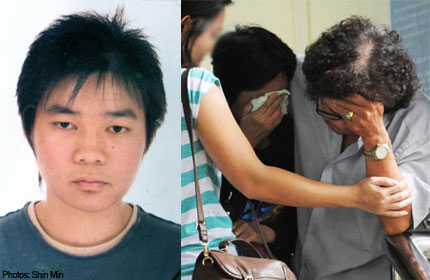
Part-time student, 26, dies suddenly in his sleep
SINGAPORE - His last words to his parents were "I'm very tired",
before going into his room to take a nap. But his parents never saw
26-year-old Tan Songchun alive again.
Tan, a part-time student at the Singapore Institute of Management, was found lying motionless on his bed at about 11pm yesterday.
"His mouth was slightly open and his face was serene, like he was sleeping," said his father.
His mother, who discovered his body, told reporters from Shin Min News Daily that she also found a pool of vomit beside him on his bed.
According to the Chinese evening daily, Tan had come home at about 7pm, after work.
Complaining that he was tired, he told his parents that he would take a nap before dinner. But when he did not emerge from his room a few hours later, his mother went to check on him and found his lifeless body.
Paramedics believe he had been dead for at least an hour.
His father, a 55-year-old odd-job worker, said his son had always been healthy and was filial. The younger Tan had wanted to earn a degree so he could get a better paying job to help support the family.
He had just taken a week's leave to study for his exams, and yesterday was the first day he went back to work.
A doctor interviewed by Shin Min said that vomitting could be caused by a number of reasons including heart and digestive problems, or a head injury.
Vomitting could lead to death if it got into the lungs, leading to pneumonia. But this was more prevalent in alcoholics and the elderly.
He said it was unlikely that vomitting itself could be the cause of death here.
Tan, a part-time student at the Singapore Institute of Management, was found lying motionless on his bed at about 11pm yesterday.
"His mouth was slightly open and his face was serene, like he was sleeping," said his father.
His mother, who discovered his body, told reporters from Shin Min News Daily that she also found a pool of vomit beside him on his bed.
According to the Chinese evening daily, Tan had come home at about 7pm, after work.
Complaining that he was tired, he told his parents that he would take a nap before dinner. But when he did not emerge from his room a few hours later, his mother went to check on him and found his lifeless body.
Paramedics believe he had been dead for at least an hour.
His father, a 55-year-old odd-job worker, said his son had always been healthy and was filial. The younger Tan had wanted to earn a degree so he could get a better paying job to help support the family.
He had just taken a week's leave to study for his exams, and yesterday was the first day he went back to work.
A doctor interviewed by Shin Min said that vomitting could be caused by a number of reasons including heart and digestive problems, or a head injury.
Vomitting could lead to death if it got into the lungs, leading to pneumonia. But this was more prevalent in alcoholics and the elderly.
He said it was unlikely that vomitting itself could be the cause of death here.
Friday, May 11, 2012
Army suspends field training after jeep accident
The Army has suspended all field training for five days as part of a
safety time-out, said the Ministry of Defence (MINDEF) in a statement
today.
The suspension, which will last from May 11-15, is the longest halt in military exercise to date.
MINDEF said it is to serve as a reminder of the current safety measures.
This comes after a national serviceman (NSF) died after sustaining injuries from a jeep accident on Friday afternoon.
It is the second training fatality in less than a month.
3rd Sergeant (3SG) Tan Mou Sheng, 20, was in a scout jeep with a few other servicemen when the driver of the jeep lost control of the vehicle at the Marsiling training area, said MINDEF.
The Straits Times (ST) reported that he was sitting at the back of the jeep when the accident happened at about 6.50am. It is not known if he was belted up or not.
He was found pinned under the vehicle and had lost consciousness. Efforts to revive him failed.
He was in a critical condition when he was sent to Khoo Teck Puat Hospital (KTPH).
According to ST, the former Hwa Chong Institute student underwent surgery, but was later pronounced dead at 1.56pm.
Another NSF, 3SG Hong Dickson, 20, had a laceration on his right leg and was discharged after receiving outpatient treatment at KTPH.
The suspension, which will last from May 11-15, is the longest halt in military exercise to date.
MINDEF said it is to serve as a reminder of the current safety measures.
This comes after a national serviceman (NSF) died after sustaining injuries from a jeep accident on Friday afternoon.
It is the second training fatality in less than a month.
3rd Sergeant (3SG) Tan Mou Sheng, 20, was in a scout jeep with a few other servicemen when the driver of the jeep lost control of the vehicle at the Marsiling training area, said MINDEF.
The Straits Times (ST) reported that he was sitting at the back of the jeep when the accident happened at about 6.50am. It is not known if he was belted up or not.
He was found pinned under the vehicle and had lost consciousness. Efforts to revive him failed.
He was in a critical condition when he was sent to Khoo Teck Puat Hospital (KTPH).
According to ST, the former Hwa Chong Institute student underwent surgery, but was later pronounced dead at 1.56pm.
Another NSF, 3SG Hong Dickson, 20, had a laceration on his right leg and was discharged after receiving outpatient treatment at KTPH.
Thursday, May 10, 2012
Don't lose sleep over weight, scientists say
PARIS: A lack of sleep could make you fat, scientists said on Thursday.
Not getting enough shut-eye may inhibit a hormone which controls hunger satisfaction and boost an appetite-stimulating hormone, said a paper presented to the European Congress on Obesity in Lyon, France.
This, in turn, could increase the sensation of hunger by 25 per cent.
"If this translates to a proportional increase in calories, then a person with reduced sleep could eat 350 to 500 calories more per day," said a statement on the research led by Karine Spiegel from the University of Lyon.
A cheeseburger has about 500 calories.
The study compared data from other research projects on obesity and sleep duration. The findings are more pronounced for children and young adults.
"While it might be natural to think that sleeping less (or being awake more) means you use more calories and should therefore lose weight, studies have shown the opposite to be the case," said the statement.
"Interventions as simple as extending the nightly sleep duration in these younger, habitual short sleepers should be explored to prevent obesity."
Six hours are considered a short sleep period in adults and seven to eight hours a healthier one.
Not getting enough shut-eye may inhibit a hormone which controls hunger satisfaction and boost an appetite-stimulating hormone, said a paper presented to the European Congress on Obesity in Lyon, France.
This, in turn, could increase the sensation of hunger by 25 per cent.
"If this translates to a proportional increase in calories, then a person with reduced sleep could eat 350 to 500 calories more per day," said a statement on the research led by Karine Spiegel from the University of Lyon.
A cheeseburger has about 500 calories.
The study compared data from other research projects on obesity and sleep duration. The findings are more pronounced for children and young adults.
"While it might be natural to think that sleeping less (or being awake more) means you use more calories and should therefore lose weight, studies have shown the opposite to be the case," said the statement.
"Interventions as simple as extending the nightly sleep duration in these younger, habitual short sleepers should be explored to prevent obesity."
Six hours are considered a short sleep period in adults and seven to eight hours a healthier one.
Wednesday, April 11, 2012
Mother's brave hug saves son
A Singapore family's holiday in Malacca ended in tragedy when a woman
and her son were killed when the car they were in went out of control
on the North-South Highway.
Madam Mok Ping Ping , 40, and two of her sons, aged 14 and seven, who were seated at the back, were flung out.
Lianhe Wanbao reported that Madam Mok had grabbed her youngest son and hugged him tightly as they were thrown out to the side of the highway.
Her instinctive action as a protective mother probably saved her son's life as her body shielded him from the full impact of hitting the ground.
Madam Mok and her oldest son, who was thrown onto the middle of the highway, were pronounced dead at the scene.
Her youngest son, a seven-year-old boy, suffered superficial injuries to his head.
The family were on the way back to Singapore when the accident took place near Pagoh in Johor around 5.30pm on Saturday.
It was raining heavily when the car skidded and crashed into a metal barrier along the side of the highway.
Madam Mok's husband was sitting in front next to a friend who was driving. Both of them escaped unhurt.
Another son, who's 13, was travelling with their friends in another car.
Madam Mok and her husband did not have driving licences, Lianhe Wanbao reported.
LOUD WAILS
Her husband broke into loud wails and called repeatedly for her and their son during a ritual held at the accident site around 2am on Sunday.
When The New Paper visited their home in an Upper Bukit Timah Road condominium last night, no one answered the door.
A neighbour said she had not seen the family "for the past few days".
The woman, who looked to be in her 20s and did not want to be named, said the family had moved in just a few months ago.
She knew little about them, except that they have a pet dog.
In another accident on the North-South Highway, a tour bus carrying 29 passengers went out of control on Saturday night and crashed into bushes at the side the road before flipping over.
No one died in the accident, but 15 passengers suffered minor injuries.
The bus is believed to have left Genting Highlands around 4.30pm on Saturday and was heading north when the accident happened near Gopeng in Perak.
SLIPPERY
Slippery roads caused by the rainy weather might have contributed to the crash, reported Sin Chew Daily.
Eight passengers travelling on a commercial bus from Kajang suffered minor injuries when their vehicle crashed into a wall in Kuala Lumpur, stopping several metres from the railway tracks.
The New Straits Times reported that the bus, which was on its way from Kajang to Central Market in Kuala Lumpur, skidded near a traffic light at Jalan Tun Sambanthan, Brickfields, on Saturday morning.
The 54-year-old bus driver, who escaped unhurt, then lost control of the bus and it hit a traffic light post and an overhead bridge nearby.
SINGAPOREANS KILLED ON MALAYSIAN ROADS
June 2011
A woman died and another suffered injuries when a minibus they were in overturned on the North-South Highway near Kulai, Johor.
The accident happened when one of the vehicle's tyres burst, causing the minibus to go out of control and overturn.
April 2011
A 29-year-old IT manager died after he crashed his motorcycle into a barrier on the North-South Highway near Kuala Kangsar, Perak.
February 2011
An elderly woman was killed when the MPV she was in crashed on the North-South Highway near Pagoh, Johor, after the driver lost control of the vehicle.
The woman's son, a 53-year-old businessman, and five other relatives were hurt.
August 2010
A 19-year-old student was flung out of her boyfriend's car after he lost control and crashed into railings in Kluang, Johor.
The student died later in a Johor Baru hospital.
July 2010
A 62-year-old retiree was killed after returning with friends from a holiday in Penang.
The van he was in was involved a three-vehicle collision in Perak.
June 2010
A young Singaporean couple heading home from Genting Highlands crashed their car into the central divider on the North-South Highway in Johor.
The 21-year-old man died, while his girlfriend survived.
June 2010
A retired teacher driving with his family to a wedding in Terengganu smashed his car into a road barrier and spun out of control.
Their vehicle then collided with an oncoming car.
The man, his wife, their 12-year-old granddaughter and their Indonesian maid were killed.
Madam Mok Ping Ping , 40, and two of her sons, aged 14 and seven, who were seated at the back, were flung out.
Lianhe Wanbao reported that Madam Mok had grabbed her youngest son and hugged him tightly as they were thrown out to the side of the highway.
Her instinctive action as a protective mother probably saved her son's life as her body shielded him from the full impact of hitting the ground.
Madam Mok and her oldest son, who was thrown onto the middle of the highway, were pronounced dead at the scene.
Her youngest son, a seven-year-old boy, suffered superficial injuries to his head.
The family were on the way back to Singapore when the accident took place near Pagoh in Johor around 5.30pm on Saturday.
It was raining heavily when the car skidded and crashed into a metal barrier along the side of the highway.
Madam Mok's husband was sitting in front next to a friend who was driving. Both of them escaped unhurt.
Another son, who's 13, was travelling with their friends in another car.
Madam Mok and her husband did not have driving licences, Lianhe Wanbao reported.
LOUD WAILS
Her husband broke into loud wails and called repeatedly for her and their son during a ritual held at the accident site around 2am on Sunday.
When The New Paper visited their home in an Upper Bukit Timah Road condominium last night, no one answered the door.
A neighbour said she had not seen the family "for the past few days".
The woman, who looked to be in her 20s and did not want to be named, said the family had moved in just a few months ago.
She knew little about them, except that they have a pet dog.
In another accident on the North-South Highway, a tour bus carrying 29 passengers went out of control on Saturday night and crashed into bushes at the side the road before flipping over.
No one died in the accident, but 15 passengers suffered minor injuries.
The bus is believed to have left Genting Highlands around 4.30pm on Saturday and was heading north when the accident happened near Gopeng in Perak.
SLIPPERY
Slippery roads caused by the rainy weather might have contributed to the crash, reported Sin Chew Daily.
Eight passengers travelling on a commercial bus from Kajang suffered minor injuries when their vehicle crashed into a wall in Kuala Lumpur, stopping several metres from the railway tracks.
The New Straits Times reported that the bus, which was on its way from Kajang to Central Market in Kuala Lumpur, skidded near a traffic light at Jalan Tun Sambanthan, Brickfields, on Saturday morning.
The 54-year-old bus driver, who escaped unhurt, then lost control of the bus and it hit a traffic light post and an overhead bridge nearby.
SINGAPOREANS KILLED ON MALAYSIAN ROADS
June 2011
A woman died and another suffered injuries when a minibus they were in overturned on the North-South Highway near Kulai, Johor.
The accident happened when one of the vehicle's tyres burst, causing the minibus to go out of control and overturn.
April 2011
A 29-year-old IT manager died after he crashed his motorcycle into a barrier on the North-South Highway near Kuala Kangsar, Perak.
February 2011
An elderly woman was killed when the MPV she was in crashed on the North-South Highway near Pagoh, Johor, after the driver lost control of the vehicle.
The woman's son, a 53-year-old businessman, and five other relatives were hurt.
August 2010
A 19-year-old student was flung out of her boyfriend's car after he lost control and crashed into railings in Kluang, Johor.
The student died later in a Johor Baru hospital.
July 2010
A 62-year-old retiree was killed after returning with friends from a holiday in Penang.
The van he was in was involved a three-vehicle collision in Perak.
June 2010
A young Singaporean couple heading home from Genting Highlands crashed their car into the central divider on the North-South Highway in Johor.
The 21-year-old man died, while his girlfriend survived.
June 2010
A retired teacher driving with his family to a wedding in Terengganu smashed his car into a road barrier and spun out of control.
Their vehicle then collided with an oncoming car.
The man, his wife, their 12-year-old granddaughter and their Indonesian maid were killed.
Monday, April 9, 2012
Top 10 natural cancer killers
A recent study found that the adoption of only one of five healthy
lifestyle habits, such as not smoking and drinking moderately, can lower
the cancer risk in males by 14 per cent.
The results of a long-term survey by the National Cancer Center of Japan found that the more healthy habits the subjects had, the lower their risk of cancer.
On average, the adoption of one healthy habit would reduce cancer risks by 14 per cent for males and by 9 per cent for females, the center said.
However, other than healthy habits, it is known that certain foods have excellent anti-cancer properties.
These cancer-fighting foods contain antioxidants and phytonutrients - nutrients with potent disease fighting power that supresses the development of cancer cells and boost your immune system.
And the fact that these are all easily available foods means that you can fight cancer with ever meal, snack and beverage you take, three times a day, everyday.
Here's a list of the top 10 cancer fighting foods you should watch out for, compiled by Dr Geo Espinosa, N.D., L.Ac, CNS, the Director of the Integrative Urology Center at New York University Langone Medical Center.
1. Beans: Not only do they offer an excellent nutritional choice, they
are a good source of fibre and have been found to be especially
protective against head and neck cancers - which include cancer of the
mouth, throat and larynx.
A study found that people who ate beans at least three times a week cut their chances of getting colon polyps by a whopping 33%.
However, unlike vegetables where the more colourful the vegetable, the more cancer fighting nutrients it is likely to have, beans are the opposite. White kidney beans are believed to work better against cancer cells than more colourful beans.
2. Broccoli and other vegetables: Broccoli is known to be rich in several cancer fighting compounds, including the chemical indole-3-carbinol (I3C), which is linked to another phytonutrient diindolylmethane (DIM).
Not only broccoli, other cruciferous vegetables such as cabbage, cauliflower and brussel sprouts are rich in these nutrients.
The chemicals help to promote the metabolism of estrogen, which is a cancer-promoting hormone. Cruciferous vegetables are also a source of a chemical known to promote the production of enzymes that fight cancer-causing agents.
3. Carrots: This power food is known to be an excellent source of beta-carotene, which is a powerful anti-oxidant.
It is known for cutting the risk of various cancers, such as cancers of the prostate, mouth, throat, colon, stomach and bladder, among many more.
In addition to beta-carotene, carrots also have a cancer-fighting substance known as falcarinol. This substance is known for inhibiting the proliferation of intestinal cancer cells.
4. Peppers and Capsicum: Capsaicin is the main capsaicinoid in chili peppers. In a study, it was found that capsaicin slows down the growth of prostate cancer and encouraged cell suicide of cancer cells.
Capsaicin is believed to have some effect against lung cancer and stomach cancer.
According to reports, when capsaicin was added to conventional anticancer drugs, it promoted the apoptosis of stomach cancer cells.
5. Garlic: Garlic is not just for vampires. They also keep cancer away.
The herb reportedly helps to enhance the immune system to fight cancer. These compounds are believed to block carcinogens from getting into cells. In addition, they may help slow the growth of tumours.
Studies say that people who regularly eat raw or cooked garlic have about half the risk of developing stomach cancer and two-thirds the risk of colorectal cancer.
6. Mushrooms: Mushrooms are delicious, and they come in many different forms - from shitake, maitake to coriolus versicolor.
They are rich in polysaccharides, which gives a boost to the immune system.
Mushrooms also contain lectin, which prevents cancer cells from multiplying. Previous studies have suggested the potential of mushrooms against cancers such as prostate cancer and leukemia.
7. Raspberries: It is a well known fact that fruits such as raspberries are an excellent source of antioxidants and phytonutrients.
In a study done on rats, those given of diet of 5 to 10% raspberries had up to 62% decrease in number of esophageal tumours.
The raspberries were also observed to inhibit the growth of colon cancer cells.
8. Red wine and grapes: Resveratrol is a powerful antioxidant known to be present in grapes and red wine.
A study found that it slows the growth of prostate cancer cells, and have shown positive results in relation to colon cancer.
Its anti-inflammatory properties are also helpful in the cancer fight.
9. Tomotoes: Tomatoes which are cooked or processed have an especially high concentration of lycopene, a phytonutrient and antioxidant.
A study found that men who consumed the most tomatoes and tomato products had a 35% lower risk of developing prostate cancer.
Other case-control studies have shown that greater consumption of tomatoes is associated with a reduced risk of lung cancer.
10. Turmeric: Turmeric is called an anticancer food for a reason. Curcumin, which is the active ingredient in turmeric, appears to be a blend of anti-carcinogenic, pro-apoptotic, anti-angiogenic, anti-metastatic, immunomodulatory and antioxidant substances.
In addition to fighting prostate and colon cancer, data suggests that curcumin used along with chemotherapy is a superior strategy for the treatment of gastrointestinal cancer.
Clinical studies have shown that turmeric may also help in relieving symptoms of inflammatory bowel diseases.
The results of a long-term survey by the National Cancer Center of Japan found that the more healthy habits the subjects had, the lower their risk of cancer.
On average, the adoption of one healthy habit would reduce cancer risks by 14 per cent for males and by 9 per cent for females, the center said.
These cancer-fighting foods contain antioxidants and phytonutrients - nutrients with potent disease fighting power that supresses the development of cancer cells and boost your immune system.
And the fact that these are all easily available foods means that you can fight cancer with ever meal, snack and beverage you take, three times a day, everyday.
Here's a list of the top 10 cancer fighting foods you should watch out for, compiled by Dr Geo Espinosa, N.D., L.Ac, CNS, the Director of the Integrative Urology Center at New York University Langone Medical Center.
A study found that people who ate beans at least three times a week cut their chances of getting colon polyps by a whopping 33%.
However, unlike vegetables where the more colourful the vegetable, the more cancer fighting nutrients it is likely to have, beans are the opposite. White kidney beans are believed to work better against cancer cells than more colourful beans.
2. Broccoli and other vegetables: Broccoli is known to be rich in several cancer fighting compounds, including the chemical indole-3-carbinol (I3C), which is linked to another phytonutrient diindolylmethane (DIM).
Not only broccoli, other cruciferous vegetables such as cabbage, cauliflower and brussel sprouts are rich in these nutrients.
The chemicals help to promote the metabolism of estrogen, which is a cancer-promoting hormone. Cruciferous vegetables are also a source of a chemical known to promote the production of enzymes that fight cancer-causing agents.
3. Carrots: This power food is known to be an excellent source of beta-carotene, which is a powerful anti-oxidant.
It is known for cutting the risk of various cancers, such as cancers of the prostate, mouth, throat, colon, stomach and bladder, among many more.
In addition to beta-carotene, carrots also have a cancer-fighting substance known as falcarinol. This substance is known for inhibiting the proliferation of intestinal cancer cells.
4. Peppers and Capsicum: Capsaicin is the main capsaicinoid in chili peppers. In a study, it was found that capsaicin slows down the growth of prostate cancer and encouraged cell suicide of cancer cells.
Capsaicin is believed to have some effect against lung cancer and stomach cancer.
According to reports, when capsaicin was added to conventional anticancer drugs, it promoted the apoptosis of stomach cancer cells.
5. Garlic: Garlic is not just for vampires. They also keep cancer away.
The herb reportedly helps to enhance the immune system to fight cancer. These compounds are believed to block carcinogens from getting into cells. In addition, they may help slow the growth of tumours.
Studies say that people who regularly eat raw or cooked garlic have about half the risk of developing stomach cancer and two-thirds the risk of colorectal cancer.
6. Mushrooms: Mushrooms are delicious, and they come in many different forms - from shitake, maitake to coriolus versicolor.
They are rich in polysaccharides, which gives a boost to the immune system.
Mushrooms also contain lectin, which prevents cancer cells from multiplying. Previous studies have suggested the potential of mushrooms against cancers such as prostate cancer and leukemia.
7. Raspberries: It is a well known fact that fruits such as raspberries are an excellent source of antioxidants and phytonutrients.
In a study done on rats, those given of diet of 5 to 10% raspberries had up to 62% decrease in number of esophageal tumours.
The raspberries were also observed to inhibit the growth of colon cancer cells.
8. Red wine and grapes: Resveratrol is a powerful antioxidant known to be present in grapes and red wine.
A study found that it slows the growth of prostate cancer cells, and have shown positive results in relation to colon cancer.
Its anti-inflammatory properties are also helpful in the cancer fight.
9. Tomotoes: Tomatoes which are cooked or processed have an especially high concentration of lycopene, a phytonutrient and antioxidant.
A study found that men who consumed the most tomatoes and tomato products had a 35% lower risk of developing prostate cancer.
Other case-control studies have shown that greater consumption of tomatoes is associated with a reduced risk of lung cancer.
10. Turmeric: Turmeric is called an anticancer food for a reason. Curcumin, which is the active ingredient in turmeric, appears to be a blend of anti-carcinogenic, pro-apoptotic, anti-angiogenic, anti-metastatic, immunomodulatory and antioxidant substances.
In addition to fighting prostate and colon cancer, data suggests that curcumin used along with chemotherapy is a superior strategy for the treatment of gastrointestinal cancer.
Clinical studies have shown that turmeric may also help in relieving symptoms of inflammatory bowel diseases.
Thursday, April 5, 2012
Cyclist run over by car along Lower Delta Road
A fatal road accident took place at Lower Delta road last night.
A male cyclist was run over by a car and pinned under the vehicle.
A driver who witnessed the accident sent video footage of the scene to citizen journalism website Stomp after recording it from his in-car camera.
The accident occurred in the centre lane of the road, causing traffic to slow down.
A spokesperson from the the police said:
"The police are investigating a fatal road accident that took place at about 9.30pm along Lower Delta Road towards Bukit Merah.
"The accident involved a car and a bicycle.
"The cyclist was a 57-year-old Chinese man. He was pronounced dead at 9.55pm and the driver was arrested.
Police investigations are ongoing.
A male cyclist was run over by a car and pinned under the vehicle.
A driver who witnessed the accident sent video footage of the scene to citizen journalism website Stomp after recording it from his in-car camera.
The accident occurred in the centre lane of the road, causing traffic to slow down.
A spokesperson from the the police said:
"The police are investigating a fatal road accident that took place at about 9.30pm along Lower Delta Road towards Bukit Merah.
"The accident involved a car and a bicycle.
"The cyclist was a 57-year-old Chinese man. He was pronounced dead at 9.55pm and the driver was arrested.
Police investigations are ongoing.
Wednesday, April 4, 2012
Some vegetables improve breast cancer survival: Study
WASHINGTON (AFP) - Chinese women who ate cabbage, broccoli and leafy
greens saw improved survival rates after breast cancer than women who
did not eat these cruciferous vegetables, said an United States study
presented on Tuesday.
The findings came from data on 4,886 Chinese breast cancer survivors aged 20 to 75 who were diagnosed with stage one to stage four breast cancer from 2002 to 2006 and who were part of the Shanghai Breast Cancer Survival study.
Women who ate more cruciferous vegetables over the 36 months following their diagnosis saw their risk of dying from any cause decrease by 27 per cent to 62 per cent compared to women who reporting eating little or none of these veggies.
The risk of dying of breast cancer decreased by 22 to 62 per cent for the cruciferous veggie eaters, and their chance of experiencing a recurrence of breast cancer dropped by 21 to 35 per cent.
The findings came from data on 4,886 Chinese breast cancer survivors aged 20 to 75 who were diagnosed with stage one to stage four breast cancer from 2002 to 2006 and who were part of the Shanghai Breast Cancer Survival study.
Women who ate more cruciferous vegetables over the 36 months following their diagnosis saw their risk of dying from any cause decrease by 27 per cent to 62 per cent compared to women who reporting eating little or none of these veggies.
The risk of dying of breast cancer decreased by 22 to 62 per cent for the cruciferous veggie eaters, and their chance of experiencing a recurrence of breast cancer dropped by 21 to 35 per cent.
Saturday, March 31, 2012
At 20, she's only 20kg
This 20-year-old Russian girl has been making waves in the online world.
Kseniya Bubenko is perilously skinny.
She is 1.58m and weighs just 20kg, a curious mixture of skin and bones.
Photos of her recently
emerged on online after she appeared on a Russian talk show, shocking
netizens with her tiny frame. Her pictures have also gone viral on
Facebook.
She has reportedly named her own diet "pobeda" ("victory" in Russian) and her images have appeared in many publications worldwide.
Reactions are flying in thick and fast from netizens all over the world, with many criticising the fashion world for abetting eating disorders by glamorising extreme thinness.
On Singapore's own citizen journalism website Stomp, the reactions range from disgust to admiration.
"She's beautiful..." Stomper localblood gushes while PasserBySaysBye thinks otherwise. "Her face is pretty.. but her body is not," he says.
For those who decry the notion that ultra-skinny is sexy, change is coming.
Last week, Israel became the first country to ban underweight models from catwalks and commercials.
The move is the first attempt by a government to use legislation to take on the skinny trend.
The law could become a model for other countries grappling with the spread of anorexia and bulimia, particularly among young women.
The anti-skinny law will not apply to foreign publications sold in Israel.
But otherwise, models must produce a medical report, dating back no more than three months, at every shoot that will be used in the Israeli market.
They must state that they are not malnourished by World Health Organisation standards.
The UN agency uses the body mass index - calculated by dividing weight by height - to determine malnutrition.
Any advert published for the Israeli market must also have a clearly written notice disclosing if the model used was digitally altered to make her, or him, look thinner.
Understanding a anorexia
Also known as Golden Girl Syndrome, anorexia nervosa is characterised by voluntary maintenance of unhealthy low weight (less than 85 per cent of expected), cessation of menstrual periods for at least three cycles (amenorrhoea), and an intense fear of weight gain or becoming fat.
Those who have anorexia
are very concerned about their weight and they keep it as low as
possible by strictly controlling what they eat. They may also exercise
very vigorously to lose weight.
The onset of anorexia is often innocuous with mild attempts at dieting initially. These frequently get of hand rapidly.
There is no single cause for anorexia nervosa - rather, it is the result of a combination of emotional, social and biological factors. However, most studies suggest that it is 10 to 20 times more common in females than in males.
Although the condition is the leading cause of death for mental health cases, with a 10 to 15 per cent risk of premature death, the disorder often causes the sufferer to become severely disabled, but stops short of killing him or her.
The disorder is alarmingly common amongst girls in Singapore, and the number of cases seems to be on the rise.
Between 1994 and 2002, there were a total of 126 cases recorded by the Child Guidance Clinic and the Eating Disorder Clinic at the Institute of Mental Health. In recent years, the number of anorexia cases has increased, with Singapore General Hospital (SGH) seeing an average of 120 new cases a year.
The cause of anorexia is not known. But it is believed that anorexics have certain personality characteristics which increase their likelihood of developing the condition.
Most anorexics have certain personality traits like difficulty handling stress, a tendency to anxiety and depression, obsessive-compulsive feelings and perfectionism.
What are you risking, besides your life?
Circulation may be impaired due to slow or irregular heart beats and the blood pressure may be low, either of which can lead to dizziness. There may be swelling of the face, hands and feet, and fatigue associated with altered sleep patterns.
Untreated anorexia results in severe complications, which includes:
>> Thinning of the bones;
>> Electrolyte imbalance;
>> Low blood sugar levels;
>> Heart failure;
>> Kidney failure;
>> Liver damage,
>> and anaemia.
Low levels of nutrition can also lead to a host of problems, such as:
>> Low potassium levels can lead to dehydration, fatigue, kidney damage, irregular heartbeats and fits.
>> Low sodium levels can lead to confusion and, if severe, fits.
>> Low calcium levels can lead to painful and tight muscle contractions.
>> Low calcium and vitamin D levels can lead to bone damage.
There may be dental decay due to the stomach's acid acting on the teeth, caused by frequent vomiting.
Anorexic children have impaired growth and delayed puberty. Adolescent and young females may cease having periods and/or have infertility.
Anorexia in pregnancy increases the risks of miscarriage, premature birth and baby of low birth weight.
For men, there may be loss of libido and impotency in men.
Anorexia can lead to bulimia nervosa, in which there is binge eating followed by immediate attempts at vomiting and/or laxative use to get rid of the food consumed.
Serious complications secondary to bingeing are rare but can be catastrophic when they occur, eg rupture of the oesophagus or stomach.
Warning signs to look out for
How do you tell if your friend or family member has an eating disorder? Look for these 20 behaviours, signs and symptoms:
1. Extreme preoccupation with food
2. Distorted perception of their body
3. Emotional state tied to eating habits
4. Self loathing comments
5. Becoming very secretive about food
6. Moodiness, shakiness, irritability
7. Obsessive rituals (such as eating only certain food at certain foods)
8. Social withdrawal
9. Avoidance of social situations that include food
10. Loss of menstrual period
11. Development of fuzzy hair on the body
12. Exercises in an extreme manner
13. Excessive calorie counting
14. Dramatic weight loss unrelated to illness
15. Gets very cold easily
16. Dry and brittle hair
17. Hoarding and hiding food
18. Blisters on knuckles and fingers from sticking fingers down their throats
19. Frequent and secretive trips to the bathroom after meals
20. Consumes large amounts of food when experiencing stressful or unhappy emotions
21. Eats secretively or is ashamed of the amount consumed
Where to get help
Singapore General Hospital Eating Disorders Programme (Tel: 6321 4377)
Association of Women for Action and Research (AWARE) Eating Disorders Helpline: 1800-774-5935
Singapore Association of Mental Health (Support for Eating Disorders Singapore SEDS) Helpline: 1800 283 7019
Kseniya Bubenko is perilously skinny.
She is 1.58m and weighs just 20kg, a curious mixture of skin and bones.
She has reportedly named her own diet "pobeda" ("victory" in Russian) and her images have appeared in many publications worldwide.
Reactions are flying in thick and fast from netizens all over the world, with many criticising the fashion world for abetting eating disorders by glamorising extreme thinness.
On Singapore's own citizen journalism website Stomp, the reactions range from disgust to admiration.
"She's beautiful..." Stomper localblood gushes while PasserBySaysBye thinks otherwise. "Her face is pretty.. but her body is not," he says.
For those who decry the notion that ultra-skinny is sexy, change is coming.
Last week, Israel became the first country to ban underweight models from catwalks and commercials.
The move is the first attempt by a government to use legislation to take on the skinny trend.
The law could become a model for other countries grappling with the spread of anorexia and bulimia, particularly among young women.
The anti-skinny law will not apply to foreign publications sold in Israel.
But otherwise, models must produce a medical report, dating back no more than three months, at every shoot that will be used in the Israeli market.
They must state that they are not malnourished by World Health Organisation standards.
The UN agency uses the body mass index - calculated by dividing weight by height - to determine malnutrition.
Any advert published for the Israeli market must also have a clearly written notice disclosing if the model used was digitally altered to make her, or him, look thinner.
Understanding a anorexia
Also known as Golden Girl Syndrome, anorexia nervosa is characterised by voluntary maintenance of unhealthy low weight (less than 85 per cent of expected), cessation of menstrual periods for at least three cycles (amenorrhoea), and an intense fear of weight gain or becoming fat.
The onset of anorexia is often innocuous with mild attempts at dieting initially. These frequently get of hand rapidly.
There is no single cause for anorexia nervosa - rather, it is the result of a combination of emotional, social and biological factors. However, most studies suggest that it is 10 to 20 times more common in females than in males.
Although the condition is the leading cause of death for mental health cases, with a 10 to 15 per cent risk of premature death, the disorder often causes the sufferer to become severely disabled, but stops short of killing him or her.
The disorder is alarmingly common amongst girls in Singapore, and the number of cases seems to be on the rise.
Between 1994 and 2002, there were a total of 126 cases recorded by the Child Guidance Clinic and the Eating Disorder Clinic at the Institute of Mental Health. In recent years, the number of anorexia cases has increased, with Singapore General Hospital (SGH) seeing an average of 120 new cases a year.
The cause of anorexia is not known. But it is believed that anorexics have certain personality characteristics which increase their likelihood of developing the condition.
Most anorexics have certain personality traits like difficulty handling stress, a tendency to anxiety and depression, obsessive-compulsive feelings and perfectionism.
What are you risking, besides your life?
Circulation may be impaired due to slow or irregular heart beats and the blood pressure may be low, either of which can lead to dizziness. There may be swelling of the face, hands and feet, and fatigue associated with altered sleep patterns.
>> Thinning of the bones;
>> Electrolyte imbalance;
>> Low blood sugar levels;
>> Heart failure;
>> Kidney failure;
>> Liver damage,
>> and anaemia.
Low levels of nutrition can also lead to a host of problems, such as:
>> Low potassium levels can lead to dehydration, fatigue, kidney damage, irregular heartbeats and fits.
>> Low sodium levels can lead to confusion and, if severe, fits.
>> Low calcium levels can lead to painful and tight muscle contractions.
>> Low calcium and vitamin D levels can lead to bone damage.
There may be dental decay due to the stomach's acid acting on the teeth, caused by frequent vomiting.
Anorexic children have impaired growth and delayed puberty. Adolescent and young females may cease having periods and/or have infertility.
Anorexia in pregnancy increases the risks of miscarriage, premature birth and baby of low birth weight.
For men, there may be loss of libido and impotency in men.
Anorexia can lead to bulimia nervosa, in which there is binge eating followed by immediate attempts at vomiting and/or laxative use to get rid of the food consumed.
Serious complications secondary to bingeing are rare but can be catastrophic when they occur, eg rupture of the oesophagus or stomach.
Warning signs to look out for
How do you tell if your friend or family member has an eating disorder? Look for these 20 behaviours, signs and symptoms:
2. Distorted perception of their body
3. Emotional state tied to eating habits
4. Self loathing comments
5. Becoming very secretive about food
6. Moodiness, shakiness, irritability
7. Obsessive rituals (such as eating only certain food at certain foods)
8. Social withdrawal
9. Avoidance of social situations that include food
10. Loss of menstrual period
11. Development of fuzzy hair on the body
12. Exercises in an extreme manner
13. Excessive calorie counting
14. Dramatic weight loss unrelated to illness
15. Gets very cold easily
16. Dry and brittle hair
17. Hoarding and hiding food
18. Blisters on knuckles and fingers from sticking fingers down their throats
19. Frequent and secretive trips to the bathroom after meals
20. Consumes large amounts of food when experiencing stressful or unhappy emotions
21. Eats secretively or is ashamed of the amount consumed
Where to get help
Singapore General Hospital Eating Disorders Programme (Tel: 6321 4377)
Association of Women for Action and Research (AWARE) Eating Disorders Helpline: 1800-774-5935
Singapore Association of Mental Health (Support for Eating Disorders Singapore SEDS) Helpline: 1800 283 7019
Monday, March 26, 2012
Chocolate lovers tend to weigh less: Study
People who ate chocolate a few times a week or more weighed less than
those who rarely indulged, according to a US study involving a thousand
people.
Researchers said the findings, published in the Archives of Internal Medicine, don't prove that adding a candy bar to your daily diet will help you shed pounds. Nor did the total amount of chocolate consumed have an impact.
But the researchers, led by Beatrice Golomb, from the University of California San Diego, said it was possible that antioxidants in chocolate could be behind health benefits including lower blood pressure and cholesterol, as well as decreased body weight.
"People have just assumed
that because it comes with calories and it's typically eaten as a
sweet, therefore it would inherently have been one way, bad," said
Golomb.
She and her colleagues used data from a study on cholesterol-lowering drugs that surveyed 1,000 healthy adults on typical eating habits, including how often they ate chocolate.
The participants, who ranged from 20 to 85 years old, ate chocolate an average of twice per week and had an average body mass index, or BMI, of 28, which is considered overweight but not obese.
The researchers found that people who ate chocolate with greater frequency tended to eat more calories overall, including more saturated fat, than those who went light on the candy. But even so, chocolate lovers tended to have a lower body weight.
That was still the case after researchers accounted for age and gender, as well as how much they exercised.
The effect worked out to a 2.3 to 3.2 kg (5 to 7 lb)difference between people who ate five servings of chocolate a week compared to those who didn't eat any, Golomb said.
However, it was only how often they ate chocolate, rather than the total amount, that was linked to their weight.
Past studies have tied chocolate to lower blood pressure and cholesterol, and better insulin sensitivity, possibly because of antioxidants or other chemicals in cocoa.
There are a number of possible explanations for the results, said Eric Ding, a nutritionist at the Harvard Medical School who was not involved in the study.
One is that poorer people stick to the basics when they're buying food and don't eat as much chocolate. Poverty has been tied to higher body weight.
Another possibility is that "people who lost weight reward themselves with chocolate, more than chocolate causing the weight loss," he told Reuters Health.
Because the new study is relatively small and couldn't prove cause-and-effect, it's hard to take any lessons from the findings, Ding said. But the key for chocolate lovers seems to be considering calories and knowing that not all chocolate is created equal.
For example, past evidence suggests that antioxidants in chocolate called flavonoids are behind any benefits tied to chocolate - and dark chocolate has the most flavonoids.
"If you consume chocolate, consume it in place of something else, rather than adding to your net daily calories. Try to consume dark chocolate," he said.
The researchers agreed that moderation is important. "This certainly does not provide support for eating large amounts of chocolate," Golomb said. "For those of us who do eat a little bit of chocolate regularly, perhaps any guilt associated with that might be qualified."
Researchers said the findings, published in the Archives of Internal Medicine, don't prove that adding a candy bar to your daily diet will help you shed pounds. Nor did the total amount of chocolate consumed have an impact.
But the researchers, led by Beatrice Golomb, from the University of California San Diego, said it was possible that antioxidants in chocolate could be behind health benefits including lower blood pressure and cholesterol, as well as decreased body weight.
She and her colleagues used data from a study on cholesterol-lowering drugs that surveyed 1,000 healthy adults on typical eating habits, including how often they ate chocolate.
The participants, who ranged from 20 to 85 years old, ate chocolate an average of twice per week and had an average body mass index, or BMI, of 28, which is considered overweight but not obese.
The researchers found that people who ate chocolate with greater frequency tended to eat more calories overall, including more saturated fat, than those who went light on the candy. But even so, chocolate lovers tended to have a lower body weight.
That was still the case after researchers accounted for age and gender, as well as how much they exercised.
The effect worked out to a 2.3 to 3.2 kg (5 to 7 lb)difference between people who ate five servings of chocolate a week compared to those who didn't eat any, Golomb said.
However, it was only how often they ate chocolate, rather than the total amount, that was linked to their weight.
Past studies have tied chocolate to lower blood pressure and cholesterol, and better insulin sensitivity, possibly because of antioxidants or other chemicals in cocoa.
There are a number of possible explanations for the results, said Eric Ding, a nutritionist at the Harvard Medical School who was not involved in the study.
One is that poorer people stick to the basics when they're buying food and don't eat as much chocolate. Poverty has been tied to higher body weight.
Another possibility is that "people who lost weight reward themselves with chocolate, more than chocolate causing the weight loss," he told Reuters Health.
Because the new study is relatively small and couldn't prove cause-and-effect, it's hard to take any lessons from the findings, Ding said. But the key for chocolate lovers seems to be considering calories and knowing that not all chocolate is created equal.
For example, past evidence suggests that antioxidants in chocolate called flavonoids are behind any benefits tied to chocolate - and dark chocolate has the most flavonoids.
"If you consume chocolate, consume it in place of something else, rather than adding to your net daily calories. Try to consume dark chocolate," he said.
The researchers agreed that moderation is important. "This certainly does not provide support for eating large amounts of chocolate," Golomb said. "For those of us who do eat a little bit of chocolate regularly, perhaps any guilt associated with that might be qualified."
Friday, March 9, 2012
The myth of the 8-hour sleep
If you are tossing and turning every night fretting that you are not
getting your full eight hours of beauty sleep, you are likely worrying
for nothing.
The dogmatic idea that every adult has to get eight hours of sleep every night is likely a myth.
A sleep study on students published in the latest issue of the Eastern Economics Journal found that for older teens, seven hours a night was enough.
The study, which compared
children's test scores with the amount of sleep they reported, revealed
that 12-year-old did well on eight hours of sleep, and 10-year-olds
required about nine hours of sleep.
US federal guidelines recommend about nine hours of sleep for children.
It appears that "no matter how much sleep children are getting, it has always been assumed that they need more," as summed up by a report by journal Pediatrics.
Experts YourHealth spoke to said the idea of the specific eight hour recommendation stems from the belief that after 16 hours of alertness, the body needs the remaining eight hours to rest and recharge.
However, this belief, which has since become somewhat of a dogma, can be misleading.
"Some people may fret unnecessarily if they are not getting the full eight hours, and the stress it creates is undesirable," said Dr Lim Li Ling, President of Singapore Sleep Society and Medical Director of the Singapore Neurology & Sleep Centre.
People should not be fixated on the idea that they must get eight hours of sleep, as every individual is different, she added.
Taking herself as an
example, Dr Lim said she needs seven hours of sleep every night. For
most adults, the number of hours required falls between six to eight
hours. For newborns, sleep requirement may go as high as 16 hours.
However, doctors interviewed warned against the idea that you can just copy your neighbour in sleeping four hours a night and be in the pink of health.
While different people may have different sleep requirements, Dr Lim says it generally settles around the eight hour mark, give or take an hour or two.
"There is an elite that by virtue of nature, don't need much sleep," Prof Michael Chee of the Duke-NUS Graduate Medical School and Principal Investigator of the Cognitive Neuroscience Lab told YourHealth.
"Mutations in hDEC2 confer such ability in perhaps the one to three per cent of persons who get by on four to five hours a night," he said.
"However, just as most of us don't have the athletic chops of a professional athlete or the body of a model, we'll need more to stay in top shape."
What's the ideal sleep requirement?
According to Prof Chee, this is similar to asking "what is the best diet". There is no simple answer to this question.
Research simply shows that dogmatic time recommendations may not be necessarily correct, he said.
While in one study, researchers were surprised to find that students on 7 hours of sleep fared no worse in scholastic achievement than those on 9 hours, another study on 12,000 subjects found that students with less than 8hours of sleep were more likely to engage in risky sexual behavior and consume tobacco.
In addition, differing lifestyles play a part in determining the amount of sleep we need, he said.
"Sleep loss increases the rate of performance decline as you persistently engage in an attentionally demanding task. So if you are just vegetating, you probably won't notice sleep loss as if you are making many decisions on a complex plan," he said.
A good gauge of your sleep requirement is how many hours of sleep you consistently need to feel well-rested, Dr Lim advised.
If you are crawling out of bed every morning, or drinking a cup of coffee every morning, you are likely sleeping below your requirements.
Indications that you have hit your requirement includes:
>> Waking up naturally
>> Feeling refreshed
>> Able to sustain alertness
>>Having no urge for a nap
>> Not requiring artificial stimulants like coffee.
Fragmented sleep: Good or bad?
As recent reports have cast doubt on the veracity of the number eight, some say the myth could extend as far as suggesting a continuous eight hour sleep is 'unnatural'.
A report by BBC suggested
that it is normal to get two sleep sessions - one in the early evening,
and another later in the night after a break.
Historian Roger Ekirch said much of historical evidence shows that humans used to sleep in two distinct chunks.
Later on in history, attitudes changed to encourage a full eight hour block of sleep, but while most have adapted to this sleeping pattern, Ekirch believes that the human body's natural preference for segmented sleep as well may be the root of many sleeping problems.
This includes a condition called sleep maintenance insomnia, where people wake during the night and have trouble getting back to sleep.
The anxiety cause by the 'false' belief that humans need to sleep in a consolidated block could lead to a vicious cycle, Ekirch said.
However, experts here say this is no reason to go against the recommended full eight hours every night, and especially not to support the practice of waking up in the middle of the night to surf the net, only to complain of feeling tired the next day.
If you are waking up in the middle of the night naturally, there is no reason to get overly anxious and take unnecessary steps to remedy it, such as taking sleeping pills.
This is medically unsound, Prof Chee said.
However, whether polyphasic sleep is necessarily better is another question. This is as the body goes through several stages of sleep every sleep cycle, from light sleep to the deeper stages of stage 3 non-REM and REM sleep.
Rapid eye movement (REM) sleep first occurs about 90 minutes after falling asleep, and may last as long as 10 minutes to an hour.
If you are awoken after entering the deeper sleep cycles, you may experience sleep paralysis or 'sleep drunkedness', Dr Lim said. In a worse case scenario, you may feel groggy for the rest of the day, affecting your work productivity.
And while some research has suggested that an afternoon nap may be beneficial, Dr Lim said that this is taking into consideration that most of us are sleep deprived, and an extra half-an-hour shut eye is beneficial as an addition to the total amount of sleep time.
Another factor to consider that a continuous block of sleep is simply more time efficient. While Dr Lim conceded that the retired or children can afford to sleep in small chunks, most of us have schedules that would just 'not make sense'.
The dogmatic idea that every adult has to get eight hours of sleep every night is likely a myth.
A sleep study on students published in the latest issue of the Eastern Economics Journal found that for older teens, seven hours a night was enough.
US federal guidelines recommend about nine hours of sleep for children.
It appears that "no matter how much sleep children are getting, it has always been assumed that they need more," as summed up by a report by journal Pediatrics.
Experts YourHealth spoke to said the idea of the specific eight hour recommendation stems from the belief that after 16 hours of alertness, the body needs the remaining eight hours to rest and recharge.
However, this belief, which has since become somewhat of a dogma, can be misleading.
"Some people may fret unnecessarily if they are not getting the full eight hours, and the stress it creates is undesirable," said Dr Lim Li Ling, President of Singapore Sleep Society and Medical Director of the Singapore Neurology & Sleep Centre.
People should not be fixated on the idea that they must get eight hours of sleep, as every individual is different, she added.
However, doctors interviewed warned against the idea that you can just copy your neighbour in sleeping four hours a night and be in the pink of health.
While different people may have different sleep requirements, Dr Lim says it generally settles around the eight hour mark, give or take an hour or two.
"There is an elite that by virtue of nature, don't need much sleep," Prof Michael Chee of the Duke-NUS Graduate Medical School and Principal Investigator of the Cognitive Neuroscience Lab told YourHealth.
"Mutations in hDEC2 confer such ability in perhaps the one to three per cent of persons who get by on four to five hours a night," he said.
"However, just as most of us don't have the athletic chops of a professional athlete or the body of a model, we'll need more to stay in top shape."
What's the ideal sleep requirement?
According to Prof Chee, this is similar to asking "what is the best diet". There is no simple answer to this question.
While in one study, researchers were surprised to find that students on 7 hours of sleep fared no worse in scholastic achievement than those on 9 hours, another study on 12,000 subjects found that students with less than 8hours of sleep were more likely to engage in risky sexual behavior and consume tobacco.
In addition, differing lifestyles play a part in determining the amount of sleep we need, he said.
"Sleep loss increases the rate of performance decline as you persistently engage in an attentionally demanding task. So if you are just vegetating, you probably won't notice sleep loss as if you are making many decisions on a complex plan," he said.
A good gauge of your sleep requirement is how many hours of sleep you consistently need to feel well-rested, Dr Lim advised.
If you are crawling out of bed every morning, or drinking a cup of coffee every morning, you are likely sleeping below your requirements.
Indications that you have hit your requirement includes:
>> Waking up naturally
>> Feeling refreshed
>> Able to sustain alertness
>>Having no urge for a nap
>> Not requiring artificial stimulants like coffee.
Fragmented sleep: Good or bad?
As recent reports have cast doubt on the veracity of the number eight, some say the myth could extend as far as suggesting a continuous eight hour sleep is 'unnatural'.
Historian Roger Ekirch said much of historical evidence shows that humans used to sleep in two distinct chunks.
Later on in history, attitudes changed to encourage a full eight hour block of sleep, but while most have adapted to this sleeping pattern, Ekirch believes that the human body's natural preference for segmented sleep as well may be the root of many sleeping problems.
This includes a condition called sleep maintenance insomnia, where people wake during the night and have trouble getting back to sleep.
The anxiety cause by the 'false' belief that humans need to sleep in a consolidated block could lead to a vicious cycle, Ekirch said.
However, experts here say this is no reason to go against the recommended full eight hours every night, and especially not to support the practice of waking up in the middle of the night to surf the net, only to complain of feeling tired the next day.
If you are waking up in the middle of the night naturally, there is no reason to get overly anxious and take unnecessary steps to remedy it, such as taking sleeping pills.
However, whether polyphasic sleep is necessarily better is another question. This is as the body goes through several stages of sleep every sleep cycle, from light sleep to the deeper stages of stage 3 non-REM and REM sleep.
Rapid eye movement (REM) sleep first occurs about 90 minutes after falling asleep, and may last as long as 10 minutes to an hour.
If you are awoken after entering the deeper sleep cycles, you may experience sleep paralysis or 'sleep drunkedness', Dr Lim said. In a worse case scenario, you may feel groggy for the rest of the day, affecting your work productivity.
And while some research has suggested that an afternoon nap may be beneficial, Dr Lim said that this is taking into consideration that most of us are sleep deprived, and an extra half-an-hour shut eye is beneficial as an addition to the total amount of sleep time.
Another factor to consider that a continuous block of sleep is simply more time efficient. While Dr Lim conceded that the retired or children can afford to sleep in small chunks, most of us have schedules that would just 'not make sense'.
Thursday, March 1, 2012
4 amputations before he mends his ways
Prevention is always better than cure.
SINGAPORE - In about eight years, he went through not one, not two, but four amputations on his right leg.
Mr Heng Liang Hai, 63, a former carpenter, was diagnosed with Type 2 diabetes about 30years ago and he did not manage his condition well at first.
Between 1995 and 2003, Mr Heng had two toe amputations and two lower-limb amputations.
First, it was his ankle, then the knee.
Said Mr Heng in Mandarin: "It was only after that last amputation that I realised I had to take care of my health."
Diabetes remains a major health issue with one in three Singaporeans developing it by the time they are 69, Professor Chia Kee Seng, the dean of the NUS Saw Swee Hock School of Public Health, told The Straits Times in an earlier interview.
Although the number of amputations caused by diabetes has been decreasing, doctors said more can be done.
Figures from the Ministry of Health (MOH) showed that from a high of 717 in 2004 (an average of two amputations a day), it dropped by 36 per cent to 457 cases in 2010.
The New Paper met three diabetic amputees who shared how their lives changed after they lost their lower limbs.
Concerns for the future
One of them, Mr S. Damotharan, 45, who lost his right ankle three months ago, urged diabetics to manage their condition and prevent amputations.
"Try not to lose
anything. No point regretting afterwards," said the former canteen
operator, who has four children aged between 4 1/2 and 10.
His wife, who works as an assistant engineer, is now the sole breadwinner.
While he maintains a cheerful demeanour, he is concerned about how he is going to provide for his family.
Dr Sathappan, senior consultant in the department of orthopaedic surgery at Tan Tock Seng Hospital, said it is common for diabetics to have microvascular diseases because their blood vessels clog up easily.
This results in deprivation of oxygen and nutrients to tissues in the leg. If left untreated, tissue death or gangrene sets in.
Amputation is necessary because gangrene is potentially life-threatening, said Associate Professor Aziz Nather, senior consultant for foot and ankle surgery at the National University Hospital (NUH).
Dr Bee Yong Mong, director of the Diabetes Centre at the Singapore General Hospital, said toe amputations are the most common, followed by ankle and knee amputations.
Miss Tiffany Chew, a TTSH podiatrist who specialises in the diagnosis, treatment and management of foot, ankle and lower leg conditions, said toe amputations affect how a person walks.
"This results in abnormal pressures on the feet which may lead to ulcerations.
"With the risks of ulcerations being higher, the risk of getting amputation further up on the same limb is definitely higher," said Miss Chew.
Learning not to give up
There is also the psychological effect of limb loss.
To help patients cope with this, SGH set up an amputee support group in 1999.
Miss Grace Lim, the senior nurse clinician in-charge of the group, said: "It was important for them not to give up on themselves, otherwise their health will worsen.
"We got those who had recovered well to come back and visit the patients, inspiring them to live healthily."
Mr Heng, for example, has changed his lifestyle habits. Instead of eating two bowls of rice at mealtimes, he stops after half a bowl.
"I know of another diabetic who is younger than me. He didn't watch what he ate and he's now gone," said Mr Heng.
With his prosthetic leg, he is able to go to the exercise corner near his home every day for 30 minutes and take long walks.
As for Mr Lim Chin Huat, 41, who was diagnosed with Type 2 diabetes in 1988 and lost his left ankle in 2002, he exercises in a different way.
Mr Lim lives in a Sungei Kadut factory owned by a distant relative and his room is so far from the toilet that it takes him at least five minutes to wheel himself there.
"Imagine how bad it is when I get diarrhoea," said Mr Lim, who does not live with his family because he is not close to them.
Type 2 diabetes is caused by the body's ineffective use of insulin to regulate blood sugar levels and the risk of contracting the condition is linked to unhealthy lifestyles.
Mr Lim worked as a driver and security guard for a while but then he suffered kidney failure due to diabetes.
He had to start dialysis and would often fall sick, so he lost his job. His marriage to a woman in the Philippines also suffered as he had limited mobility and finances to travel there.
They eventually got a divorce in 2010.
He will always remember the moment he woke up from his operation: "I felt my life was destroyed. It took me at least two months to come to terms with my loss."
Amputations in numbers:
Number of diabetic patients undergoing lower-limb or toe amputations in Singapore
2004: 717
2006: 597
2008: 466
2010: 457
Breakdown of the 457 diabetic amputations bygender: Two out of three were men (66.3%)
Breakdown of the 457 diabetic amputations by age in 2010:
20-39: 1.8%
40-59: 47.7%
60-79: 42.7%
80 and above: 7.9%
Note: The percentages do not add up to 100% due to rounding error.
Diabetic amputations are preventable
Up to half of the amputations linked to diabetes are preventable, said Dr Bee Yong Mong, director of the Diabetes Centre at Singapore General Hospital (SGH).
Here are tips from Dr Bee, who is also a consultant at the SGH endocrinology department, and Tan Tock Seng Hospital podiatrist Tiffany Chew:
1. Self-care
Inspect the bottom of your feet and between the toes daily to ensure there is no wound
Wear proper footwear at all times
Thoroughly dry between the toes after bathing or washing your feet
Apply moisturiser daily except between the toes
Cut nails straight across and not too short, then use a nail file (Those who have impaired vision should get help to manage their nails.)
2. Annual foot screening
This is a structured screening process by health-care professionals to identify patients who are at high risk of developing foot complications.
3. Podiatrist care
Specialist care is needed for high-risk patients or those who already show early signs of diabetic foot complications.
Miss Chew said any calluses and corns must betreated by a podiatrist as they are predisposing riskfactors for ulcerations when mismanaged or leftuntreated.
Associate Professor Aziz Nather, senior consultant in the division of foot and ankle surgery at National University Hospital, said Singapore currently does not have many trained podiatrists.
He said there is a need to train assistant nurses and technicians to increase the pool of health-care workers who are equipped to do foot screening and educate on foot care.
NUH runs a foot screening training course for all hospitals in Singapore and also hospitals in the regional countries.
To date, they have run five training classes and trained 116 nurses, said Assoc Prof Aziz.
SINGAPORE - In about eight years, he went through not one, not two, but four amputations on his right leg.
Mr Heng Liang Hai, 63, a former carpenter, was diagnosed with Type 2 diabetes about 30years ago and he did not manage his condition well at first.
Between 1995 and 2003, Mr Heng had two toe amputations and two lower-limb amputations.
Said Mr Heng in Mandarin: "It was only after that last amputation that I realised I had to take care of my health."
Diabetes remains a major health issue with one in three Singaporeans developing it by the time they are 69, Professor Chia Kee Seng, the dean of the NUS Saw Swee Hock School of Public Health, told The Straits Times in an earlier interview.
Although the number of amputations caused by diabetes has been decreasing, doctors said more can be done.
Figures from the Ministry of Health (MOH) showed that from a high of 717 in 2004 (an average of two amputations a day), it dropped by 36 per cent to 457 cases in 2010.
The New Paper met three diabetic amputees who shared how their lives changed after they lost their lower limbs.
Concerns for the future
One of them, Mr S. Damotharan, 45, who lost his right ankle three months ago, urged diabetics to manage their condition and prevent amputations.
His wife, who works as an assistant engineer, is now the sole breadwinner.
While he maintains a cheerful demeanour, he is concerned about how he is going to provide for his family.
Dr Sathappan, senior consultant in the department of orthopaedic surgery at Tan Tock Seng Hospital, said it is common for diabetics to have microvascular diseases because their blood vessels clog up easily.
This results in deprivation of oxygen and nutrients to tissues in the leg. If left untreated, tissue death or gangrene sets in.
Amputation is necessary because gangrene is potentially life-threatening, said Associate Professor Aziz Nather, senior consultant for foot and ankle surgery at the National University Hospital (NUH).
Dr Bee Yong Mong, director of the Diabetes Centre at the Singapore General Hospital, said toe amputations are the most common, followed by ankle and knee amputations.
Miss Tiffany Chew, a TTSH podiatrist who specialises in the diagnosis, treatment and management of foot, ankle and lower leg conditions, said toe amputations affect how a person walks.
"This results in abnormal pressures on the feet which may lead to ulcerations.
"With the risks of ulcerations being higher, the risk of getting amputation further up on the same limb is definitely higher," said Miss Chew.
Learning not to give up
There is also the psychological effect of limb loss.
To help patients cope with this, SGH set up an amputee support group in 1999.
Miss Grace Lim, the senior nurse clinician in-charge of the group, said: "It was important for them not to give up on themselves, otherwise their health will worsen.
"We got those who had recovered well to come back and visit the patients, inspiring them to live healthily."
Mr Heng, for example, has changed his lifestyle habits. Instead of eating two bowls of rice at mealtimes, he stops after half a bowl.
"I know of another diabetic who is younger than me. He didn't watch what he ate and he's now gone," said Mr Heng.
With his prosthetic leg, he is able to go to the exercise corner near his home every day for 30 minutes and take long walks.
As for Mr Lim Chin Huat, 41, who was diagnosed with Type 2 diabetes in 1988 and lost his left ankle in 2002, he exercises in a different way.
Mr Lim lives in a Sungei Kadut factory owned by a distant relative and his room is so far from the toilet that it takes him at least five minutes to wheel himself there.
"Imagine how bad it is when I get diarrhoea," said Mr Lim, who does not live with his family because he is not close to them.
Type 2 diabetes is caused by the body's ineffective use of insulin to regulate blood sugar levels and the risk of contracting the condition is linked to unhealthy lifestyles.
Mr Lim worked as a driver and security guard for a while but then he suffered kidney failure due to diabetes.
He had to start dialysis and would often fall sick, so he lost his job. His marriage to a woman in the Philippines also suffered as he had limited mobility and finances to travel there.
They eventually got a divorce in 2010.
He will always remember the moment he woke up from his operation: "I felt my life was destroyed. It took me at least two months to come to terms with my loss."
Amputations in numbers:
Number of diabetic patients undergoing lower-limb or toe amputations in Singapore
2006: 597
2008: 466
2010: 457
Breakdown of the 457 diabetic amputations bygender: Two out of three were men (66.3%)
Breakdown of the 457 diabetic amputations by age in 2010:
20-39: 1.8%
40-59: 47.7%
60-79: 42.7%
80 and above: 7.9%
Note: The percentages do not add up to 100% due to rounding error.
Diabetic amputations are preventable
Up to half of the amputations linked to diabetes are preventable, said Dr Bee Yong Mong, director of the Diabetes Centre at Singapore General Hospital (SGH).
Here are tips from Dr Bee, who is also a consultant at the SGH endocrinology department, and Tan Tock Seng Hospital podiatrist Tiffany Chew:
1. Self-care
Inspect the bottom of your feet and between the toes daily to ensure there is no wound
Wear proper footwear at all times
Thoroughly dry between the toes after bathing or washing your feet
Apply moisturiser daily except between the toes
Cut nails straight across and not too short, then use a nail file (Those who have impaired vision should get help to manage their nails.)
2. Annual foot screening
This is a structured screening process by health-care professionals to identify patients who are at high risk of developing foot complications.
3. Podiatrist care
Specialist care is needed for high-risk patients or those who already show early signs of diabetic foot complications.
Miss Chew said any calluses and corns must betreated by a podiatrist as they are predisposing riskfactors for ulcerations when mismanaged or leftuntreated.
Associate Professor Aziz Nather, senior consultant in the division of foot and ankle surgery at National University Hospital, said Singapore currently does not have many trained podiatrists.
He said there is a need to train assistant nurses and technicians to increase the pool of health-care workers who are equipped to do foot screening and educate on foot care.
NUH runs a foot screening training course for all hospitals in Singapore and also hospitals in the regional countries.
To date, they have run five training classes and trained 116 nurses, said Assoc Prof Aziz.
Subscribe to:
Posts (Atom)